By Mariam Sunny and Jennifer Rigby
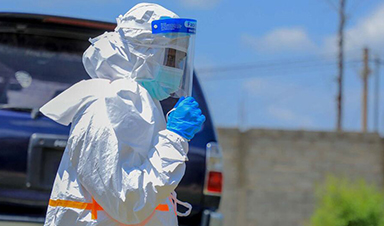
May 29 (Reuters) – Global health authorities are racing to identify medical options to help contain an Ebola outbreak in eastern Democratic Republic of Congo, linked to the Bundibugyo strain of the virus.
Unlike for the more common Zaire strain, there are no approved vaccines or treatments for Bundibugyo.
The latest outbreak is suspected to have led to about 906 cases in the Democratic Republic of Congo, including 223 suspected deaths, with the World Health Organization warning that the toll is likely to rise. Bundibugyo ebolavirus, or BDBV, has a fatality rate of up to 40%.
A small number of experimental vaccines and therapies are being assessed, and global health authorities are examining whether any existing Ebola treatments might offer protection — so far supported only by limited animal data.
Most experimental treatments have not yet been tested in humans and would require emergency or compassionate-use authorization before they are deployed in Congo.
The WHO on Thursday recommended prioritizing several experimental drugs, including antibodies, antivirals and vaccines, for the treatment and prevention of BDBV.
Here is what we know of these candidates so far:
VACCINES
1. The WHO said on Thursday a single-dose rVSV Bundibugyo vaccine being developed by the International AIDS Vaccine Initiative is the most promising candidate to prevent BDBV.
The vaccine, rVSVΔG/BDBV-GP, which uses the same technology as Merck's approved vaccine Ervebo for the Zaire strain, has shown survival benefit in non-human primates in a 2023 proof-of-concept study.
The WHO said development of the vaccine would likely take seven to nine months before it is ready for assessment in a clinical trial.
The International AIDS Vaccine Initiative said it is advancing the candidate towards a clinical trial and preparing for manufacturing, including transferring the vaccine virus and processes for Good Manufacturing Practices production.
2. The WHO has recommended prioritizing another vaccine candidate, ChAdOx1 Bundibugyo, being developed by Oxford University and the Serum Institute of India.
The potential vaccine is based on ChAdOx1 technology, which was used in the Oxford/AstraZeneca COVID-19 vaccine, and is being manufactured by the Serum Institute.
The company started production under its "emergency response framework," alongside partners Coalition for Epidemic Preparedness Innovations, or CEPI, and the University of Oxford, as soon as it got word of the outbreak this month, a spokesperson said.
Doses could be ready within two to three months for efficacy assessment through a clinical trial, the WHO said, adding that additional animal studies have yet to be conducted.
The WHO said experts considered a single dose of the vaccine candidate potentially suitable for contacts of Ebola cases, while a two-dose regimen might be used for high-risk but unexposed groups, including healthcare workers and frontline responders.
The Oxford Vaccine Group said it is working to generate pre-clinical data to support the development and testing of the ChAdOx1 BDBV vaccine.
CEPI, which funded some of the early COVID-19 vaccines and aims to have shots available within 100 days of an outbreak, said it is in talks with both candidates about how to speed up development.
ANTIBODY-BASED THERAPIES
1. The WHO has recommended prioritizing privately held Mapp Biopharmaceutical's pan-ebolavirus antibody drug, MBP134 — a combination of two human monoclonal antibodies — for clinical trials among confirmed BDBV cases.
Initially studied for the Sudan ebolavirus strain, the drug was found to be safe and well tolerated in early-stage trials. Development has been backed by the U.S. Biomedical Advanced Research and Development Authority, or BARDA.
BARDA said it is coordinating shipments of the investigational treatment for potential use in high-risk Americans exposed to the virus.
Mapp said MBP134 has shown similar activity against all known ebolaviruses and that it is working with the WHO and other authorities as part of the response to the Congo outbreak.
2. Regeneron Pharmaceuticals' antibody drug candidate, maftivimab, is also being explored as a potential treatment by the WHO. According to the company, it has been shown in a lab to be active against the Bundibugyo Ebolavirus.
Regeneron said it is working to prepare existing supply of maftivimab for use in upcoming clinical trials.
The FDA has approved a combination of maftivimab and two other antibodies, atoltivimab and odesivimab, under the brand name Inmazeb, to treat Zaire Ebolavirus infection in adult and pediatric patients.
The company said it recently donated 500 doses of Inmazeb to the WHO, which could be used if found helpful.
"Supply of Inmazeb is already on the ground in the DRC, should WHO wish to utilize it for immediate treatment or as an additional component of the study," Regeneron said.
3. Human monoclonal antibodies isolated from Bundibugyo survivors have also been explored as potential treatments.
One candidate, BDBV289-N, demonstrated efficacy in a 2018 animal study. The study, conducted by a group of researchers with support from the U.S. National Institutes of Health, showed the antibody gave up to 100% protection in infected monkeys, even when treatment started up to eight days after the infection.
ANTIVIRAL DRUGS
Gilead Sciences' experimental oral antiviral drug obeldesivir is being considered as a potential post-exposure treatment by the WHO to prevent those exposed to Ebola from developing the disease.
Once-daily obeldesivir given for 10 days provided up to 100% protection in monkeys against the Zaire and Sudan Ebola strains when treatment began 24 hours after exposure.
"Obeldesivir is predicted to be active against this particular (Bundibugyo) strain. While not approved for this, we do have preclinical data that shows positive results," a company spokesperson said.
Gilead's antiviral remdesivir has shown activity against the Bundibugyo virus in laboratory studies conducted by researchers at the University of Texas Medical Branch. Some data suggest the drug, given as an intravenous infusion, may have stronger activity against BDBV than against the Zaire Ebola strain.
The WHO has also recommended a combination therapy using a monoclonal antibody and remdesivir for evaluation.
DIAGNOSTIC TESTS
The WHO had indicated that limited testing capacity for the Bundibugyo strain was slowing response to the outbreak. Here are tests that can detect the infection.
1. BioFire Defense, an affiliate of French diagnostic firm bioMérieux, makes an FDA-cleared test – BioFire Global Fever Special Pathogens Panel – that can detect multiple Ebola species, including Bundibugyo.
A company spokesperson said it is increasing production capacity and engaging with public health stakeholders and international contacts to assess potential needs.
2. Germany-based firm Altona Diagnostics' test, called RealStar Filovirus Screen RT-PCR Kit 1.0, is being used to detect the Bundibugyo outbreak in Congo. The firm has ramped up production to support local testing facilities in Congo.
(Reporting by Mariam Sunny in Bengaluru and Jennifer Rigby in Geneva; Editing by Josephine Mason, Rod Nickel and Diti Pujara)

News – Curated by Amanda Scott, Alias Group Creative
Follow her on Bluesky

Where do nanoparticles go once they enter the body?
New international best practice guidance, co-written at ANSTO, sets out how to measure where nanoparticles like titanium dioxide end up in the body and how long they remain. The guidance has been shared by [...]
Long-Acting HIV Shots Could Solve a Major Treatment Challenge for Young People
A major African trial suggests that changing how HIV treatment is delivered could significantly improve viral suppression in adolescents. Young people with HIV were more likely to keep the virus suppressed when they received [...]

WHO Factsheets – The top 10 causes of death
In 2023, the 10 leading causes of death accounted for 33 million deaths, or 54% of the total 61 million deaths worldwide. The top global causes of death, in order of total number of lives lost, [...]

Aging Cells May Be Hiding From the Immune System – Scientists Think They Know How
Your immune system is supposed to clear out damaged cells. Researchers may have found how some of them hide and linger as the body ages. Researchers led by Cedars-Sinai Health Sciences University have identified [...]

Your Voice May Reveal How Fast Your Brain Is Aging
Researchers have developed a machine-learning “speech clock” that estimates age from subtle patterns in how people speak and what they say. It is possible that people’s voices may contain certain signals of aging that [...]

Optogenetics Pioneers Win 2026 Nobel Prize in Physiology or Medicine
The 2026 Nobel Prize in Physiology or Medicine has been awarded to Peter Hegemann, Georg Nagel, and Karl Deisseroth for the development of optogenetics, a revolutionary technology that uses light to control individual neurons [...]

Molecular Manufacturing: The Future of Nanomedicine – From NanoappsMedical Inc.
This book explores the revolutionary potential of atomically precise manufacturing technologies to transform global healthcare, as well as practically every other sector across society. This forward-thinking volume examines how envisaged Factory@Home systems might enable the cost-effective [...]
What is ‘American Covid’ and how bad is it?
Cases of so-called ‘American Covid’ are on the rise in the UK. The strain is officially called XFG, or ‘Stratus’, and is the most common variant in North America, hence the name. It might soon [...]
Researcher at Russian plague laboratory dies of ‘unknown’ infection
Russian authorities have imposed "anti-epidemic measures" after a laboratory worker at an institute in Siberia dedicated to studying the plague and other infectious diseases died of a mysterious illness. The researcher, a 28-year-old female [...]

GHCE Concept
From the preface of the book Global Health Care Equivalency in the Age of Nanotechnology, Nanomedicine and Artificial Intelligence, Edited by Frank Boehm: Since the publication of my first book (Nanomedical Device and Systems [...]

A Surprising Brain Signal Could Explain Why Eating Less Protein Extends Lifespan
A new paper suggests that limiting protein intake triggers a coordinated response throughout the body that may help explain how protein restriction affects healthy aging. Animals respond to protein restriction, or reduced protein in [...]

Back and shoulder surgery is often worse than useless
Millions of operations should be scrapped SIX IN TEN Britons have surgery at some point. So do lots of Americans, at a cost of perhaps $500bn a year, a third of all spending on [...]

Cocaine plays with mind, hijacks brain circuit, drives increasingly rigid and repetitive behavior
Researchers have found that cocaine hijacks brain circuit, which to drive increasingly rigid and repetitive behavior. The brain circuit that normally participates in selecting natural mouth and face movements, but which becomes disproportionately engaged [...]

Injectable nanodevices could provide effective treatment for drug-resistant glioblastoma
The brain cancer glioblastoma is one of the most aggressive and treatment-resistant cancers known to medicine, carrying a median survival of just 12-15 months, even with the best available care. Now, researchers at the [...]
New Treatment Cuts “Bad” Cholesterol in Half for a Full Year
A single infusion of an experimental CRISPR-Cas9 therapy was reported to safely lower LDL cholesterol by 52.5% and triglycerides by 47.8%, as measured 12 months after treatment. What if one infusion could keep cholesterol [...]

Too Much RNA Can Drain a Cell’s Energy, Scientists Discover
A virus may cripple a cell’s power supply simply by producing too much of a molecule the cell needs to survive. New research from the Texas A&M College of Veterinary Medicine and Biomedical Sciences [...]