The Kunming Montreal Global Biodiversity Framework calls for the elimination of plastic pollution by 2030. If that goal has been clearly set, why have meaningful measures that create real change still not been implemented?
Plastic pollution is more than just trash on the beach. Marine plastic waste releases PFAS and heavy metals into the water of small freshwater lakes and ponds, at levels exceeding the threshold limits. Birds and animals drink this water. PFAS are 'forever chemicals' that threaten both the natural environment and human health.
A Growing Environmental Crisis
Norway is home to fantastic natural places that provide us with outdoor recreation and learning. Everyone says they want to protect the environment, but do they actually do anything? The reality is brutal: the environment is being degraded, species are disappearing, and populations are declining sharply. This does not just happen by itself – it is the result of human choices.
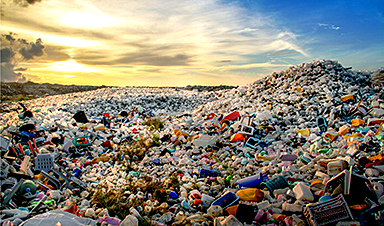
Before an environmental problem becomes acute, we call it an environmental challenge. At that point, we still have the opportunity to act. One of the biggest environmental challenges of our era is plastic pollution. Plastic that ends up in the ocean and along the coast does not disappear – it breaks down into microplastics and remains in the environment. It threatens marine life, birds, animals, and ultimately us humans. It is not a problem that we can keep putting off – it must be solved. Now.
Every year, more than 19 million tons of plastic make their way into rivers, lakes, and oceans. The experience of volunteers and professional clean-up organizations is clear: Large volumes of marine plastic waste are cleaned up from coastal areas, but more continues to flow in from the sea and is washed up onto the land. This process continues year after year.
We are facing a 'compound interest' effect in the amount of marine litter in the coastal landscape. With the current system, however, neither volunteers nor professional organizations are able to deal with what is already in the environment or what will continue to be added. This will be a problem for many decades to come.
Cleanup efforts cannot keep pace
This author has participated in cleaning up marine litter and has studied the consequences of marine plastic waste in coastal areas. Findings show alarmingly high concentrations of PFAS and heavy metals in marine plastic waste collected from small freshwater lakes and ponds. The concentrations found in freshwater exceed the threshold values of the environmental quality standards.
Birds and wildlife are exposed when they drink water, and the same is true for humans when they eat meat from animals that have grazed on coastal islands, such as sheep. Small freshwater lakes and ponds are closed ecosystems, meaning the environmental contaminants have 'nowhere to go', and their concentrations increase over time. This gives us a warning about what is happening in the oceans too; it just takes longer to detect.
Goal 7 of The Kunming-Montreal Global Biodiversity Framework states that plastic pollution must be eliminated by 2030 to protect biodiversity.
The question is simple: why are we not following up with measures that make a real difference?
National plans fall short
The Norwegian government has presented a number of targets in White Paper 35 (2024–2025) and in the Norwegian Plastics Strategy (2021). These documents focus on the principle of producer responsibility, reducing plastic production, better waste management, and measures to combat unmarked fishing gear. The strategy also highlights the need for a global agreement on plastic pollution and an expert panel on chemicals and waste.
Nevertheless, Norway lacks a national plan to clean up the marine litter that is already in the environment and to manage the litter that is yet to come. Without funded, long-term measures for Norway's coastal landscapes, we are constantly on the back foot, while the plastic continues to accumulate and the challenges continue to grow.
Many good measures have been implemented, but they are not making a significant enough impact. The Norwegian Environment Agency allocated NOK 27.9 million in funding for cleaning up marine plastic waste in 2025, compared with NOK 80 million a few years ago. The Norwegian Retailers' Environment Fund is aiming to clean up 55 percent of the coastline by the end of 2025.
That's great, but is it enough considering that plastic pollution is one of the greatest environmental challenges of our time? It must be taken into account that an area cleared one year can be polluted by marine plastic waste the following year due to the continuous influx carried by ocean currents from both domestic and foreign sources. As the measures stand now, they offer only a short-term fix in a crisis that requires long-term solutions.
Ambition without action is not enough
We cannot wait for a global agreement. Plastic waste is already in the environment. Should Norway establish a national model for plastic pollution response inspired by the oil spill response system? One proposal is to establish a single central organization that brings all the actors together under one umbrella and has overall responsibility for prioritization and measures where the need is greatest – with clear, long-term strategies, funding, and lines of responsibility.
University students are very concerned about plastic pollution and the consequences it will have both for the environment and for human health. They have put forward many constructive solutions, but what we really need is political action, they point out. They are impatient, and rightly so. If we are to avoid polluting the environment 'for all eternity', we must deliver on the Global Biodiversity Framework's goals now. Ambitions are not enough – action is what matters.
Reference: "Organic contaminants and toxic elements in marine plastic debris, water and sediments in small freshwater lakes in a Norwegian coastal archipelago" by Hilde Ervik, András Mészey, Anna Røsvik and Bjørn Munro Jenssen, 11 December 2025, Heliyon.
DOI: 10.1016/j.heliyon.2025.e44232

News
Plastic Without End: Are We Polluting the Planet for Eternity?
The Kunming Montreal Global Biodiversity Framework calls for the elimination of plastic pollution by 2030. If that goal has been clearly set, why have meaningful measures that create real change still not been implemented? [...]
Scientists Rewire Natural Killer Cells To Attack Cancer Faster and Harder
Researchers tested new CAR designs in NK-92 cells and found the modified cells killed tumor cells more effectively, showing stronger anti-cancer activity. Researchers at the Ribeirão Preto Blood Center and the Center for Cell-Based [...]
New “Cellular” Target Could Transform How We Treat Alzheimer’s Disease
A new study from researchers highlights an unexpected player in Alzheimer’s disease: aging astrocytes. Senescent astrocytes have been identified as a major contributor to Alzheimer’s progression. The cells lose protective functions and fuel inflammation, particularly in [...]

Treating a Common Dental Infection… Effects That Extend Far Beyond the Mouth
Successful root canal treatment may help lower inflammation associated with heart disease and improve blood sugar and cholesterol levels. Treating an infected tooth with a successful root canal procedure may do more than relieve [...]
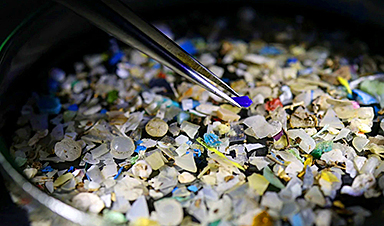
Microplastics found in prostate tumors in small study
In a new study, researchers found microplastics deep inside prostate cancer tumors, raising more questions about the role the ubiquitous pollutants play in public health. The findings — which come from a small study of 10 [...]
All blue-eyed people have this one thing in common
All Blue-Eyed People Have This One Thing In Common Blue Eyes Aren’t Random—Research Traces Them Back to One Prehistoric Human It sounds like a myth at first — something you’d hear in a folklore [...]
Scientists reveal how exercise protects the brain from Alzheimer’s
Researchers at UC San Francisco have identified a biological process that may explain why exercise sharpens thinking and memory. Their findings suggest that physical activity strengthens the brain's built in defense system, helping protect [...]

NanoMedical Brain/Cloud Interface – Explorations and Implications. A new book from Frank Boehm
New book from Frank Boehm, NanoappsMedical Inc Founder: This book explores the future hypothetical possibility that the cerebral cortex of the human brain might be seamlessly, safely, and securely connected with the Cloud via [...]
Deadly Pancreatic Cancer Found To “Wire Itself” Into the Body’s Nerves
A newly discovered link between pancreatic cancer and neural signaling reveals a promising drug target that slows tumor growth by blocking glutamate uptake. Pancreatic cancer is among the most deadly cancers, and scientists are [...]
This Simple Brain Exercise May Protect Against Dementia for 20 Years
A long-running study following thousands of older adults suggests that a relatively brief period of targeted brain training may have effects that last decades. Starting in the late 1990s, close to 3,000 older adults [...]
Scientists Crack a 50-Year Tissue Mystery With Major Cancer Implications
Researchers have resolved a 50-year-old scientific mystery by identifying the molecular mechanism that allows tissues to regenerate after severe damage. The discovery could help guide future treatments aimed at reducing the risk of cancer [...]
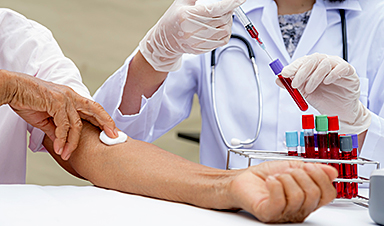
This New Blood Test Can Detect Cancer Before Tumors Appear
A new CRISPR-powered light sensor can detect the faintest whispers of cancer in a single drop of blood. Scientists have created an advanced light-based sensor capable of identifying extremely small amounts of cancer biomarkers [...]
Blindness Breakthrough? This Snail Regrows Eyes in 30 Days
A snail that regrows its eyes may hold the genetic clues to restoring human sight. Human eyes are intricate organs that cannot regrow once damaged. Surprisingly, they share key structural features with the eyes [...]
This Is Why the Same Virus Hits People So Differently
Scientists have mapped how genetics and life experiences leave lasting epigenetic marks on immune cells. The discovery helps explain why people respond so differently to the same infections and could lead to more personalized [...]
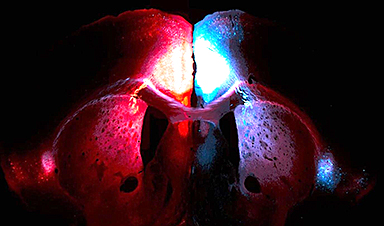
Rejuvenating neurons restores learning and memory in mice
EPFL scientists report that briefly switching on three “reprogramming” genes in a small set of memory-trace neurons restored memory in aged mice and in mouse models of Alzheimer’s disease to level of healthy young [...]

New book from Nanoappsmedical Inc. – Global Health Care Equivalency
A new book by Frank Boehm, NanoappsMedical Inc. Founder. This groundbreaking volume explores the vision of a Global Health Care Equivalency (GHCE) system powered by artificial intelligence and quantum computing technologies, operating on secure [...]