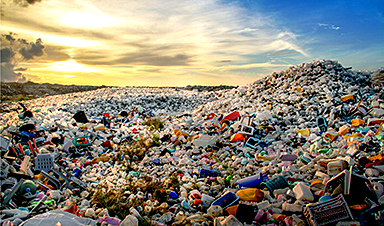
The Kunming Montreal Global Biodiversity Framework calls for the elimination of plastic pollution by 2030. If that goal has been clearly set, why have meaningful measures that create real change still not been implemented?
Plastic pollution is more than just trash on the beach. Marine plastic waste releases PFAS and heavy metals into the water of small freshwater lakes and ponds, at levels exceeding the threshold limits. Birds and animals drink this water. PFAS are 'forever chemicals' that threaten both the natural environment and human health.
A Growing Environmental Crisis
Norway is home to fantastic natural places that provide us with outdoor recreation and learning. Everyone says they want to protect the environment, but do they actually do anything? The reality is brutal: the environment is being degraded, species are disappearing, and populations are declining sharply. This does not just happen by itself – it is the result of human choices.
Before an environmental problem becomes acute, we call it an environmental challenge. At that point, we still have the opportunity to act. One of the biggest environmental challenges of our era is plastic pollution. Plastic that ends up in the ocean and along the coast does not disappear – it breaks down into microplastics and remains in the environment. It threatens marine life, birds, animals, and ultimately us humans. It is not a problem that we can keep putting off – it must be solved. Now.
Every year, more than 19 million tons of plastic make their way into rivers, lakes, and oceans. The experience of volunteers and professional clean-up organizations is clear: Large volumes of marine plastic waste are cleaned up from coastal areas, but more continues to flow in from the sea and is washed up onto the land. This process continues year after year.
We are facing a 'compound interest' effect in the amount of marine litter in the coastal landscape. With the current system, however, neither volunteers nor professional organizations are able to deal with what is already in the environment or what will continue to be added. This will be a problem for many decades to come.
Cleanup efforts cannot keep pace
This author has participated in cleaning up marine litter and has studied the consequences of marine plastic waste in coastal areas. Findings show alarmingly high concentrations of PFAS and heavy metals in marine plastic waste collected from small freshwater lakes and ponds. The concentrations found in freshwater exceed the threshold values of the environmental quality standards.
Birds and wildlife are exposed when they drink water, and the same is true for humans when they eat meat from animals that have grazed on coastal islands, such as sheep. Small freshwater lakes and ponds are closed ecosystems, meaning the environmental contaminants have 'nowhere to go', and their concentrations increase over time. This gives us a warning about what is happening in the oceans too; it just takes longer to detect.
Goal 7 of The Kunming-Montreal Global Biodiversity Framework states that plastic pollution must be eliminated by 2030 to protect biodiversity.
The question is simple: why are we not following up with measures that make a real difference?
National plans fall short
The Norwegian government has presented a number of targets in White Paper 35 (2024–2025) and in the Norwegian Plastics Strategy (2021). These documents focus on the principle of producer responsibility, reducing plastic production, better waste management, and measures to combat unmarked fishing gear. The strategy also highlights the need for a global agreement on plastic pollution and an expert panel on chemicals and waste.
Nevertheless, Norway lacks a national plan to clean up the marine litter that is already in the environment and to manage the litter that is yet to come. Without funded, long-term measures for Norway's coastal landscapes, we are constantly on the back foot, while the plastic continues to accumulate and the challenges continue to grow.
Many good measures have been implemented, but they are not making a significant enough impact. The Norwegian Environment Agency allocated NOK 27.9 million in funding for cleaning up marine plastic waste in 2025, compared with NOK 80 million a few years ago. The Norwegian Retailers' Environment Fund is aiming to clean up 55 percent of the coastline by the end of 2025.
That's great, but is it enough considering that plastic pollution is one of the greatest environmental challenges of our time? It must be taken into account that an area cleared one year can be polluted by marine plastic waste the following year due to the continuous influx carried by ocean currents from both domestic and foreign sources. As the measures stand now, they offer only a short-term fix in a crisis that requires long-term solutions.
Ambition without action is not enough
We cannot wait for a global agreement. Plastic waste is already in the environment. Should Norway establish a national model for plastic pollution response inspired by the oil spill response system? One proposal is to establish a single central organization that brings all the actors together under one umbrella and has overall responsibility for prioritization and measures where the need is greatest – with clear, long-term strategies, funding, and lines of responsibility.
University students are very concerned about plastic pollution and the consequences it will have both for the environment and for human health. They have put forward many constructive solutions, but what we really need is political action, they point out. They are impatient, and rightly so. If we are to avoid polluting the environment 'for all eternity', we must deliver on the Global Biodiversity Framework's goals now. Ambitions are not enough – action is what matters.
Reference: "Organic contaminants and toxic elements in marine plastic debris, water and sediments in small freshwater lakes in a Norwegian coastal archipelago" by Hilde Ervik, András Mészey, Anna Røsvik and Bjørn Munro Jenssen, 11 December 2025, Heliyon.
DOI: 10.1016/j.heliyon.2025.e44232

News

Where do nanoparticles go once they enter the body?
New international best practice guidance, co-written at ANSTO, sets out how to measure where nanoparticles like titanium dioxide end up in the body and how long they remain. The guidance has been shared by [...]
Long-Acting HIV Shots Could Solve a Major Treatment Challenge for Young People
A major African trial suggests that changing how HIV treatment is delivered could significantly improve viral suppression in adolescents. Young people with HIV were more likely to keep the virus suppressed when they received [...]

WHO Factsheets – The top 10 causes of death
In 2023, the 10 leading causes of death accounted for 33 million deaths, or 54% of the total 61 million deaths worldwide. The top global causes of death, in order of total number of lives lost, [...]
Aging Cells May Be Hiding From the Immune System – Scientists Think They Know How
Your immune system is supposed to clear out damaged cells. Researchers may have found how some of them hide and linger as the body ages. Researchers led by Cedars-Sinai Health Sciences University have identified [...]

Your Voice May Reveal How Fast Your Brain Is Aging
Researchers have developed a machine-learning “speech clock” that estimates age from subtle patterns in how people speak and what they say. It is possible that people’s voices may contain certain signals of aging that [...]
Optogenetics Pioneers Win 2026 Nobel Prize in Physiology or Medicine
The 2026 Nobel Prize in Physiology or Medicine has been awarded to Peter Hegemann, Georg Nagel, and Karl Deisseroth for the development of optogenetics, a revolutionary technology that uses light to control individual neurons [...]
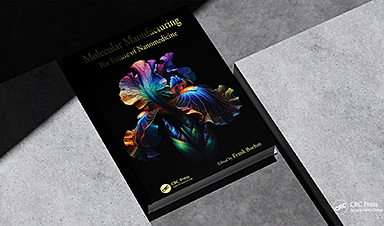
Molecular Manufacturing: The Future of Nanomedicine – From NanoappsMedical Inc.
This book explores the revolutionary potential of atomically precise manufacturing technologies to transform global healthcare, as well as practically every other sector across society. This forward-thinking volume examines how envisaged Factory@Home systems might enable the cost-effective [...]

What is ‘American Covid’ and how bad is it?
Cases of so-called ‘American Covid’ are on the rise in the UK. The strain is officially called XFG, or ‘Stratus’, and is the most common variant in North America, hence the name. It might soon [...]
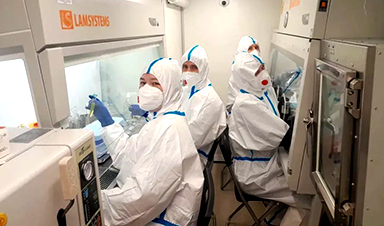
Researcher at Russian plague laboratory dies of ‘unknown’ infection
Russian authorities have imposed "anti-epidemic measures" after a laboratory worker at an institute in Siberia dedicated to studying the plague and other infectious diseases died of a mysterious illness. The researcher, a 28-year-old female [...]

GHCE Concept
From the preface of the book Global Health Care Equivalency in the Age of Nanotechnology, Nanomedicine and Artificial Intelligence, Edited by Frank Boehm: Since the publication of my first book (Nanomedical Device and Systems [...]
A Surprising Brain Signal Could Explain Why Eating Less Protein Extends Lifespan
A new paper suggests that limiting protein intake triggers a coordinated response throughout the body that may help explain how protein restriction affects healthy aging. Animals respond to protein restriction, or reduced protein in [...]

Back and shoulder surgery is often worse than useless
Millions of operations should be scrapped SIX IN TEN Britons have surgery at some point. So do lots of Americans, at a cost of perhaps $500bn a year, a third of all spending on [...]
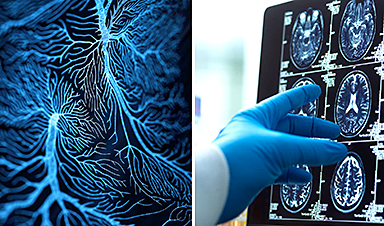
Cocaine plays with mind, hijacks brain circuit, drives increasingly rigid and repetitive behavior
Researchers have found that cocaine hijacks brain circuit, which to drive increasingly rigid and repetitive behavior. The brain circuit that normally participates in selecting natural mouth and face movements, but which becomes disproportionately engaged [...]
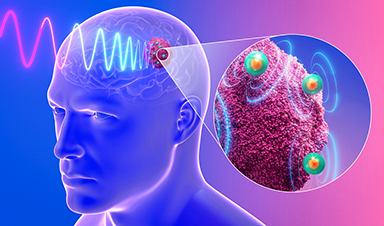
Injectable nanodevices could provide effective treatment for drug-resistant glioblastoma
The brain cancer glioblastoma is one of the most aggressive and treatment-resistant cancers known to medicine, carrying a median survival of just 12-15 months, even with the best available care. Now, researchers at the [...]
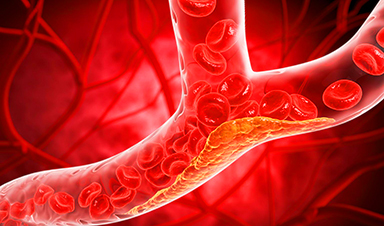
New Treatment Cuts “Bad” Cholesterol in Half for a Full Year
A single infusion of an experimental CRISPR-Cas9 therapy was reported to safely lower LDL cholesterol by 52.5% and triglycerides by 47.8%, as measured 12 months after treatment. What if one infusion could keep cholesterol [...]
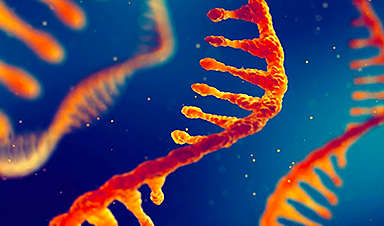
Too Much RNA Can Drain a Cell’s Energy, Scientists Discover
A virus may cripple a cell’s power supply simply by producing too much of a molecule the cell needs to survive. New research from the Texas A&M College of Veterinary Medicine and Biomedical Sciences [...]