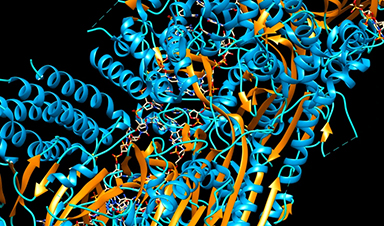
A single infusion that edits a gene directly inside a patient’s liver appears to keep working four years later, according to its developer, Intellia Therapeutics. The treatment now awaits a decision from the US Food and Drug Administration (FDA). If it is approved, it would become the world’s first CRISPR medicine delivered straight into the body rather than applied to cells in a lab.
The therapy is called lonvoguran ziclumeran, or lonvo-z for short. It targets one form of hereditary angioedema, an inherited disorder that causes repeated bouts of painful swelling. These attacks can affect the throat and other parts of the body, and they can be dangerous. Intellia, based in Cambridge, Massachusetts, has asked the FDA for approval, and a decision is expected by 10 March. Chief executive John Leonard told investors on 12 November that approval would make lonvo-z the first CRISPR medicine given in vivo, meaning inside the living body.
Switching off a troublemaking gene
CRISPR-Cas9 is a gene-editing tool that can find a specific stretch of DNA and cut it. Lonvo-z uses this system to disable the gene that makes prekallikrein. This protein is produced in the liver and encourages blood vessels to leak.
The medicine itself is made of tiny fatty particles wrapped around mRNA, the genetic instructions cells use to build proteins. Here, the mRNA carries the recipe for the CRISPR-Cas9 components. Once the particles are infused into the bloodstream, the liver absorbs them, and that is exactly where prekallikrein is made. The whole procedure takes a single day.
Jonathan Bernstein specialises in hereditary angioedema at the University of Cincinnati in Ohio and is one of the investigators on a lonvo-z trial. He says the gene-editing approach could free patients from a lifetime of combining medicines to head off and treat attacks. Of the four-year results, he says: “It’s very reassuring. That’s what you’re supposed to see.”
Why editing inside the body matters
Only one CRISPR therapy currently has FDA approval. Casgevy treats two inherited blood disorders, sickle cell anemia and β-thalassemia, and it works very differently. Doctors first collect a patient’s blood stem cells and send them away to be edited. The edited cells are then infused back into the same person.
Because each dose has to be custom-made, the process takes longer, costs more and is more complicated. Patients must also go through harsh chemotherapy to make space for the edited cells. In vivo approaches like lonvo-z aim to avoid these hurdles by doing the editing inside the body itself.
New kinds of risk
Editing inside the body brings its own safety questions. With cells edited in a lab, there is a chance to check them before they go back into the patient. Once the editing happens in the patient, there is no way to screen out cells that picked up unintended changes elsewhere in the genome or in other organs. Patients could also mount harmful immune reactions to the treatment.
These concerns are not merely hypothetical. Last year, the FDA halted a pair of Intellia’s other in vivo trials when someone taking part developed liver damage and died after receiving a CRISPR treatment. The participant was an older man who had other medical problems. The agency lifted that hold this year after requiring additional safety measures.
What comes next
The latest durability figures come from data released by Intellia itself. If regulators give the go-ahead by March, lonvo-z would mark a shift for gene editing. The technology would move from a custom lab process to a one-day infusion given directly to the patient. For people with hereditary angioedema, Bernstein says, that could mean an alternative to a lifelong routine of medications.
Sources: www.nature.com.

News – Curated by Amanda Scott, Alias Group Creative
Follow her on Bluesky
New CRISPR therapy is poised to gain first FDA approval to alter genes inside the body
A single infusion that edits a gene directly inside a patient's liver appears to keep working four years later, according to its developer, Intellia Therapeutics. The treatment now awaits a decision from the US [...]

Blockchain in Healthcare: Real Applications
Blockchain in healthcare refers to the use of distributed ledger technology to secure, manage, and share medical data and processes. Applications include patient record management, prescription tracking, and supply chain authentication, all designed to [...]
Our books are available worldwide!
Online Sellers other than Amazon, Routledge, and IOPP Indigo Global Health Care Equivalency in the Age of Nanotechnology, Nanomedicine and Artifcial Intelligence Global Health Care Equivalency In The Age Of Nanotechnology, Nanomedicine And Artificial [...]

Scientists Discover a Surprising New Power of Honey That Could Protect Your Skin
Honey’s medical uses may go beyond healing wounds, as laboratory experiments suggest multifloral honey could strengthen human skin cells’ defenses against damaging UV radiation. Ultraviolet (UV) radiation from sunlight can accelerate skin aging and [...]

Scientists Discover That Male and Female Hearts Age in Surprisingly Different Ways
A new study reveals surprising differences in how male and female hearts age at the cellular level. The heart may age very differently from one region to another. A detailed study of mouse hearts [...]
An Ancient Virus May Hold the Secret to What Makes the Human Brain Different
Could a virus that infected chimpanzees millions of years ago help explain how the human brain became different? Researchers at Lund University have discovered that ancient viral DNA embedded in the chimpanzee genome silences [...]
Could a Nasal Spray Stop Alzheimer’s Before Memory Loss Begins?
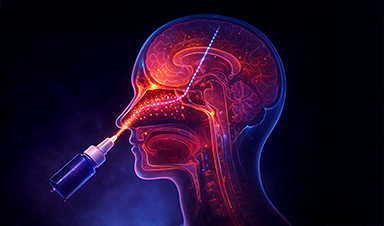
Protecting memory from Alzheimer’s may one day involve a nasal spray, with encouraging results in animals and evidence that its particles also protect human neurons grown in the lab. Alzheimer’s disease damages the connections [...]

A sceptical guide to AI agents in drug discovery
In conversation with Dr Eric Ma, Senior Principal Data Scientist at Moderna, Dr Raminderpal Singh examines what AI agents are actually good for, where the lock-in hides and why expertise has become more valuable [...]
Study identifies new targets for antiviral drugs against coronaviruses
A study led by researchers at the University of California San Diego School of Medicine and University of California, Riverside (UCR) School of Medicine has identified new targets for antiviral drugs against coronaviruses, including [...]
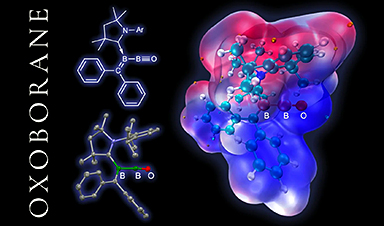
“Nearly Everybody Had Given Up” – Scientists Finally Solve a 60-Year Chemistry Mystery
After more than six decades of failed attempts, chemists have achieved a breakthrough involving a class of molecules long considered too unstable to isolate. Chemists have succeeded in isolating a group of molecules that [...]

Depression Symptoms Improved in Just 48 Hours After a Single Psychedelic Dose
A single dose of psilocybin produced rapid antidepressant effects in a small Swedish clinical trial, with improvements lasting for weeks. A single dose of psilocybin, the psychedelic compound found in magic mushrooms, produced rapid [...]

GHCE Concept
From the preface of the book Global Health Care Equivalency in the Age of Nanotechnology, Nanomedicine and Artificial Intelligence, Edited by Frank Boehm: Since the publication of my first book (Nanomedical Device and Systems [...]

Human Bodies Are Producing Two Billion Tons of CO2 a Year
A new study reveals that the amount of carbon dioxide produced by human metabolism has increased dramatically over three decades. The carbon dioxide produced by human bodies as they convert food into energy increased [...]
A Hidden DNA Mechanism Could Explain How 20% of Human Cancers Develop
Researchers have identified an unexpected molecular vulnerability in cancers carrying BAF mutations. Mutations found in roughly 20% of human cancers may promote tumor growth by changing how DNA is organized inside cells. Researchers have [...]

Ebola kills over 5,300 in fastest-growing outbreak on record
Africa’s latest Ebola outbreak has killed nearly 5,400 people, the vast majority of them in the Democratic Republic of Congo (DRC), according to the continent’s top health agency. Africa Centres for Disease Control and [...]
China makes early progress in using sound waves to stimulate damaged brains
Chinese researchers are testing whether focused ultrasound can help restore consciousness in patients with severe brain injuries, adding to a growing international effort to use sound waves to stimulate deep brain structures without surgery. [...]