Plastic is ubiquitous in the modern world, and it’s notorious for taking a long time to completely break down in the environment – if it ever does.
But even without breaking down completely, plastic can shed tiny particles – called nanoplastics because of their extremely small size – that scientists are just now starting to consider in long-term health studies.
One of those scientists is Dr. Wei Xu, an associate professor in the Texas A&M College of Veterinary Medicine and Biomedical Sciences’ Department of Veterinary Physiology & Pharmacology. Xu’s current work is focused on what happens when nanoplastics interact with seawater, where they can pick up some curious hitchhikers in the form of chemicals and organic components.
When particles are released into the environment, they can interact with a lot of different materials that modify their surfaces, possibly including proteins, chemicals, and toxins. Most people are concerned with what happens when you accidentally ingest nanoplastics, but our work looks at how they might be getting into the body through the skin and what they might be bringing with them.”
Dr. Wei Xu, associate professor, Texas A&M College of Veterinary Medicine and Biomedical Sciences’ Department of Veterinary Physiology & Pharmacology
As they demonstrated in a recent publication, Xu and his team have discovered that nanoplastics with environmental coatings can sneak past some of the skin’s defenses at the microscopic level.
“We found that particles with the environmental coating accumulated in certain areas inside the cell and seemed successful at avoiding its ‘garbage disposal’ system, which might try to kill or expel them,” Xu said. “It’s like they’re wearing camouflage that allows them to stay inside the cell longer.”
While the long-term health consequences of nanoplastics in the body are still being studied, Xu’s research highlights the importance of the skin as a target for nanoplastics and the ability of the environment to alter particles before they’re absorbed by the body.
“While the nanoplastics themselves are a health concern, we also want to better understand these environmental coatings and what those may do once inside the body,” Xu said.
Tiny beads, big discoveries
To understand how nanoplastics affected by the environment enter the skin, Xu and his team created their own nanoplastic beads augmented by ocean water.
“There are vendors that produce nanoplastic particles for scientific research, but these particles have never been out in the environment,” Xu said. “So, before we conducted the toxicity assessment, we used water collected from the ocean off the coast of Corpus Christi.”
After letting the particles interact with the seawater for one to two weeks, Xu and his team were able to analyze the particles’ environmental coatings to see what kind of changes occurred. Then, they tested how the particles make their way inside cultured skin cells.
“We had conducted previous research using plain nanoplastic beads that showed how they induce a reaction from skin cells,” Xu said. “It was significant seeing how the beads with environmental coatings were better able to avoid the attack by the immune system.”
Tackling a complex problem
Xu’s research on the skin and environmental effects of particles is helping scientists understand that some of the trickiest problems in toxicology are even more complex than they had previously realized.
“In our research, we had to focus on a specific type of environmental coating, so we looked at proteins,” Xu said. “But what about those from algal blooms or other toxins? What happens when there are floods and water mixes with other contaminants? We haven’t had the chance to explore how these things intersect yet.”
Even if researchers do find solutions to preventing absorption of nanoplastics with certain kinds of environmental coatings, there’s no guarantee that those will continue to work.
“What if the environment is totally changed in 10 or 20 years and there are different coatings on the particles? We may have to keep coming up with new strategies to control them,” Xu said.
The first step, according to Xu, is for there to be better standardization for research on nanoplastic particles, which he hopes his research will help drive forward.
“I’ve had students look at publications on the same particle and find different results because other researchers aren’t required to consider environmental coatings,” he said. “We need better consistency for the long term.”
Another step is to fully analyze all the coating types that Xu and his team found in their study of seawater.
“We’ve already had people ask us about other types of coatings besides proteins,” he said. “It will be a lot of work, but it’s critical if we’re to understand the full scope of the problem.”
Simpson, K., et al. (2025). Environmental protein corona on nanoplastics altered the responses of skin keratinocytes and fibroblast cells to the particles. Journal of Hazardous Materials. doi.org/10.1016/j.jhazmat.2025.138722

News
New Toothpaste Stops Gum Disease Without Harming Healthy Bacteria
Researchers have developed a targeted approach to combat periodontitis without disrupting the natural balance of the oral microbiome. The innovation could reshape how gum disease is treated while preserving beneficial bacteria. The human mouth [...]
Plastic Without End: Are We Polluting the Planet for Eternity?
The Kunming Montreal Global Biodiversity Framework calls for the elimination of plastic pollution by 2030. If that goal has been clearly set, why have meaningful measures that create real change still not been implemented? [...]
Scientists Rewire Natural Killer Cells To Attack Cancer Faster and Harder
Researchers tested new CAR designs in NK-92 cells and found the modified cells killed tumor cells more effectively, showing stronger anti-cancer activity. Researchers at the Ribeirão Preto Blood Center and the Center for Cell-Based [...]
New “Cellular” Target Could Transform How We Treat Alzheimer’s Disease
A new study from researchers highlights an unexpected player in Alzheimer’s disease: aging astrocytes. Senescent astrocytes have been identified as a major contributor to Alzheimer’s progression. The cells lose protective functions and fuel inflammation, particularly in [...]

Treating a Common Dental Infection… Effects That Extend Far Beyond the Mouth
Successful root canal treatment may help lower inflammation associated with heart disease and improve blood sugar and cholesterol levels. Treating an infected tooth with a successful root canal procedure may do more than relieve [...]
Microplastics found in prostate tumors in small study
In a new study, researchers found microplastics deep inside prostate cancer tumors, raising more questions about the role the ubiquitous pollutants play in public health. The findings — which come from a small study of 10 [...]
All blue-eyed people have this one thing in common
All Blue-Eyed People Have This One Thing In Common Blue Eyes Aren’t Random—Research Traces Them Back to One Prehistoric Human It sounds like a myth at first — something you’d hear in a folklore [...]
Scientists reveal how exercise protects the brain from Alzheimer’s
Researchers at UC San Francisco have identified a biological process that may explain why exercise sharpens thinking and memory. Their findings suggest that physical activity strengthens the brain's built in defense system, helping protect [...]
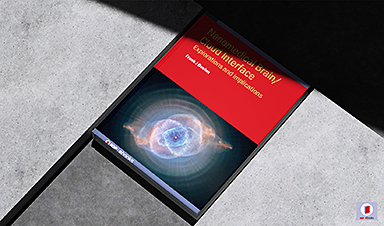
NanoMedical Brain/Cloud Interface – Explorations and Implications. A new book from Frank Boehm
New book from Frank Boehm, NanoappsMedical Inc Founder: This book explores the future hypothetical possibility that the cerebral cortex of the human brain might be seamlessly, safely, and securely connected with the Cloud via [...]
Deadly Pancreatic Cancer Found To “Wire Itself” Into the Body’s Nerves
A newly discovered link between pancreatic cancer and neural signaling reveals a promising drug target that slows tumor growth by blocking glutamate uptake. Pancreatic cancer is among the most deadly cancers, and scientists are [...]
This Simple Brain Exercise May Protect Against Dementia for 20 Years
A long-running study following thousands of older adults suggests that a relatively brief period of targeted brain training may have effects that last decades. Starting in the late 1990s, close to 3,000 older adults [...]
Scientists Crack a 50-Year Tissue Mystery With Major Cancer Implications
Researchers have resolved a 50-year-old scientific mystery by identifying the molecular mechanism that allows tissues to regenerate after severe damage. The discovery could help guide future treatments aimed at reducing the risk of cancer [...]

This New Blood Test Can Detect Cancer Before Tumors Appear
A new CRISPR-powered light sensor can detect the faintest whispers of cancer in a single drop of blood. Scientists have created an advanced light-based sensor capable of identifying extremely small amounts of cancer biomarkers [...]
Blindness Breakthrough? This Snail Regrows Eyes in 30 Days
A snail that regrows its eyes may hold the genetic clues to restoring human sight. Human eyes are intricate organs that cannot regrow once damaged. Surprisingly, they share key structural features with the eyes [...]
This Is Why the Same Virus Hits People So Differently
Scientists have mapped how genetics and life experiences leave lasting epigenetic marks on immune cells. The discovery helps explain why people respond so differently to the same infections and could lead to more personalized [...]
Rejuvenating neurons restores learning and memory in mice
EPFL scientists report that briefly switching on three “reprogramming” genes in a small set of memory-trace neurons restored memory in aged mice and in mouse models of Alzheimer’s disease to level of healthy young [...]