Progress in nanomedicine is almost as fast as the science is small. Over the last year, we’ve seen an abundance of headlines covering medical R&D at the nanoscale: polymer-coated nanoparticles targeting ovarian cancer, Albumin recruiting nanoparticles for mRNA vaccines, and therapies to reverse Alzheimer’s in mice, to name a few.
As we rush towards 2026, what might we see unfold next? AZoNano spoke to leading experts in nano medicine and technology to unpack the trends and developments that may define the coming year.
New Drugs Can Wait. Safe Scale-up Shouldn’t.
For the Dutch process analytical technology company InProcess-LSP, 2026 is the year nanomedicine steps out of the proof-of-concept phase and into the (sometimes more challenging) work of safe, reliable production.
In 2026, nano R&D will be driven less by discovering entirely new nanomaterials and more by making complex nanomedicines efficient, robust and scalable. After a hard year for pharmaceutical companies, efficiency and Quality by Design will set the tone. Larger players are rolling out PAT tools that tightly connect R&D, pilot and manufacturing, so processes are designed with scale-up in mind from day one.
Albert Grau-Carbonell, InProcess-LSP Application Specialist, and Ad Gerich, CEO.
If previously nanomedicine was about proving that lipid nanoparticles, polymer carriers, or smart nanoconstructs can deliver drugs, 2026 is about ensuring they do so safely, consistently, and under regulatory pressure.
Real-time CQA monitoring will be at the core of this shift. Production and development lines will be equipped with more sensors, not just for classical CPPs, but also for nano-specific CQAs such as particle size and size distribution. Techniques like SR-DLS will be used to monitor size in real time and rapidly fine-tune flow rates in turbulent mixing, for example in mRNA/LNP vaccine manufacturing, to speed up tech transfer and reduce development risk.
Albert Grau-Carbonell, InProcess-LSP Application Specialist, and Ad Gerich, CEO.
Here, “safe deployment” is as much about knowing what you’re producing in real time as it is about the biology. Closing the gap between measurement and control becomes central to keeping complex nanomedicines within tight quality and safety windows.
At the same time, AI is starting to influence decisions across the nanomedicine pipeline – but with a strong focus on safety.
At the same time, the era of AI will be fully present in nano R&D, from early discovery (e.g. new antibodies or formulations) to big-data analysis of PAT streams. But adoption will be cautious: companies are aware that using immature AI models in high-stakes decisions could lead to bad clinical outcomes and investor pushback.
As a result, the work that really makes waves in 2026 will focus on data-rich, AI-supported nano processes with strong human oversight, enabling faster, safer and more predictable development of nanomedicines.
Albert Grau-Carbonell, InProcess-LSP Application Specialist, and Ad Gerich, CEO.
In other words, AI is less automatic, instead working alongside researchers. The emphasis is on traceability, explainability, and human review, all of which are critical if AI-enabled nanotherapies are to earn trust at scale.
A Future of Mechanically Aware Therapies
As nanomedicine has progressed beyond proof-of-concept, the new focus is shifting from simply getting drugs to the right place to how these therapies behave once they’re inside the body.
The next wave of nanomedicine will advance from passive drug carriers to intelligent, mechano-responsive therapeutics capable of sensing and adjusting to the body’s physical forces.
Alireza Mohammad Karim, PhD, Rashkind Scholar, Department of Pediatrics, Division of Cardiology, Children’s Hospital of Philadelphia, Cambridge Trust Scholar, University of Cambridge
Having covered all manners of nanoscience throughout his academic career, Dr. Karim brings a fresh perspective to his research in Cardiology at the Children’s Hospital of Philadelphia.
As a result, Dr. Karim is well-positioned to see how mechanics and medicine are starting to intersect.
By designing nanomaterials that directly engage with mechanotransduction pathways, such as PIEZO signaling in cardiovascular and ocular tissues, and testing them in organ-on-chip systems that replicate real mechanical environments, we can develop therapies that adapt their behavior to each patient’s unique mechanical signature.
This integration of nanoscience, mechanobiology, and AI-driven modeling is set to usher in a new era of mechanically targeted precision medicine.
Dr. Alireza Mohammad Karim, PhD, Rashkind Scholar, Department of Pediatrics, Division of Cardiology, Children’s Hospital of Philadelphia, Cambridge Trust Scholar, University of Cambridge
In practice, that looks like nanotherapies that home in on the right tissue, pay attention to the forces around them, and adjust what they do accordingly; treatments shaped as much by a patient’s mechanical landscape as by their biology.
Challenges to Tackle in 2026
For Precise Nano Corporation, the future of nanotechnology – from materials to medicines – first and foremost involves tackling the challenges that have long stood in the way of development. How can we reliably make the right nanomaterials, at the right quality, at scale?
The nanomaterials industry still faces challenges in producing clean, consistent, non-agglomerated, and accurately sized materials in sufficient volumes, regardless of the applications. Even with the advanced testing and analytical equipment to accurately determine the actual makeup and accuracy of these very tiny Nano-materials. With the fairly recent advent of AI generated information, the need for superior and advanced Nano-materials are still in great demand to support these industry efforts.
Gilmore Ching, Chairman at Precise Nano Corporation (PNC)
For Ching, data and materials can’t be separated. As AI models enter the picture and additive manufacturing becomes more sophisticated, the quality of the underlying nanomaterials will decide how reliable those tools really are.
Advanced information gathered with equal or even greater emphasis on the superior materials used towards almost every additive manufacturing application and the subsequent products developed need to work in tandem. To sustain optimum and accurate results on any Research and Development area and to further the industry progress is crucially needed in 2026 and beyond.
Gilmore Ching, Chairman at Precise Nano Corporation (PNC)
Nanomedicine in 2026: Safe, Scalable, Surprisingly Normal
If you put all of these threads side by side – safer scale-up, mechanically aware therapies, cleaner and more consistent nanomaterials – a picture begins to form.
Nanomedicine in 2026 and beyond won’t sit on a single headline-grabbing breakthrough; it’ll be hiding in the boring bits. The extra sensor on a production line. The slightly better control over particle size. The tech that tells you a therapy will misbehave before it reaches a patient.
When it’s developed and scaled, most of us won’t see a nanodrug and think, this has precisely tuned mechanotransduction or CQA monitoring behind it. We’ll just see a vaccine, or a cancer therapy, or a treatment for a heart condition, and expect it to work.
But before it hit the market, teams like those at InProcess-LSP, CHOP, and Precise Nano will have spent years shrinking uncertainty down to a level that feels almost invisible.
Progress at the nanoscale isn’t only about making things smaller, though; it’s about closing the gap between what a therapy could do and what it actually does in the body. And if that can be achieved, the most interesting thing about nanomedicine won’t be that it sounds futuristic – it will be how ordinary it starts to feel.


News

Popular Vitamin B3 Supplements May Help Cancer Cells Survive, Scientists Warn
A new study raises important questions about widely used NAD+ supplements, suggesting that compounds often taken to boost energy and support healthy aging may have unintended consequences in cancer treatment. Millions of Americans take [...]
Scientists Discover Cancer Tumors Are “Addicted” to This Common Antioxidant
Cancer cells may be exploiting a common antioxidant as fuel, revealing a potential weakness that future therapies could target. Cancer cells may be tapping into an unexpected energy source: an antioxidant long associated with [...]
Nanotube injector transfers cytoplasmic contents and organelles between living cells safely
Cells are not isolated units; they continuously exchange proteins, genetic material, and even entire organelles with their neighbors. Intercellular transfer influences how tissues develop, respond to stress, and repair damage. In certain cancers, for [...]

CEO of America’s largest public hospital system is ready to replace radiologists with AI
The chief executive of America’s largest public hospital system says he is prepared to start replacing radiologists with artificial intelligence in some circumstances, once the regulatory landscape catches up. Mitchell H. Katz, MD, president [...]
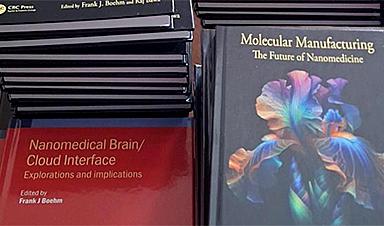
Our books now available worldwide!
Online Sellers other than Amazon, Routledge, and IOPP Indigo Global Health Care Equivalency in the Age of Nanotechnology, Nanomedicine and Artifcial Intelligence Global Health Care Equivalency In The Age Of Nanotechnology, Nanomedicine And Artificial [...]

Study finds higher heart disease risk in long COVID patients
People with long COVID are at increased risk of developing cardiovascular disease, according to a new study from Karolinska Institutet published in eClinicalMedicine. The results show that the risk of conditions such as cardiac arrhythmias [...]
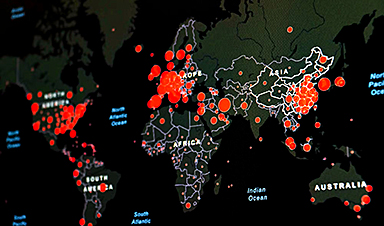
The Corona variant Cicada is here – we know that
Online and on social media, reports are piling up about a new Sars-Cov-2 variant that is currently on the rise: BA.3.2, also known as Cicada. That's what it's all about: The Omicron variant BA.3.2, [...]

A Simple Blood Test Could Predict Dementia Risk 25 Years Early
A single blood marker may quietly signal dementia risk decades in advance. Scientists at the University of California, San Diego, have identified a blood signal that could forecast dementia risk decades before symptoms begin. Their [...]

Sperm Get Lost in Space and Scientists Finally Know Why
Having a baby in space may be far more complicated than expected, as new research shows sperm struggle to find their way in microgravity. Starting a family beyond Earth could be more complicated than [...]
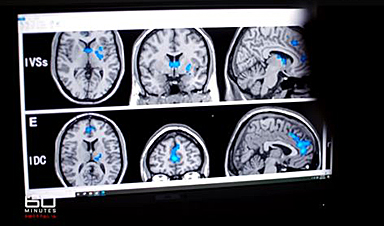
Digital Dementia – Brain fog and disassociation from being chronically online
New medical evidence, featured on 60 Minutes Australia, indicates excessive screen time is causing "digital dementia" in young Australians, with brain scans showing physical shrinkage and damage. Experts warn that high device usage (6-8 hours [...]

A new, highly mutated COVID variant called ‘Cicada’ is spreading in the US.
BA.3.2, a heavily mutated new COVID-19 variant which may be better able to escape immunity from vaccines or prior infection, is now spreading in the United States. Although COVID cases are currently low nationally, [...]

Molecular Manufacturing: The Future of Nanomedicine – New book from NanoappsMedical Inc.
This book explores the revolutionary potential of atomically precise manufacturing technologies to transform global healthcare, as well as practically every other sector across society. This forward-thinking volume examines how envisaged Factory@Home systems might enable the cost-effective [...]

Ancient bacteria strain discovered in ice cave is resistant to some modern antibiotics
In the depths of Scarisoara cave in Romania sits one of the world’s biggest underground glaciers, a monumental slab of ice the size of roughly 40 Olympic swimming pools that began to form around [...]

Scientists Identify “Good” Bacteria That May Prevent Long COVID
According to the WHO, about 6% of people worldwide who get COVID-19, roughly 400 million people, later develop a long-lasting form of the illness. That shows the condition remains a significant public health challenge. In [...]
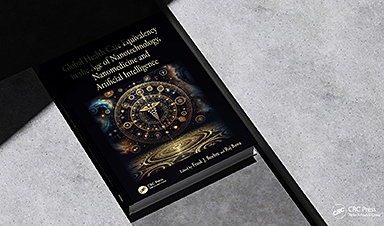
New book from Nanoappsmedical Inc. – Global Health Care Equivalency
A new book by Frank Boehm, NanoappsMedical Inc. Founder. This groundbreaking volume explores the vision of a Global Health Care Equivalency (GHCE) system powered by artificial intelligence and quantum computing technologies, operating on secure [...]
RNA Recycling Extends Lifespan
Summary: Researchers discovered a biological “trash disposal” mechanism that directly controls how fast we age. While circular RNA has long been known to accumulate in cells as we get older, this study proves for the [...]