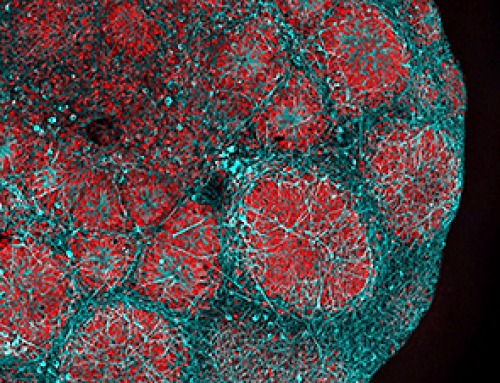
Researchers have developed a way to grow a highly specialized subset of brain nerve cells that are involved in motor neuron disease and damaged in spinal injuries.
Their study, published today in eLife as the final Version of Record after appearing previously as a Reviewed Preprint, presents what the editors call fundamental findings on the directed differentiation of a rare population of special brain progenitors – also known as adult or parent stem cells – into corticospinal-like neurons. The editors note that the work provides compelling data demonstrating the success of this new approach.
The findings set the stage for further research into whether these molecularly directed neurons can form functional connections in the body, and to explore their potential use in human diseases where corticospinal neurons are compromised.
“To realistically model diseases and screen for potential treatments, or to regenerate neurons that are damaged in spinal injuries, we need reliable approaches to accurately differentiate progenitor cells into these specific types of neurons,” explains co-lead author Kadir Ozkan, who at the time of the study was a Postdoctoral Fellow in senior author Jeffrey Macklis’ lab at the Department of Stem Cell and Regenerative Biology, and Center for Brain Science, Harvard University, Cambridge, US. “Generic or regionally similar neurons do not adequately reflect the selective vulnerability of neuron subtypes in most human neurodegenerative diseases or injuries.”
Corticospinal neurons are crucial cells that degenerate in amyotrophic lateral sclerosis (ALS), the most common form of motor neuron disease. Damage to these cells’ long axons – the extensions that connect from the cell bodies in the brain through the spinal cord to their target spinal motor neurons – underlies the loss of voluntary and skilled movement seen in people with spinal cord injuries.
There are currently no appropriate in vitro models for investigating the selective vulnerability and degeneration of corticospinal neurons in ALS or to explore potential routes to regeneration in spinal cord injury. This critically limits the relevance of much existing research.”
Jeffrey Macklis, senior author, the Max and Anne Wien Professor of Life Sciences, Department of Stem Cell and Regenerative Biology, and Center for Brain Science, Harvard University
Previous work from the Macklis Lab and others has identified central molecular programs that first broadly, and then with increasing precision, control and regulate the specification, diversity and connectivity of specific neuron subtypes in the cerebral cortex during the period of their differentiation. Building on that work, the team has identified a subset of progenitor cells in the postnatal and adult cortex that can be captured and differentiated in the lab into neurons with unique characteristics of corticospinal neurons.
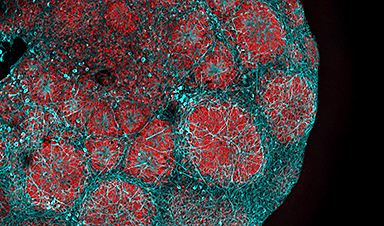
“Knowing that a subset of early progenitors and glial cells in the cortex share a common ancestry with cortical ‘projection neurons’, we hypothesised that some of these progenitors might retain dormant neurogenic potential – that is, the potential to differentiate into neurons,” explains co-lead author Hari Padmanabhan, who was also a Postdoctoral Fellow in the Macklis Lab at the time of the study. The team found that a subset of progenitor cells producing two important regulatory molecules, Sox6 and Neuron/Glia Antigen 2 (Sox6+/NG2+ cells), are poised to develop into neurons. “We wanted to grow these cortical SOX6+/NG2+ progenitors in the lab and see if we could direct their differentiation into corticospinal neurons.”
To achieve this, the team designed a multi-component gene-expression system termed “NVOF” to precisely fine tune the regulatory signals the progenitor cells require. The system enabled them to drive cells down a highly specific differentiation route where they acquire the hallmark characteristics of corticospinal neurons, rather than the features of other types of central nervous system neurons.
As they anticipated, the NVOF programming produced mature neurons from the progenitors with the same distinct shape, key cell markers, molecular-gene expression, and electrical connectivity as seen in native corticospinal neurons. By contrast, a widely employed approach to differentiate neuron-like cells by switching on just the Neurogenin2 gene resulted in cells of a mixed identity with abnormal forms (morphology) and molecular features.
eLife’s editors note that, as the study demonstrates reprogramming in vitro only – that is, not using living model organisms – future research is needed to assess how these reprogrammed corticospinal neurons integrate and function under physiological conditions and in models of trauma or neurodegeneration.
“We have identified a subset of cortical progenitor cells with strong potential to differentiate into specialised neurons for disease modelling in ALS and spinal cord injury, and for regenerative therapies,” concludes Macklis. “Importantly, SOX6+/NG2+ progenitor cells are widely distributed in the cortex, already positioned near sites of degeneration or pathology. This adds substantially to their therapeutic potential, pending further study, including with human pluripotent stem cell-derived cortical progenitors.”
Ozkan, A., et al. (2026). Directed differentiation of functional corticospinal-like neurons from endogenous SOX6+/NG2+ cortical progenitors. eLife. doi: 10.7554/eLife.100340.3. https://elifesciences.org/articles/100340

News

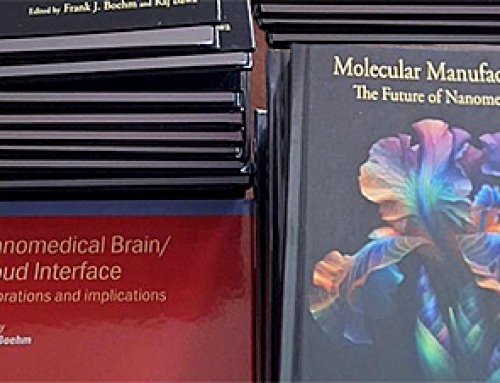
NanoMedical Brain/Cloud Interface – Explorations and Implications. A new book from Frank Boehm
New book from Frank Boehm, NanoappsMedical Inc Founder: This book explores the future hypothetical possibility that the cerebral cortex of the human brain might be seamlessly, safely, and securely connected with the Cloud via [...]
Our books now available worldwide!
Online Sellers other than Amazon, Routledge, and IOPP Indigo Global Health Care Equivalency in the Age of Nanotechnology, Nanomedicine and Artifcial Intelligence Global Health Care Equivalency In The Age Of Nanotechnology, Nanomedicine And Artificial [...]

Ryugu asteroid samples contain all DNA and RNA building blocks, bolstering origin-of-life theories
All the essential ingredients to make the DNA and RNA underpinning life on Earth have been discovered in samples collected from the asteroid Ryugu, scientists said Monday. The discovery comes after these building blocks [...]

Is Berberine Really a “Natural Ozempic”?
Often labeled a “natural Ozempic,” berberine is widely discussed as a metabolic aid. Yet research suggests its influence may lie deeper. In recent years, berberine has gained significant attention as a supposed “natural way” [...]
Viagra Ingredient Shows Promise for Rare Childhood Brain Disease in Surprising Study
A rare childhood disease with no approved treatment may have an unexpected new therapeutic candidate. Sildenafil, the active ingredient also sold under the brand name Viagra, may help reduce symptoms in people with Leigh [...]

In a first for China, Neuracle’s implantable brain-computer interface wins approval
In a landmark development, Neuracle Medical Technology has secured the country’s first-ever approval for an implantable brain-computer interface (BCI) system designed to restore hand motor function in patients with spinal cord injuries, in a [...]
A Cambridge Lab Mistake Reveals a Powerful New Way to Modify Drug Molecules
A surprising lab discovery reveals a light-powered way to tweak complex drugs faster, cleaner, and later in development. Researchers at the University of Cambridge have created a new technique for altering complex drug molecules [...]

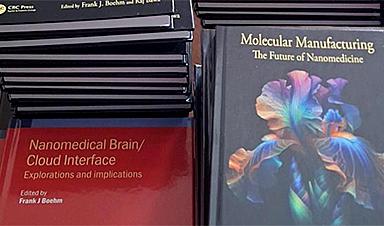
New book from NanoappsMedical Inc – Molecular Manufacturing: The Future of Nanomedicine
This book explores the revolutionary potential of atomically precise manufacturing technologies to transform global healthcare, as well as practically every other sector across society. This forward-thinking volume examines how envisaged Factory@Home systems might enable the cost-effective [...]

Scientists Discover Simple Saliva Test That Reveals Hidden Diabetes Risk
Researchers have identified a potential new way to assess metabolic health using saliva instead of blood. High insulin levels in the blood, known as hyperinsulinemia, can reveal metabolic problems long before obvious symptoms appear. It is [...]

One Nasal Spray Could Protect Against COVID, Flu, Pneumonia, and More
A single nasal spray vaccine may one day protect against viruses, pneumonia, and even allergies. For decades, scientists have dreamed of creating a universal vaccine capable of protecting against many different pathogens. The idea [...]
New AI Model Predicts Cancer Spread With Incredible Accuracy
Scientists have developed an AI system that analyzes complex gene-expression signatures to estimate the likelihood that a tumor will spread. Why do some tumors spread throughout the body while others remain confined to their [...]

Scientists Discover DNA “Flips” That Supercharge Evolution
In Lake Malawi, hundreds of species of cichlid fish have evolved with astonishing speed, offering scientists a rare opportunity to study how biodiversity arises. Researchers have identified segments of “flipped” DNA that may allow fish to adapt rapidly [...]

Scientists Discover Why Some COVID Survivors Still Can’t Taste Food Years Later
A new study provides the first direct biological evidence explaining why some people continue to experience taste loss long after recovering from COVID-19. Researchers have uncovered specific biological changes in taste buds that could help [...]

Catching COVID significantly raises the risk of developing kidney disease, researchers find
Catching Covid significantly raises the risk of developing deadly kidney disease, research has shown. The virus was found to increase the chances that patients will develop the incurable condition by around 50 per cent. [...]

New Toothpaste Stops Gum Disease Without Harming Healthy Bacteria
Researchers have developed a targeted approach to combat periodontitis without disrupting the natural balance of the oral microbiome. The innovation could reshape how gum disease is treated while preserving beneficial bacteria. The human mouth [...]

Plastic Without End: Are We Polluting the Planet for Eternity?
The Kunming Montreal Global Biodiversity Framework calls for the elimination of plastic pollution by 2030. If that goal has been clearly set, why have meaningful measures that create real change still not been implemented? [...]