A cutting-edge X-ray method reveals the 3D orientation of nanoscale material structures, offering fresh insights into their functionality.
Researchers at the Swiss Light Source (SLS) have developed a groundbreaking technique called X-ray linear dichroic orientation tomography (XL-DOT). This method reveals the three-dimensional arrangement of a material's structural building blocks at the nanoscale. Its first application focused on a polycrystalline catalyst, enabling scientists to visualize crystal grains, grain boundaries, and defects—critical features that influence catalyst performance. Beyond catalysis, XL-DOT offers unprecedented insights into the structure of various functional materials used in information technology, energy storage, and biomedical applications.
Advancements in Non-Destructive Imaging of Material Microstructures
Zooming into the micro- or nanostructure of functional materials — whether natural or man-made — reveals countless coherent domains or grains. These grains are distinct regions where molecules and atoms are arranged in orderly, repeating patterns.
The arrangement of these grains is closely tied to the material's properties. Their size, orientation, and distribution can mean the difference between a sturdy brick and a crumbling stone. They determine how ductile a metal is, how efficiently a semiconductor transfers electrons, and how well ceramics conduct heat. This structural organization also plays a critical role in biological materials; for example, collagen fibers are made of interwoven fibrils, and their alignment affects the mechanical strength of connective tissues.
These domains are often tiny: tens of nanometers in size. And it is their arrangement in three dimensions over extended volumes that is property-determining. Yet until now, techniques to probe the organization of materials at the nanoscale have largely been confined to two dimensions or are destructive in nature.
Now, using X-rays generated by the Swiss Light Source SLS, a collaborative team of researchers from Paul Scherrer Institute PSI, ETH Zurich, the University of Oxford and the Max Plank Institute for Chemical Physics of Solids have succeeded in creating an imaging technique to access this information in three-dimensions.
"We Not Only Look Inside, but With Nanoscale Resolution"
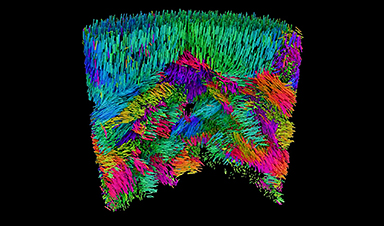
Their technique is known as X-ray linear dichroic orientation tomography, or XL-DOT for short. XL-DOT uses polarized X-rays from the Swiss Light Source SLS, to probe how materials absorb X-rays differently depending on the orientation of structural domains inside. By changing the polarization of the X-rays, while rotating the sample to capture images from different angles, the technique creates a three-dimensional map revealing the internal organization of the material.
The team applied their method to a chunk of vanadium pentoxide catalyst about one micron in diameter, used in the production of sulfuric acid. Here, they could identify minute details in the catalyst`s structure including crystalline grains, boundaries where grains meet, and changes in the crystal orientation. They also identified topological defects in the catalyst. Such features directly affect the activity and stability of catalysts, so knowledge of this structure is crucial in optimizing performance.
Importantly, the method achieves high spatial resolution. Because X-rays have a short wavelength, the method can resolve structures just tens of nanometers in size, aligning with the sizes of features such as the crystalline grains.
"Linear dichroism has been used to measure anisotropies in materials for many years, but this is the first time it has been extended to 3D. We not only look inside, but with nanoscale resolution," says Valerio Scagnoli, Senior Scientist in the Mesoscopic Systems, a joint group between PSI and ETH Zurich. "This means that we now have access to information that was not previously visible, and we can achieve this in small but representative samples, several micrometers in size."
Leading the way with coherent X-rays
Although the researchers first had the idea for XL-DOT in 2019, it would take another five years to put it into practice. Together with complex experimental requirements, a major hurdle was extracting the three-dimensional map of crystal orientations from terabytes of raw data. This mathematical puzzle was overcome with the development of a dedicated reconstruction algorithm by Andreas Apseros, first author of the study, during his doctoral studies at PSI, funded by the Swiss National Science Foundation (SNSF).
The researchers believe that their success in developing XL-DOT is in part thanks to the long-term commitment to developing expertise with coherent X-rays at PSI, which led to unprecedented control and instrument stability at the coherent Small Angle X-ray Scattering (cSAXS) beamline: critical for the delicate measurements.
This is an area that is set to leap forward after the SLS 2.0 upgrade: "Coherence is where we're really set to gain with the upgrade," says Apseros. "We're looking at very weak signals, so with more coherent photons, we'll have more signal and can either go to more difficult materials or higher spatial resolution."
A way into the microstructure of diverse materials
Given the non-destructive nature of XL-DOT, the researchers foresee operando investigations of systems such as batteries as well as catalysts. "Catalyst bodies and cathode particles in batteries are typically between ten and fifty micrometers in size, so this is a reasonable next step," says Johannes Ihli, formerly of cSAXS and currently at the University of Oxford, who led the study.
Yet the new technique is not just useful for catalysts, the researchers emphasize. It is useful for all types of materials that exhibit ordered microstructures, whether biological tissues or advanced materials for information technology or energy storage.
Indeed, for the research team, the scientific motivation lies with probing the three-dimensional magnetic organization of materials. An example is the orientation of magnetic moments within antiferromagnetic materials. Here, the magnetic moments are aligned in alternating directions when going from atom to atom. Such materials maintain no net magnetization when measured at a distance, yet they do possess local order in the magnetic structure, a fact that is appealing for technological applications such as faster and more efficient data processing. "Our method is one of the only ways to probe this orientation," says Claire Donnelly, group leader Max Planck Institute for Chemical Physics of Solids in Dresden who, since carrying out her doctoral work in the Mesoscopic Systems group has maintained a strong collaboration with the team at PSI.
It was during this doctoral work that Donnelly together with the same team at PSI published in Nature a method to carry out magnetic tomography using circularly polarized X-rays (in contrast to XL-DOT, which uses linearly polarized X-rays). This has since been implemented in synchrotrons around the world.
With the groundwork for XL-DOT laid, the team hope that it will, in a similar way to its circularly polarized sibling, become a widely used technique at synchrotrons. Given the much wider range of samples that XL-DOT is relevant to and the importance of structural ordering to material performance, the impact of this latest method may be expected to be even greater. "Now that we've overcome many of the challenges, other beamlines can implement the technique. And we can help them to do it," adds Donnelly.
Reference: "X-ray Linear Dichroic Tomography of Crystallographic and Topological Defects" 11 December 2024, Nature.

News

New $60 Blood Test Detects Lung Cancer Without Costly DNA Sequencing
A simple blood test that detects chemical changes in DNA identified more than 90% of stage 2-4 lung cancers in an early study, without relying on costly DNA sequencing. Researchers at Tel Aviv University and collaborating [...]
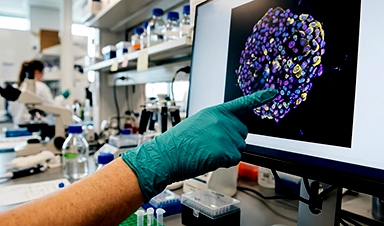
Reducing drug development failures with human-relevant models and AI
Professor Joseph C. Wu of Stanford University explains how stem cells, human-relevant models and AI are helping researchers predict which drug candidates are most likely to succeed before clinical trials. Researchers now have access [...]
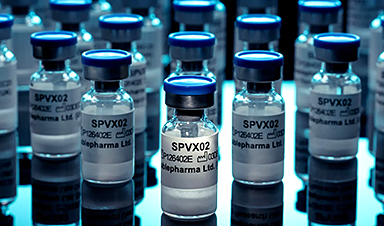
Half of vaccines are binned – ‘fridge-free’ versions could change that
Vaccines that do not need to be kept cool in a fridge have been successfully trialed in patients for the first time, say UK scientists. Currently, most vaccines need to be refrigerated or frozen [...]

Mushroom Mystery: The Fungus That Makes People See Tiny Humans
A mushroom sold in markets and served in restaurants in Southwest China has an unusual warning attached to it: cook it thoroughly, or you may start seeing tiny people. For decades, people have reported [...]

Artificial intelligence used to design brand new viruses
Artificial Intelligence has been used to design brand new viruses that are fully functional and can replicate in the laboratory, say US researchers. It is the first time whole genomes have been successfully designed [...]

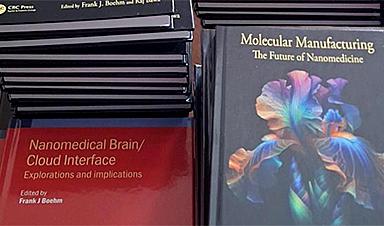
Molecular Manufacturing: The Future of Nanomedicine – New book from NanoappsMedical Inc.
This book explores the revolutionary potential of atomically precise manufacturing technologies to transform global healthcare, as well as practically every other sector across society. This forward-thinking volume examines how envisaged Factory@Home systems might enable the cost-effective [...]

Moderna kicks off Phase I Ebola trial as Africa readies itself for research
If the Phase I trial is successful, Moderna plans to quickly initiate Phase II and Phase III trials of its Ebola vaccine. Moderna has initiated a Phase I trial of its mRNA Ebola vaccine [...]
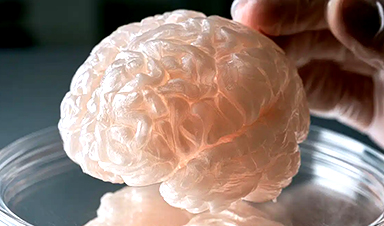
3D Human Brain Tissue Model Replicates Alzheimer’s Pathology
Summary: Researchers introduced a highly reproducible three-dimensional human brain tissue model capable of replicating complex neurodegenerative processes in Alzheimer’s disease. Developed over nine years using human stem cells, the self-organizing tissue spheroids integrate functional neurons, [...]

A Common Sugar May Loosen Cancer Cells and Help Them Spread
Chemotherapy may kill most ovarian cancer cells, but the few that survive can turn dangerously active. By releasing fructose, they may help nearby tumor cells break free and spread. Researchers at The Wistar Institute [...]

COVID-19 can wake up dormant viruses in the body, large study confirms
Virus reactivations by SARS-CoV-2 could worsen initial symptoms and increase risk of Long Covid. Early in the COVID-19 pandemic, scientists noticed that a SARS-CoV-2 infection can “wake up” other, dormant viruses already present in [...]

Scientists Discover the Brain May Enter a New Biological Phase Between 50 and 75
A single-cell study reveals major changes in immune cells, genome organization, and gene regulation within the aging human hippocampus, offering important insights into brain aging and dementias associated with age. Between roughly ages 50 [...]
Our books now available worldwide!
Online Sellers other than Amazon, Routledge, and IOPP Indigo Global Health Care Equivalency in the Age of Nanotechnology, Nanomedicine and Artifcial Intelligence Global Health Care Equivalency In The Age Of Nanotechnology, Nanomedicine And Artificial [...]

Unzipping the Code of Life: Scientists Pinpoint Where DNA First Opens
Researchers mapped where DNA first opens and how a helicase gate may release one strand as genome copying begins. Before a cell can divide, it must open its tightly wound DNA and begin copying the entire [...]

Scientists Tested an 8-Hour Eating Window and Found a Surprising Brain Benefit
Limiting the daily eating window may provide brain benefits beyond those associated with weight loss. Eating within a shorter daily window may provide cognitive benefits beyond those associated with weight loss alone, according to [...]

Focused Ultrasound Opens Blood-Brain Barrier to Treat Brain Cancer
Summary: A new study demonstrates that primary brain tumors (gliomas) are particularly receptive to targeted drug delivery using focused ultrasound (FUS) combined with microbubbles. The team developed a high-resolution MRI protocol to track blood-brain barrier [...]

AI’s promise and practical limits in drug discovery
AI tools are becoming increasingly common in early drug discovery, allowing scientists to analyse data and navigate large volumes of research. However, according to Dr Raminderpal Singh, turning that potential into consistent scientific workflows [...]