Despite containment and COVID-19 vaccines; "serious cause for concern," say researchers.
A study highlights persistent high excess death rates in the West from 2020 to 2022, despite COVID-19 measures and vaccines. Over three million excess deaths were reported in 47 countries, urging a reevaluation of pandemic policies and their effectiveness.
Excess Death Rates Post-COVID
Excess death rates have remained high in the West for three years running since the beginning of the COVID-19 pandemic. This is according to a data analysis of 47 countries published on June 3 in the open-access journal BMJ Public Health.
This is despite the implementation of various containment measures and the availability of COVID-19 vaccines, giving rise to "serious cause for concern," say the researchers who call on governments and policymakers to thoroughly investigate the underlying causes.
Evaluating Pandemic Response Effectiveness
The researchers wanted to gauge the effectiveness of the response to the health crisis posed by the COVID-19 pandemic, as reflected in excess deaths.
These refer to the numbers of people who died from any cause above and beyond what would normally be expected for any given week/month between January 2020 and December 2022 in 47 countries in Europe, North America, Australia, and New Zealand.
Statistical Methods and Overall Findings
The researchers applied a statistical method called Karlinsky and Kobak's estimate model. This uses historical death data in a particular country from 2015 until 2019 and accounts for seasonal variation and annual trends in deaths due to changes in population structure.
The total number of excess deaths in the countries included in the analysis was 3,098,456. Excess deaths were reported by 41 countries (87%) in 2020, by 42 (89%) in 2021, and by 43 (91%) in 2022.
Yearly Analysis of Excess Deaths
In 2020, the year in which the COVID-19 pandemic started and containment measures, such as lock-downs, social distancing, school closures and quarantines, were implemented, 1,033,122 excess deaths (11.5% higher than expected) were recorded.
In 2021, the year in which both COVID-19 containment measures and COVID-19 vaccines were used to curb SARS-CoV-2 virus spread and infection, a total of 1,256,942 excess deaths (just under 14% higher than expected) were reported.
And in 2022, the year in which most containment measures were lifted, but COVID-19 vaccines were continued, preliminary data indicate that 808,392 excess deaths were recorded.
Geographic Disparities and Excess Death Trends
Greenland was the only country out of the 47 reporting no excess deaths between 2020 and 2022. Among the others, the percentage difference between the reported and projected number of deaths was highest in 13 countries (28%) during 2020, in 21 (46%) during 2021, and in 12 (26%) during 2022.
The percentage difference between the documented and projected number of deaths was highest in 28% of countries during 2020, in 46% during 2021, and in 26% during 2022.
Assessing Direct and Indirect Impacts of COVID-19
It's not clear how many of these excess deaths reflect the impact of COVID-19 infection, or the indirect effects of containment measures and vaccination programs, say the researchers.
While it's likely that the indirect effects of containment measures did change the scale and nature of disease for numerous causes of death following the pandemic, those caused by restricted healthcare use and socioeconomic upheaval are difficult to prove, they add.
Challenges in Data Collection and Analysis
The researchers acknowledge various limitations to their findings, including the incompleteness of some data, particularly for 2022, because it can take months or even years before a death is registered in certain countries, they explain.
And the way in which these data are compiled differs among nations, highlight the researchers. They also point out that the data they used provided no detailed stratification of key characteristics, such as age or sex.
Conclusion and Recommendations for Future Policy
Nevertheless, they conclude: "Excess mortality has remained high in the Western World for three consecutive years, despite the implementation of COVID-19 containment measures and COVID-19 vaccines. This is unprecedented and raises serious concerns.
"Government leaders and policymakers need to thoroughly investigate underlying causes of persistent excess mortality and evaluate their health crisis policies."
Reference: "Excess mortality across countries in the Western World since the COVID-19 pandemic: 'Our World in Data' estimates of January 2020 to December 2022" by Saskia Mostert, Marcel Hoogland, Minke Huibers and Gertjan Kaspers, 3 June 2024, BMJ Public Health.
DOI: 10.1136/bmjph-2023-000282

News

Researchers Have Discovered a New Way To Reduce Chronic Nerve Pain
A cancer-linked protein called BRAF may help drive chronic nerve pain, and existing cancer drugs targeting it reduced pain sensitivity in preclinical models. Chronic nerve pain can persist long after an injury and often [...]

Our books now available worldwide!
Online Sellers other than Amazon, Routledge, and IOPP Indigo Global Health Care Equivalency in the Age of Nanotechnology, Nanomedicine and Artifcial Intelligence Global Health Care Equivalency In The Age Of Nanotechnology, Nanomedicine And Artificial [...]

Quantum-Enabled Regenerative Health: Reimagining Wellness, Precision Health and Longevity Medicine
Introduction Healthcare is approaching a frontier where the quantum portfolio could influence not only how disease is diagnosed and treated, but how health itself is measured, modeled, predicted and preserved. Quantum computing, quantum simulation, [...]

FDA Clears First-of-Its-Kind Nonmedication Treatment for PTSD
The FDA has cleared a system that uses brain activity data to personalize magnetic stimulation for PTSD, adding a new nonmedication treatment option. Every day in the United States, approximately 17.5 veterans die by suicide, [...]
FDA approves breakthrough drug to treat advanced pancreatic cancer
The Food and Drug Administration (FDA) approved on Wednesday a drug that could extend the survival of those with metastatic pancreatic cancer. The drug, called daraxonrasib, will be sold under the brand name Rasonque [...]

AI Decodes a Hidden DNA Signal Linked to Disease-Causing Mutations
Machine learning identifies the likely “initiator” and enables new predictions about DNA mutations that can cause disease. Every human cell depends on tens of thousands of genes being switched on at the right time [...]

Pope Leo Urges Global Response to Congo’s Deadliest Ebola Outbreak
Pope Leo called for international action to address the Ebola outbreak in the Democratic Republic of Congo. The epidemic has claimed over 2,500 lives and is the nation's largest recorded outbreak. The Pope emphasized [...]

Is there a summer COVID-19 surge this year? Yep, it’s ramping up again
Hantavirus. Ebola. West Nile. Measles. And, of course, cyclospora — that stomach parasite making people miserable across the country. Americans have plenty to worry about this summer. But remember COVID-19? It may not be [...]

Natural Compound in Broccoli Could Help Treat a Rare, Incurable Neurological Disease
Swinburne researchers have discovered how broccoli could help treat an extremely rare and incurable disease that affects only about 200 Australians. A naturally occurring compound in broccoli is being investigated as a possible treatment [...]

Antibody recycling, FcRn and the next generation of biologics
FcRn plays a central role in regulating the half-life of IgG antibodies and albumin, making it a critical target in both antibody engineering and autoimmune disease therapy. This article explores the biology of FcRn, [...]
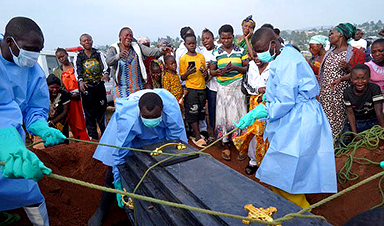
Ebola kills 2,300 in three months with no vaccine available for Congo’s deadliest ever outbreak
It’s Congo’s 17th outbreak, with a toll that has eclipsed that of the country’s 2018-2020 outbreak when 2,299 deaths out of 3,481 cases were recorded. The latest data shows 101 new cases and 33 [...]

Beyond an Agency: How AI, Creativity and Commercialization Are Converging Into a New Growth Model
At a moment when AI is forcing a fundamental rethink of how work gets done, the life sciences industry is grappling with a deeper question: what role should human creativity play in an increasingly [...]

New $60 Blood Test Detects Lung Cancer Without Costly DNA Sequencing
A simple blood test that detects chemical changes in DNA identified more than 90% of stage 2-4 lung cancers in an early study, without relying on costly DNA sequencing. Researchers at Tel Aviv University and collaborating [...]

Reducing drug development failures with human-relevant models and AI
Professor Joseph C. Wu of Stanford University explains how stem cells, human-relevant models and AI are helping researchers predict which drug candidates are most likely to succeed before clinical trials. Researchers now have access [...]
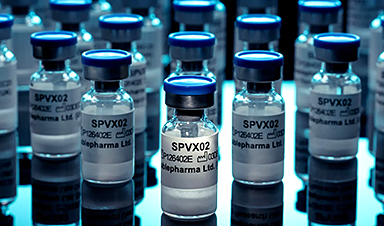
Half of vaccines are binned – ‘fridge-free’ versions could change that
Vaccines that do not need to be kept cool in a fridge have been successfully trialed in patients for the first time, say UK scientists. Currently, most vaccines need to be refrigerated or frozen [...]

Mushroom Mystery: The Fungus That Makes People See Tiny Humans
A mushroom sold in markets and served in restaurants in Southwest China has an unusual warning attached to it: cook it thoroughly, or you may start seeing tiny people. For decades, people have reported [...]