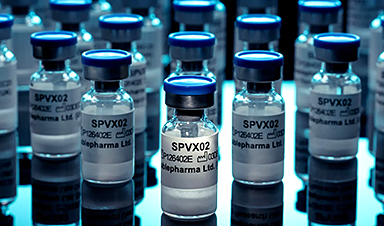
Vaccines that do not need to be kept cool in a fridge have been successfully trialed in patients for the first time, say UK scientists.
Currently, most vaccines need to be refrigerated or frozen – but around half are wasted each year, mainly because they become unusable after getting too hot or too cold.
In the trial, which involved 60 volunteers, company Stablepharma converted a liquid tetanus-diphtheria vaccine into a “fridge-free” version by keeping it as a dry powder for a year at room temperature before mixing it with water and injecting it.
The ‘cold chain’ challenge
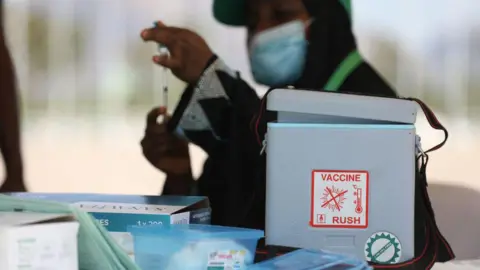
Vaccines often need strict temperature control during storage and transportation, from the moment of manufacture up until being injected into a patient’s arm.
This practice is known as the “cold chain” and is especially challenging in the poorest and most remote parts of the world or in war zones, where fridges may be scarce and electricity unreliable.
The UK’s National Institute for Health and Care Research (NIHR) has been testing the new “fridge-free” approach.
The new technology is inspired by resurrection plants, which dry out and appear dead during a drought, before springing back to life when it rains.
The trial dried out the tetanus-diphtheria vaccine with trehalose to protect its vital components.
 Getty Images
Prof Saul Faust, the director of the NIHR Clinical Research Facility in Southampton, said it gave “equivalent” immune responses to the conventional vaccine as well as being “safe and well tolerated” in the early stage studies.
Faust added: “This obviously has potential to remove cold chain dependence, reduce wastage and improve access.”
A larger trial involving 160 people is already due to start in the coming months.
This would be the final stage of research as the original vaccine is already approved and licensed so there is no requirement to perform large-stage trials needed for a novel vaccine.
The studies are being done to meet the World Health Organization’s (WHO) goal of a vaccine that survives at 30C and 75% relative humidity.
There is not one single reason vaccines are wasted and disposed of, but the WHO estimates this is the fate of half of all vaccines globally. This can include damage in transport, passing the expiration date, and unused doses from multi-dose vials, but a major factor are failures in the cold chain.
 Getty Images
Prof Sir Jonathan Van-Tam, the former deputy chief medical officer for England and an advisor to Stablepharma, used to work in remote field clinics.
“I can remember taking out vaccines in cool boxes… doing that on really inhospitable roads where one couldn’t predict getting from A to B in a short period of time and there was always this nervousness about maintaining the cold chain in time to get the vaccines into arms of waiting children.”
The new mRNA vaccine could not be adapted using this approach, but many current vaccines could be stabilized with the sugar trehalose.
It could also work for some medicines – such as monoclonal antibodies – which need to be kept in a fridge.
Prof Tuck Seng Wong is the director of the UK-Southeast Asia Vaccine Manufacturing Research Hub but was not involved in the study. He said it was “very exciting” and a “significant breakthrough in UK science”.
But added there were still “several areas” that still needed investigation, including how stable the vaccines are when the temperature is regularly fluctuating and how well the vaccines perform in both larger and more ethnically diverse groups of people.
The findings have been published in eClinicalMedicine, part of the Lancet group of journals.
Ephrem Tekle Lemango, the associate director of immunization at Unicef, said immunisation was a “life-saving service that depends on refrigeration” so “this innovation could help us vaccinate more children and pave the way for a future of fridge-free vaccines”.
Dr Bruce Roser, the founder of Stablepharma, said: “Reliable and safe fridge-free vaccines could be a game-changer for global health – helping life-saving vaccines reach millions more people, wherever they live, and making immunization programms more sustainable, reliable and equitable for future generations.”

News – Curated by Amanda Scott, Alias Group Creative
Follow her on Bluesky
Cocaine plays with mind, hijacks brain circuit, drives increasingly rigid and repetitive behavior
Researchers have found that cocaine hijacks brain circuit, which to drive increasingly rigid and repetitive behavior. The brain circuit that normally participates in selecting natural mouth and face movements, but which becomes disproportionately engaged [...]
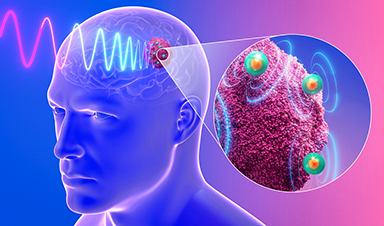
Injectable nanodevices could provide effective treatment for drug-resistant glioblastoma
The brain cancer glioblastoma is one of the most aggressive and treatment-resistant cancers known to medicine, carrying a median survival of just 12-15 months, even with the best available care. Now, researchers at the [...]
New Treatment Cuts “Bad” Cholesterol in Half for a Full Year
A single infusion of an experimental CRISPR-Cas9 therapy was reported to safely lower LDL cholesterol by 52.5% and triglycerides by 47.8%, as measured 12 months after treatment. What if one infusion could keep cholesterol [...]
Too Much RNA Can Drain a Cell’s Energy, Scientists Discover
A virus may cripple a cell’s power supply simply by producing too much of a molecule the cell needs to survive. New research from the Texas A&M College of Veterinary Medicine and Biomedical Sciences [...]

West African scientists warn of weakening health systems and urge stronger outbreak detection
LOME, Togo (AP) — West African laboratory scientists called on governments Friday to strengthen capacity to detect disease outbreaks to avoid another major outbreak, saying health systems across the region are becoming weaker. Participants [...]

A Little-Known Protein Could Point to a New Way To Treat Alzheimer’s
A study suggests that increasing SORLA protein levels could help treat Alzheimer’s disease and other disorders involving tau protein. Increasing SORLA, a protein with a protective role in the brain, helped mice withstand damage [...]
Cancer’s Hidden Antioxidant Shield Helps It Escape the Immune System
Blocking an antioxidant protein that tumors use to suppress immune attacks improved cancer immunotherapy responses in mice. Cancer cells can release antioxidants that interfere with the immune cells trying to kill them. Researchers have [...]

Scientists Find a Berry Compound That Helps Muscle Cells Burn Fat
Pterostilbene, a compound found naturally in some foods, affects how skeletal muscles process fats by stabilizing a protein called PPARδ and increasing its signaling activity. Pterostilbene, a natural compound found in blueberries, grapes, and [...]
Two Hidden Forces Help Build the Human Brain Before Birth
Scientists have uncovered two surprising forces that help guide how the human brain forms before birth. Before birth, the human brain is shaped in large part by an unusual class of stem cells known [...]
Researchers Uncover a Hidden Trigger Behind Chronic Inflammation
The findings offer new insights that could help guide the development of future therapies. A protein called human resistin may help flip on one of the immune system’s most powerful inflammatory switches. Researchers at [...]
Scientists Have Uncovered Previously Hidden Microbial Activity on Human Skin
The most abundant microbes on your skin may not be the ones doing most of the work. Human skin supports vast communities of bacteria, fungi, and viruses that can influence its protective barrier, immune [...]
Brazilian Tree Compounds Fight COVID-19 on Multiple Fronts
Scientists found compounds in a Brazilian tree that hit SARS-CoV-2 on multiple fronts, revealing a promising new lead in the search for COVID-19 treatments. Researchers have found that galloylquinic acids extracted from the leaves [...]
Cutting Two Amino Acids Slowed Prostate Cancer in Mice
A newly identified link between amino acid metabolism and cholesterol production may help prostate tumors adapt to hormone therapy. Prostate cancer can find ways around treatments designed to deprive tumors of the hormones they [...]

Largest-Ever Physics Survey Raises New Doubts About Our Model of the Universe
Physicists around the world remain deeply divided on key mysteries of the universe, from dark matter to quantum gravity. The standard cosmological model failed to gain majority support, and no leading theory dominated the [...]

Scientists Just Overturned a 100-Year-Old Belief About Bacteria in the Lungs
New findings raise questions about the role of microbes living in the lungs. More than 35 trillion bacteria live throughout the human body, forming microbiomes in the gut, mouth, lungs, skin, and urogenital tract. [...]
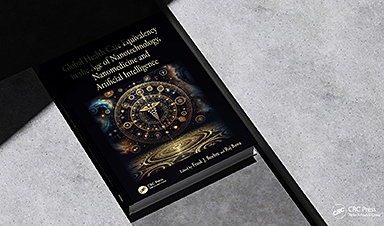
GHCE Concept
From the preface of the book Global Health Care Equivalency in the Age of Nanotechnology, Nanomedicine and Artificial Intelligence, Edited by Frank Boehm: Since the publication of my first book (Nanomedical Device and Systems [...]