Prevention is suddenly everywhere in NHS reform. The recent £340m community pharmacy deal is moving more services onto the high street.
Community Diagnostic Centres are being expanded, and the Neighbourhood Health Framework sets out a clearer route towards more preventative, local care.
The government’s NHS Modernisation Bill points in the same direction, with proposals for a Single Patient Record aimed at improving patient safety and experience by giving clinicians better access to relevant patient information.
But this shift will only work if patients trust the systems behind it.
The Single Patient Record has already raised concerns around privacy, consent and access to sensitive health data. For most patients, meanwhile, healthcare still begins in the same place: waiting for a GP appointment, unsure what happens next and navigating fragmented services.
A recent report from the Royal College of GPs and the Patients Association describes NHS services as ‘confusing, frustrating and demoralising’, particularly for people with long-term conditions and accessibility needs.
That gap matters. Prevention is not just a policy ambition, it is something patients need to feel in their day-to-day experience of healthcare. It should mean fewer unnecessary appointments, clearer information, faster reassurance and a system that carries more of the burden around referrals, results and next steps.
Here are four shifts needed to close the gap between prevention as strategy and prevention as lived patient experience.
1. Prevention must move beyond the GP surgery
With pressure on GP surgeries intensifying, they cannot remain the default route into every preventative intervention. Recent warnings that GPs are too overloaded to properly support older people at risk of falls underline the problem with making general practice the main gateway into prevention.
If earlier intervention depends on patients securing GP appointments before the system can act, prevention will struggle to reach the people most at risk.
The NHS already has examples of what a different model can look like. Its bowel screening programme now sends around 8.7 million home-testing kits a year, and NHS England says bowel screening has detected 70,000 cancers since the programme began.
At-home HPV self-sampling is also being rolled out to eligible groups, offering another example of screening designed around real lives rather than clinic attendance alone.
The same principle could apply more widely. Remote blood pressure monitoring, cholesterol checks, blood glucose monitoring and other at-home or community-based diagnostics all show how risks can be detected earlier, often before patients ever step into a waiting room.
The recent community pharmacy deal reinforces this shift, with more services from blood pressure checks to support for patients prescribed antidepressants being delivered through community pharmacies.
Together with home testing and community diagnostics, this shows how prevention can move into the places where people already live, work and seek advice. The challenge is to make these services feel joined up rather than creating another set of disconnected routes for patients to navigate.
2. Patients should not have to carry a fragmented system
For many people, especially those with chronic conditions, the hardest part of healthcare can be navigating the system around the illness: chasing referrals; repeating information and trying to understand what happens next.
The proposed Single Patient Record is designed to tackle this problem. In principle, giving clinicians the right information at the right time could reduce duplication, improve safety and stop patients having to repeat their medical histories. The government says it could help deliver 20,000 fewer A&E visits a year and save more than £20 million by reducing medication errors.
‘Prevention becomes real when the system carries more of that complexity for patients, not the other way around’
If shared records are to support prevention, privacy, consent and confidentiality need to be designed in from the start.
What is more, a shared record only matters if it changes what patients experience. Too often, people still become the link between disconnected parts of the system, carrying information, chasing updates and coordinating care across GP surgeries, hospitals, pharmacies and community services.
Prevention becomes real when the system carries more of that complexity for them. The aim should be a clearer care journey, where patients are not left wondering whether a referral has been made, a test result has been seen or anyone has the full picture.
3. Digital services need the data foundation to resolve problems earlier
The risk with online triage is that it passes patients on without enough clinical context to resolve problems sooner.
Research into NHS 111 Online found that some users were advised to contact emergency services in situations they felt were unnecessary, while wider evidence on digital triage tools suggests their impact on urgent care demand remains limited and uncertain.
The problem is not digital triage itself, but triage without the data, diagnostics and clinical context needed to support earlier intervention.
In practice, that could mean flagging rising frailty in an older adult, sending tailored reminders to high-risk patients who have missed cancer screening or arranging a same-day review for asthma symptoms before they worsen.
Earlier intervention relies on connected data, service design and clinical workflow rather than headline-grabbing AI. Prevention works when information moves fast enough for the system to act earlier, rather than simply redirecting patients once they are already under pressure.
4. The NHS can learn from systems built around prevention
Other health systems already show what more home-based, preventative care can look like.
In Australia, Hospital in the Home delivers hospital-level care in domestic settings for appropriate patients, supported by clinical governance, monitoring and remote input.
In The Netherlands, the Buurtzorg model uses small, self-managing neighbourhood teams to provide personal, social and clinical care in people’s homes. This approach has been associated with fewer emergency hospital admissions and shorter hospital stays, while using simple technology to support clinical teams and peer learning.
The NHS does not need to copy these systems wholesale. But it can learn from the principle behind them: prevention becomes more effective when care is organised around people’s lives, not around institutional boundaries.
The UK is already beginning to move in this direction. The government has announced £237 million for Community Diagnostic Centres, including new, expanded and enhanced sites to bring tests and scans closer to home.
Neighbourhood health teams are also pushing more care into community settings.
The challenge is scale. These initiatives must not become another layer of disconnected services. They need the digital maturity and shared data foundations to work as one system.
Final thought: progress is better than perfection
In prevention, great cannot become the enemy of good. The NHS does not need to wait for a single breakthrough technology to make prevention feel real for patients.
If it can scale the tools that already exist, from home testing and community diagnostics to better digital triage, joined-up records and clearer follow-up, the most visible change may be simple: fewer people starting their healthcare journey in a GP waiting room.

News – Curated by Amanda Scott, Alias Group Creative
Follow her on Bluesky
Long-Acting HIV Shots Could Solve a Major Treatment Challenge for Young People
A major African trial suggests that changing how HIV treatment is delivered could significantly improve viral suppression in adolescents. Young people with HIV were more likely to keep the virus suppressed when they received [...]

WHO Factsheets – The top 10 causes of death
In 2023, the 10 leading causes of death accounted for 33 million deaths, or 54% of the total 61 million deaths worldwide. The top global causes of death, in order of total number of lives lost, [...]

Aging Cells May Be Hiding From the Immune System – Scientists Think They Know How
Your immune system is supposed to clear out damaged cells. Researchers may have found how some of them hide and linger as the body ages. Researchers led by Cedars-Sinai Health Sciences University have identified [...]

Your Voice May Reveal How Fast Your Brain Is Aging
Researchers have developed a machine-learning “speech clock” that estimates age from subtle patterns in how people speak and what they say. It is possible that people’s voices may contain certain signals of aging that [...]

Optogenetics Pioneers Win 2026 Nobel Prize in Physiology or Medicine
The 2026 Nobel Prize in Physiology or Medicine has been awarded to Peter Hegemann, Georg Nagel, and Karl Deisseroth for the development of optogenetics, a revolutionary technology that uses light to control individual neurons [...]

Molecular Manufacturing: The Future of Nanomedicine – From NanoappsMedical Inc.
This book explores the revolutionary potential of atomically precise manufacturing technologies to transform global healthcare, as well as practically every other sector across society. This forward-thinking volume examines how envisaged Factory@Home systems might enable the cost-effective [...]

What is ‘American Covid’ and how bad is it?
Cases of so-called ‘American Covid’ are on the rise in the UK. The strain is officially called XFG, or ‘Stratus’, and is the most common variant in North America, hence the name. It might soon [...]
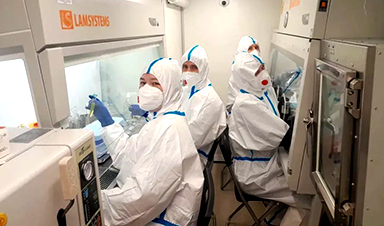
Researcher at Russian plague laboratory dies of ‘unknown’ infection
Russian authorities have imposed "anti-epidemic measures" after a laboratory worker at an institute in Siberia dedicated to studying the plague and other infectious diseases died of a mysterious illness. The researcher, a 28-year-old female [...]

GHCE Concept
From the preface of the book Global Health Care Equivalency in the Age of Nanotechnology, Nanomedicine and Artificial Intelligence, Edited by Frank Boehm: Since the publication of my first book (Nanomedical Device and Systems [...]

A Surprising Brain Signal Could Explain Why Eating Less Protein Extends Lifespan
A new paper suggests that limiting protein intake triggers a coordinated response throughout the body that may help explain how protein restriction affects healthy aging. Animals respond to protein restriction, or reduced protein in [...]

Back and shoulder surgery is often worse than useless
Millions of operations should be scrapped SIX IN TEN Britons have surgery at some point. So do lots of Americans, at a cost of perhaps $500bn a year, a third of all spending on [...]
Cocaine plays with mind, hijacks brain circuit, drives increasingly rigid and repetitive behavior
Researchers have found that cocaine hijacks brain circuit, which to drive increasingly rigid and repetitive behavior. The brain circuit that normally participates in selecting natural mouth and face movements, but which becomes disproportionately engaged [...]
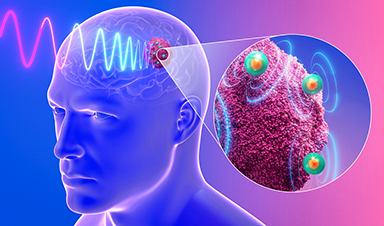
Injectable nanodevices could provide effective treatment for drug-resistant glioblastoma
The brain cancer glioblastoma is one of the most aggressive and treatment-resistant cancers known to medicine, carrying a median survival of just 12-15 months, even with the best available care. Now, researchers at the [...]
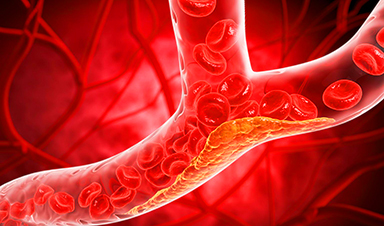
New Treatment Cuts “Bad” Cholesterol in Half for a Full Year
A single infusion of an experimental CRISPR-Cas9 therapy was reported to safely lower LDL cholesterol by 52.5% and triglycerides by 47.8%, as measured 12 months after treatment. What if one infusion could keep cholesterol [...]

Too Much RNA Can Drain a Cell’s Energy, Scientists Discover
A virus may cripple a cell’s power supply simply by producing too much of a molecule the cell needs to survive. New research from the Texas A&M College of Veterinary Medicine and Biomedical Sciences [...]

West African scientists warn of weakening health systems and urge stronger outbreak detection
LOME, Togo (AP) — West African laboratory scientists called on governments Friday to strengthen capacity to detect disease outbreaks to avoid another major outbreak, saying health systems across the region are becoming weaker. Participants [...]