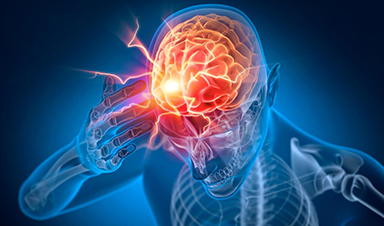
Large-scale evidence suggests cannabis, cocaine, and amphetamines may directly raise stroke risk, including in younger adults.
As recreational drug use becomes increasingly common, researchers are uncovering evidence that its health consequences may extend far beyond addiction and overdose. A Cambridge-led study analyzing data from more than 100 million people has found that cannabis, cocaine, and amphetamines are linked to a significantly higher risk of stroke, with some of the strongest effects seen in younger adults.
Stroke is the world's third leading cause of death and disability combined, yet many of its risk factors are considered preventable. While high blood pressure, smoking, and poor diet are well-established contributors, scientists have increasingly questioned whether commonly used recreational drugs may also play a direct role.
In 2024, around 2.9 million adults aged 16 to 59 in England and Wales reported using a legal or illegal recreational drug within the previous year. In the United States, more than half of people aged 12 and older have used substances such as cannabis, cocaine, or opioids at least once. Despite their widespread use, the long-term effects of these drugs on stroke risk have remained uncertain.
Vast data sharpen risk
To examine the question more closely, researchers from the Department of Clinical Neurosciences at the University of Cambridge carried out a meta-analysis of studies involving more than 100 million people. A meta-analysis pools and analyzes cohort data from the published evidence. By combining studies that may be too small or inconsistent on their own, this method can produce stronger conclusions.
The findings, published in the International Journal of Stroke, showed that cocaine and amphetamine use were each linked to roughly double the risk of stroke (cocaine increased the risk by 96%, amphetamines by 122%). Cannabis use was associated with an increase of about 37%. The researchers did not find a statistically significant association between opioid use and stroke risk.
When the analysis was limited to people younger than 55, amphetamine use was associated with an almost threefold rise in stroke risk (an increase of 174%). Cannabis use also raised stroke risk, though by a smaller amount (14%), while cocaine use was linked to a 97% increase.
Genetics points beyond correlation
To investigate whether these relationships might be causal, the researchers also used a statistical method called Mendelian randomization. This approach examines naturally occurring genetic variants related to risk factors and stroke to assess whether evidence supports a causal association with a specific risk factor.
Problematic alcohol use was associated with a higher risk of cardioembolic stroke and large artery stroke, while alcohol addiction increased the overall risk of stroke.
The researchers could not apply Mendelian randomization to amphetamine use because large genetic datasets containing information on amphetamine use are not currently available.
Stroke pathways offer clues
The researchers suggest several possible mechanisms that may explain why these drugs are associated with higher stroke risk. These include sudden blood pressure spikes, blood vessel spasm and narrowing, heart rhythm problems, increased blood clotting (especially cannabis), and inflammation or vasculitis (especially amphetamines). All of these are established pathways that can contribute to ischemic strokes, which are caused by blood clots, and hemorrhagic strokes.
Dr. Megan Ritson from the Stroke Research Group at the University of Cambridge said, "This is the most comprehensive analysis ever conducted on recreational drug use and stroke risk and provides compelling evidence that drugs like cocaine, amphetamines, and cannabis are causal risk factors for stroke. These findings give us stronger evidence to guide future research and public health strategies."
Dr. Eric Harshfield, Alzheimer's Society Research Fellow at the Department of Clinical Neurosciences, said: "Our analysis suggests that it is these drugs themselves that increase the risk of stroke, not just other lifestyle factors among users. Taken together, our findings emphasize the importance of public health measures to reduce substance abuse as a way of helping also reduce stroke risk."
DOI: 10.1177/17474930261418926
The research was funded by the British Heart Foundation, with additional support from the National Institute for Health and Care Research Cambridge Biomedical Research Center.

News – Curated by Amanda Scott, Alias Group Creative
Follow her on Bluesky
Too Much RNA Can Drain a Cell’s Energy, Scientists Discover
A virus may cripple a cell’s power supply simply by producing too much of a molecule the cell needs to survive. New research from the Texas A&M College of Veterinary Medicine and Biomedical Sciences [...]

West African scientists warn of weakening health systems and urge stronger outbreak detection
LOME, Togo (AP) — West African laboratory scientists called on governments Friday to strengthen capacity to detect disease outbreaks to avoid another major outbreak, saying health systems across the region are becoming weaker. Participants [...]

A Little-Known Protein Could Point to a New Way To Treat Alzheimer’s
A study suggests that increasing SORLA protein levels could help treat Alzheimer’s disease and other disorders involving tau protein. Increasing SORLA, a protein with a protective role in the brain, helped mice withstand damage [...]
Cancer’s Hidden Antioxidant Shield Helps It Escape the Immune System
Blocking an antioxidant protein that tumors use to suppress immune attacks improved cancer immunotherapy responses in mice. Cancer cells can release antioxidants that interfere with the immune cells trying to kill them. Researchers have [...]

Scientists Find a Berry Compound That Helps Muscle Cells Burn Fat
Pterostilbene, a compound found naturally in some foods, affects how skeletal muscles process fats by stabilizing a protein called PPARδ and increasing its signaling activity. Pterostilbene, a natural compound found in blueberries, grapes, and [...]
Two Hidden Forces Help Build the Human Brain Before Birth
Scientists have uncovered two surprising forces that help guide how the human brain forms before birth. Before birth, the human brain is shaped in large part by an unusual class of stem cells known [...]
Researchers Uncover a Hidden Trigger Behind Chronic Inflammation
The findings offer new insights that could help guide the development of future therapies. A protein called human resistin may help flip on one of the immune system’s most powerful inflammatory switches. Researchers at [...]
Scientists Have Uncovered Previously Hidden Microbial Activity on Human Skin
The most abundant microbes on your skin may not be the ones doing most of the work. Human skin supports vast communities of bacteria, fungi, and viruses that can influence its protective barrier, immune [...]
Brazilian Tree Compounds Fight COVID-19 on Multiple Fronts
Scientists found compounds in a Brazilian tree that hit SARS-CoV-2 on multiple fronts, revealing a promising new lead in the search for COVID-19 treatments. Researchers have found that galloylquinic acids extracted from the leaves [...]
Cutting Two Amino Acids Slowed Prostate Cancer in Mice
A newly identified link between amino acid metabolism and cholesterol production may help prostate tumors adapt to hormone therapy. Prostate cancer can find ways around treatments designed to deprive tumors of the hormones they [...]

Largest-Ever Physics Survey Raises New Doubts About Our Model of the Universe
Physicists around the world remain deeply divided on key mysteries of the universe, from dark matter to quantum gravity. The standard cosmological model failed to gain majority support, and no leading theory dominated the [...]
Scientists Just Overturned a 100-Year-Old Belief About Bacteria in the Lungs
New findings raise questions about the role of microbes living in the lungs. More than 35 trillion bacteria live throughout the human body, forming microbiomes in the gut, mouth, lungs, skin, and urogenital tract. [...]

GHCE Concept
From the preface of the book Global Health Care Equivalency in the Age of Nanotechnology, Nanomedicine and Artificial Intelligence, Edited by Frank Boehm: Since the publication of my first book (Nanomedical Device and Systems [...]
Novartis, Ionis drug failure spurs questions
Pelacarsen didn’t protect heart health despite lowering levels of a protein particle, “Lp(a),” in a large clinical trial — a result with important implications for cardiovascular drug research. Dive Brief: An RNA drug from [...]
New injectable treatment helps the brain rebuild after stroke
Biomedical engineers at Duke University have created an injectable biomaterial that may help the brain recover from damage left behind by an ischemic stroke. In experiments with mice, the material transformed the cavity created [...]
Scientists Discover a Hidden “Immune Organ” Inside the Skull
Researchers discovered lymph node-like immune hubs inside skull bone marrow that appear to act as rapid-response centers for the brain. For decades, the brain was thought to operate largely apart from the immune system. [...]