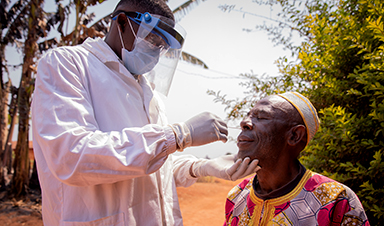
The current Bundibugyo Ebola outbreak in the Democratic Republic of the Congo (DRC) and Uganda is exposing dangerous gaps in global health security. Experts warn that, amid the aid cuts and ongoing conflict in the region, the outbreak could become one of the deadliest Ebola epidemics to date. In the absence of an approved vaccine, the main tools for control are trust, community collaboration, and systemic empathy.
Systemic empathy describes how health systems care for people, including their own staff. It prevents stigma, which can catalyse a vicious cycle of contagion. In a stigmatised environment, symptomatic people and their families often avoid medical care out of fear of discrimination, forced isolation, and the denial of proper burial rites. At community level, the abrupt enforcement of coercive or heavily militarised measures intensify stigma, fuel rumours, and undermine cooperation.
The arson of an Ebola treatment centre in Rwampara, DRC, on 21 May 2026 is an example of how rapidly mistrust can destabilise response efforts. By contrast, keeping people informed about the risks of Ebola infection and adopting community centred approaches in the outbreak response improve trust and enhance participation in prevention and healthcare.
Collective government and community support for frontline health workers is equally important. In previous Ebola outbreaks, as well as the covid-19 pandemic, frontline workers were let down by instances of delayed or inadequate supply of personal protective equipment, failure to protect them from hostility, and unfulfilled promises of financial and emotional support. Frontline workers are the only defence between populations and the virus. A rift in frontline workers’ motivation can start a chain reaction of mistrust and stigma, disrupting the entire response.
With communities, it is vital to show that Ebola protocols are protective, not punitive. Steps can be taken to reduce tensions while preserving infection prevention and control standards. For example, building community care centres for patients awaiting test results—where families can monitor their loved ones from a safe distance—increases the likelihood that families will consent to patient isolation in specialised Ebola treatment units. Maintaining communication between patients in isolation and family through digital technologies and regular updates can further reduce the fear associated with treatment centres.
Safe and dignified burial involves informing the families at each step. Respecting religious practices, engaging families in customary prayers after the burial, and ensuring infection prevention throughout the process has proven more sustainable than rigid models that exclude families. If the deceased is a female, a trained female staff or family member should prepare the body for burial using full protective equipment.
Community engagement in outbreak settings should extend beyond traditional leadership structures to include women and young people, who are often central to caregiving and community mobilisation but remain excluded from decision making processes. The Rwampara incident is a stark example of the consequences of disengagement. The man who died was a popular footballer whose mother believed he had typhoid fever, and the crowd, upset by his death, reportedly believed the virus was a hoax.
To support frontline workers, it is critical that government and partner organisations are seen to fulfil their commitments rather than making empty promises. Health workers are already operating under extreme psychological and physical stress arising from exposure risk, shortages of protective equipment, insecurity, community hostility, and the deaths of colleagues. Government and health agencies must prioritise adequate protective equipment, psychosocial support, security arrangements, fair financial compensation, and meaningful community partnership through outreach activities.
Support and protection of frontline workers is especially important in areas such as Ituri province, DRC, where sustained conflict and insecurity complicate the outbreak operations.9 This needs to be balanced, since excessive militarisation of Ebola responses may itself erode public trust by creating perceptions that health operations are aligned with political or armed actors. Community-supported and locally negotiated protection mechanisms—such as engaging local volunteers in providing security to health workers moving to and from their health post—may be more effective than overt displays of force.3
In the absence of a licenced vaccine specifically for Bundibugyo Ebola, a community and its healthcare workers must be approached with systemic empathy. This is the core of outbreak response.
Footnotes
Competing interests: ZH is adviser to Gavi, the Vaccine Alliance (Eastern Mediterranean Constituency). He led Johns Hopkins University’s Health and Risk Communication Programmes in 2005-09 and 2014-18, and chaired Pakistan’s national task force on risk communication during the covid-19 pandemic.
AI statement: During the preparation of this work, the author used ChatGPT 5.2 (OpenAI) to improve spelling and ensure consistency in British English usage. After using this tool, the author reviewed and edited the content as needed and takes full responsibility for the content of the published article.
Provenance: Not commissioned, not externally peer reviewed.

News – Curated by Amanda Scott, Alias Group Creative
Follow her on Bluesky
Aging Cells May Be Hiding From the Immune System – Scientists Think They Know How
Your immune system is supposed to clear out damaged cells. Researchers may have found how some of them hide and linger as the body ages. Researchers led by Cedars-Sinai Health Sciences University have identified [...]

Your Voice May Reveal How Fast Your Brain Is Aging
Researchers have developed a machine-learning “speech clock” that estimates age from subtle patterns in how people speak and what they say. It is possible that people’s voices may contain certain signals of aging that [...]

Optogenetics Pioneers Win 2026 Nobel Prize in Physiology or Medicine
The 2026 Nobel Prize in Physiology or Medicine has been awarded to Peter Hegemann, Georg Nagel, and Karl Deisseroth for the development of optogenetics, a revolutionary technology that uses light to control individual neurons [...]

Molecular Manufacturing: The Future of Nanomedicine – From NanoappsMedical Inc.
This book explores the revolutionary potential of atomically precise manufacturing technologies to transform global healthcare, as well as practically every other sector across society. This forward-thinking volume examines how envisaged Factory@Home systems might enable the cost-effective [...]

What is ‘American Covid’ and how bad is it?
Cases of so-called ‘American Covid’ are on the rise in the UK. The strain is officially called XFG, or ‘Stratus’, and is the most common variant in North America, hence the name. It might soon [...]

Researcher at Russian plague laboratory dies of ‘unknown’ infection
Russian authorities have imposed "anti-epidemic measures" after a laboratory worker at an institute in Siberia dedicated to studying the plague and other infectious diseases died of a mysterious illness. The researcher, a 28-year-old female [...]

GHCE Concept
From the preface of the book Global Health Care Equivalency in the Age of Nanotechnology, Nanomedicine and Artificial Intelligence, Edited by Frank Boehm: Since the publication of my first book (Nanomedical Device and Systems [...]

A Surprising Brain Signal Could Explain Why Eating Less Protein Extends Lifespan
A new paper suggests that limiting protein intake triggers a coordinated response throughout the body that may help explain how protein restriction affects healthy aging. Animals respond to protein restriction, or reduced protein in [...]

Back and shoulder surgery is often worse than useless
Millions of operations should be scrapped SIX IN TEN Britons have surgery at some point. So do lots of Americans, at a cost of perhaps $500bn a year, a third of all spending on [...]

Cocaine plays with mind, hijacks brain circuit, drives increasingly rigid and repetitive behavior
Researchers have found that cocaine hijacks brain circuit, which to drive increasingly rigid and repetitive behavior. The brain circuit that normally participates in selecting natural mouth and face movements, but which becomes disproportionately engaged [...]
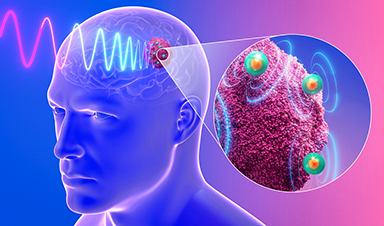
Injectable nanodevices could provide effective treatment for drug-resistant glioblastoma
The brain cancer glioblastoma is one of the most aggressive and treatment-resistant cancers known to medicine, carrying a median survival of just 12-15 months, even with the best available care. Now, researchers at the [...]
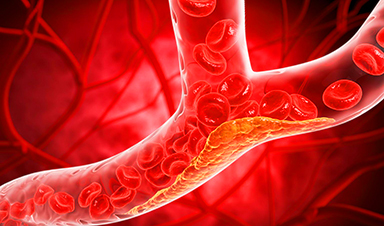
New Treatment Cuts “Bad” Cholesterol in Half for a Full Year
A single infusion of an experimental CRISPR-Cas9 therapy was reported to safely lower LDL cholesterol by 52.5% and triglycerides by 47.8%, as measured 12 months after treatment. What if one infusion could keep cholesterol [...]

Too Much RNA Can Drain a Cell’s Energy, Scientists Discover
A virus may cripple a cell’s power supply simply by producing too much of a molecule the cell needs to survive. New research from the Texas A&M College of Veterinary Medicine and Biomedical Sciences [...]
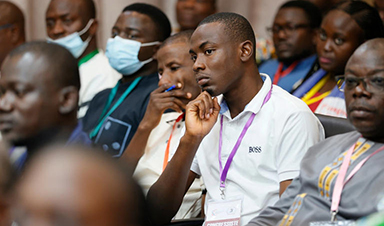
West African scientists warn of weakening health systems and urge stronger outbreak detection
LOME, Togo (AP) — West African laboratory scientists called on governments Friday to strengthen capacity to detect disease outbreaks to avoid another major outbreak, saying health systems across the region are becoming weaker. Participants [...]

A Little-Known Protein Could Point to a New Way To Treat Alzheimer’s
A study suggests that increasing SORLA protein levels could help treat Alzheimer’s disease and other disorders involving tau protein. Increasing SORLA, a protein with a protective role in the brain, helped mice withstand damage [...]
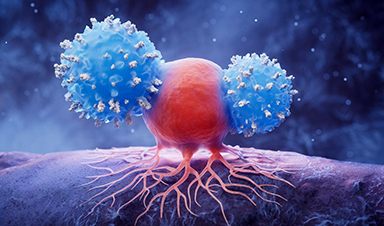
Cancer’s Hidden Antioxidant Shield Helps It Escape the Immune System
Blocking an antioxidant protein that tumors use to suppress immune attacks improved cancer immunotherapy responses in mice. Cancer cells can release antioxidants that interfere with the immune cells trying to kill them. Researchers have [...]