Scientists found that one tiny genetic change may determine whether a bat virus stays in bats or becomes a human threat.
Most infectious disease outbreaks begin when a virus or other pathogen crosses from animals into people. Many scientists believe that is how the COVID-19 pandemic began, with SARS-CoV-2, the virus responsible for COVID-19, originating from a family of coronaviruses found in bats.
Now, researchers from the UCSF Quantitative Biosciences Institute, Icahn School of Medicine at Mount Sinai, Institut Pasteur, and Fred Hutchinson Cancer Center have uncovered evidence that a single amino acid change in a coronavirus protein can dramatically alter how the virus interacts with the immune systems of bats and humans. Their findings offer new insight into how an otherwise harmless animal virus can evolve into one capable of causing serious disease in people.
The research was published in Cell Host & Microbe.
A Tiny Genetic Difference With a Big Impact
To investigate what allows some coronaviruses to infect humans, the team compared SARS-CoV-2 with a closely related bat coronavirus called RaTG13, which infects bats but is not known to infect people. Using the first laboratory-grown lung cell line developed from the greater horseshoe bat, the researchers examined how each virus interacted with immune proteins in both bat and human lung cells.
One viral protein, known as OrfB9, stood out. The SARS-CoV-2 and RaTG13 versions of OrfB9 differ by just one amino acid out of roughly 100, yet that tiny difference had striking effects.
In human lung cells, the SARS-CoV-2 version of OrfB9 shut down an important immune alarm system, allowing the virus to replicate more easily. In bat lung cells, the RaTG13 version had the opposite effect, activating an immune protein that helped keep the virus under control.
Clues to How Viruses Cross Species
The discovery highlights how even the smallest genetic changes can influence whether a virus remains confined to animals or gains the ability to infect humans.
"The difference between a virus that stays in bats and one that spills over into humans and causes catastrophic disease can come down to remarkably small genetic changes," said Nevan J. Krogan, PhD, director of QBI and senior author of the study. "By mapping these interactions at the protein level — across two viruses and two species — we can read the molecular signatures that predict spillover risk. It's the kind of early warning system the world needs."
By identifying the molecular changes that alter interactions between viruses and the immune system, the researchers hope their work will improve scientists' ability to recognize animal viruses with the greatest potential to spill over into humans before they spark future outbreaks.
Reference: "Coronavirus protein interaction mapping in bat and human cells reveals network rewiring governing immune evasion and zoonotic potential" by Jyoti Batra, Magdalena Rutkowska, Yuan Zhou, Chengjin Ye, Rithika Adavikolanu, Janet M. Young, Durga Anand, Sooraj Verma, Haripriya Parthasarathy, Martin Gordon, Shivali Malpotra, Anastasija Cupic, Thomas Kehrer, Melanie Dos Santos, Ronald Benjamin, Jack M. Moen, Declan M. Winters, Vincent Caval, Ajda Rojc, Ignacio Mena, Sadaf Aslam, Carles Martinez-Romero, Isabela Conde Viñas, Zain Khalil, Keith Farrugia, Fernando Villalón-Letelier, Atoshi Banerjee, Dafna Tussia-Cohen, Amy Diallo, Sourobh Maji, Monita Muralidharan, Helene Foussard, Irene P. Chen, Rotem Fuchs, C.J. San Felipe, Lorena Zuliani-Alvarez, Promisree Choudhury, Kirsten Obernier, Ségolène Gracias, Rahul K. Suryawanshi, Boris Bonaventure, Carlos Ibáñez, Jeffrey R. Johnson, Javier Juste, Lars Pache, Robert M. Stroud, Kliment A. Verba, James S. Fraser, Harm van Bakel, Taha Y. Taha, Melanie Ott, Tzachi Hagai, Nolwenn Jouvenet, Caroline Demeret, Benjamin J. Polacco, Danielle L. Swaney, Ignacia Echeverria, Mehdi Bouhaddou, Manon Eckhardt, Harmit S. Malik, Luis Martinez-Sobrido, Lisa Miorin, Adolfo García-Sastre and Nevan J. Krogan, 13 May 2026, Cell Host & Microbe.
DOI: 10.1016/j.chom.2026.04.015
Authors: UCSF authors are Jyoti Batra, PhD; Yuan Zhou, MS; Rithika Adavikolanu; Durga Anand; Sooraj Verma; Martin Gordon, MS; Shivali Malpotra, MS; Jack M. Moen, PhD; Ajda Rojc, MS; Atoshi Banerjee, PhD; Sourobh Maji, PhD; Monita Muralidharan, PhD; Helene Foussard, PhD; Irene P. Chen, PhD; CJ San Felipe, PhD; Lorena Zuliani-Alvarez, PhD; Promisree Choudhury, PhD; Kirsten Obernier, PhD; Rahul Suryawanshi, PhD; Taha Y. Taha, PhD, PharmD; Kliment A. Verba, PhD; James S. Fraser, PhD; Robert M. Stroud, PhD, MA; Melanie Ott, MD, PhD; Ben Polacco, PhD; Danielle L. Swaney, PhD; Ignacia Echeverria, PhD; and Manon Eckhardt, PhD. For all authors see the paper.

News – Curated by Amanda Scott, Alias Group Creative
Follow her on Bluesky

Your Voice May Reveal How Fast Your Brain Is Aging
Researchers have developed a machine-learning “speech clock” that estimates age from subtle patterns in how people speak and what they say. It is possible that people’s voices may contain certain signals of aging that [...]
Optogenetics Pioneers Win 2026 Nobel Prize in Physiology or Medicine
The 2026 Nobel Prize in Physiology or Medicine has been awarded to Peter Hegemann, Georg Nagel, and Karl Deisseroth for the development of optogenetics, a revolutionary technology that uses light to control individual neurons [...]

Molecular Manufacturing: The Future of Nanomedicine – From NanoappsMedical Inc.
This book explores the revolutionary potential of atomically precise manufacturing technologies to transform global healthcare, as well as practically every other sector across society. This forward-thinking volume examines how envisaged Factory@Home systems might enable the cost-effective [...]

What is ‘American Covid’ and how bad is it?
Cases of so-called ‘American Covid’ are on the rise in the UK. The strain is officially called XFG, or ‘Stratus’, and is the most common variant in North America, hence the name. It might soon [...]
Researcher at Russian plague laboratory dies of ‘unknown’ infection
Russian authorities have imposed "anti-epidemic measures" after a laboratory worker at an institute in Siberia dedicated to studying the plague and other infectious diseases died of a mysterious illness. The researcher, a 28-year-old female [...]
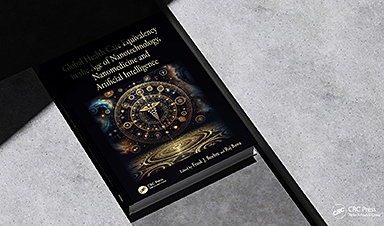
GHCE Concept
From the preface of the book Global Health Care Equivalency in the Age of Nanotechnology, Nanomedicine and Artificial Intelligence, Edited by Frank Boehm: Since the publication of my first book (Nanomedical Device and Systems [...]

A Surprising Brain Signal Could Explain Why Eating Less Protein Extends Lifespan
A new paper suggests that limiting protein intake triggers a coordinated response throughout the body that may help explain how protein restriction affects healthy aging. Animals respond to protein restriction, or reduced protein in [...]

Back and shoulder surgery is often worse than useless
Millions of operations should be scrapped SIX IN TEN Britons have surgery at some point. So do lots of Americans, at a cost of perhaps $500bn a year, a third of all spending on [...]
Cocaine plays with mind, hijacks brain circuit, drives increasingly rigid and repetitive behavior
Researchers have found that cocaine hijacks brain circuit, which to drive increasingly rigid and repetitive behavior. The brain circuit that normally participates in selecting natural mouth and face movements, but which becomes disproportionately engaged [...]
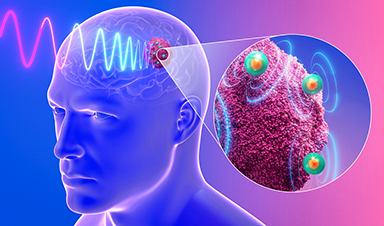
Injectable nanodevices could provide effective treatment for drug-resistant glioblastoma
The brain cancer glioblastoma is one of the most aggressive and treatment-resistant cancers known to medicine, carrying a median survival of just 12-15 months, even with the best available care. Now, researchers at the [...]
New Treatment Cuts “Bad” Cholesterol in Half for a Full Year
A single infusion of an experimental CRISPR-Cas9 therapy was reported to safely lower LDL cholesterol by 52.5% and triglycerides by 47.8%, as measured 12 months after treatment. What if one infusion could keep cholesterol [...]

Too Much RNA Can Drain a Cell’s Energy, Scientists Discover
A virus may cripple a cell’s power supply simply by producing too much of a molecule the cell needs to survive. New research from the Texas A&M College of Veterinary Medicine and Biomedical Sciences [...]
West African scientists warn of weakening health systems and urge stronger outbreak detection
LOME, Togo (AP) — West African laboratory scientists called on governments Friday to strengthen capacity to detect disease outbreaks to avoid another major outbreak, saying health systems across the region are becoming weaker. Participants [...]

A Little-Known Protein Could Point to a New Way To Treat Alzheimer’s
A study suggests that increasing SORLA protein levels could help treat Alzheimer’s disease and other disorders involving tau protein. Increasing SORLA, a protein with a protective role in the brain, helped mice withstand damage [...]
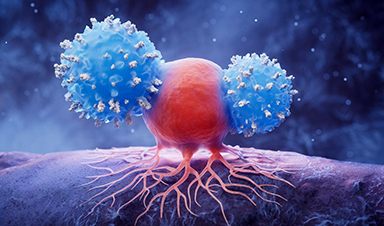
Cancer’s Hidden Antioxidant Shield Helps It Escape the Immune System
Blocking an antioxidant protein that tumors use to suppress immune attacks improved cancer immunotherapy responses in mice. Cancer cells can release antioxidants that interfere with the immune cells trying to kill them. Researchers have [...]

Scientists Find a Berry Compound That Helps Muscle Cells Burn Fat
Pterostilbene, a compound found naturally in some foods, affects how skeletal muscles process fats by stabilizing a protein called PPARδ and increasing its signaling activity. Pterostilbene, a natural compound found in blueberries, grapes, and [...]