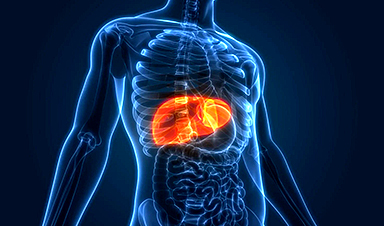
Engineered tissue grafts could help perform key liver functions and benefit thousands of people living with liver failure.
The liver is one of the body's hardest-working organs, carrying out hundreds of vital jobs, from filtering toxins and metabolizing medications to producing proteins essential for blood clotting. Yet when it fails, the only definitive treatment is often a transplant, a solution limited by a chronic shortage of donor organs.
MIT engineers have now developed injectable "mini livers" that, in mice, survived for at least two months while performing many of the functions of healthy liver tissue.
"We think of these as satellite livers. If we could deliver these cells into the body, while leaving the sick organ in place, that would provide booster function," says Sangeeta Bhatia, the John and Dorothy Wilson Professor of Health Sciences and Technology and of Electrical Engineering and Computer Science at MIT, and a member of MIT's Koch Institute for Integrative Cancer Research and the Institute for Medical Engineering and Science (IMES).
Bhatia is the senior author of the study, which was published in the journal Cell Biomaterials. MIT postdoc Vardhman Kumar is the paper's lead author.
Restoring liver function
The liver carries out about 500 vital jobs, from helping control blood clotting to clearing bacteria from the blood and breaking down drugs. Many of these tasks depend on hepatocytes, the liver's main functional cells.
For more than a decade, Bhatia's lab has been developing ways to restore hepatocyte activity without requiring a surgical liver transplant. One strategy is to place hepatocytes inside a biomaterial such as a hydrogel, but that approach still requires surgery to implant the gel.
Injecting hepatocytes directly into the body could avoid that surgery. In this study, Bhatia's lab aimed to make that approach more effective by giving the cells an engineered environment that could help them survive and allow doctors to track graft health without another invasive procedure.
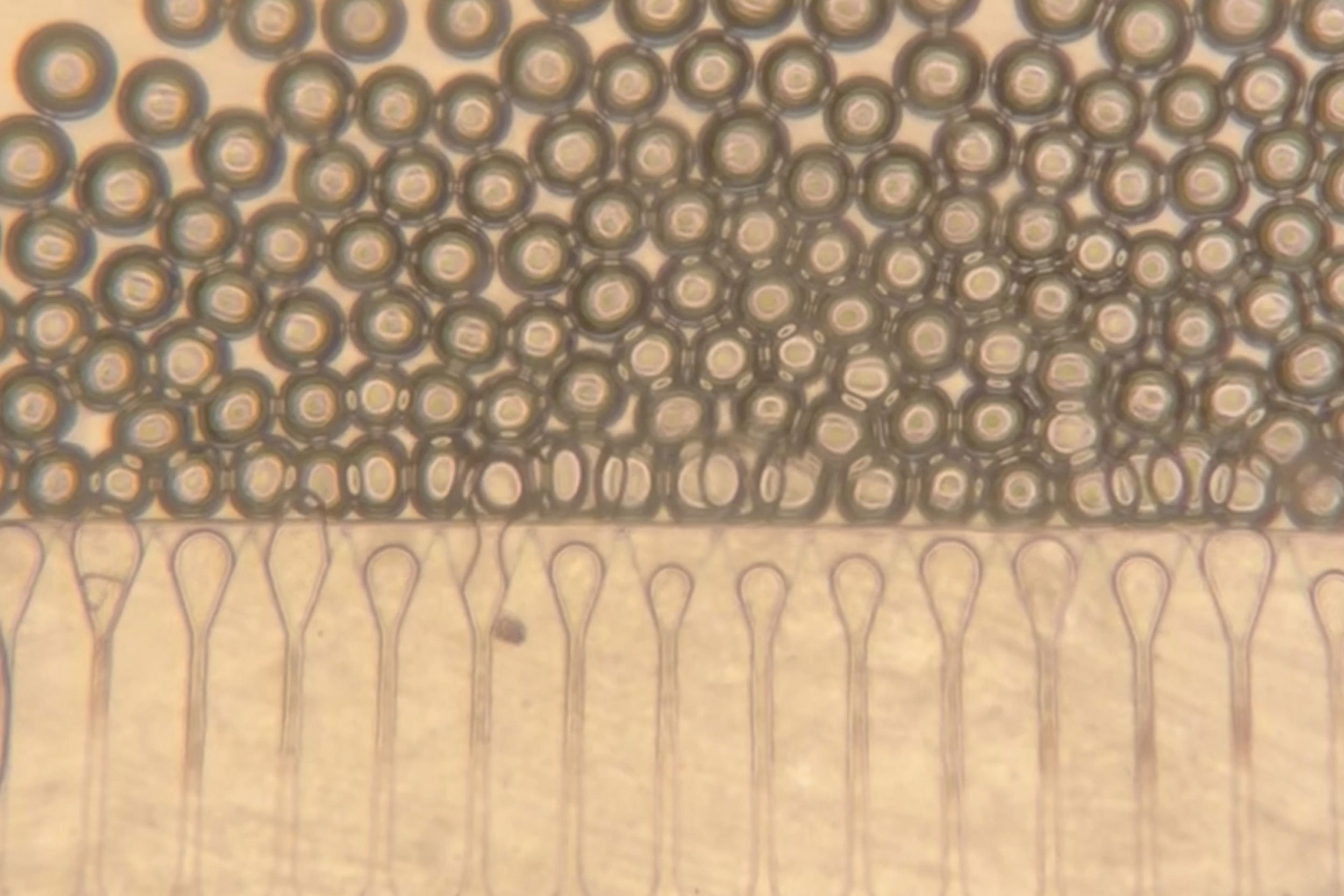
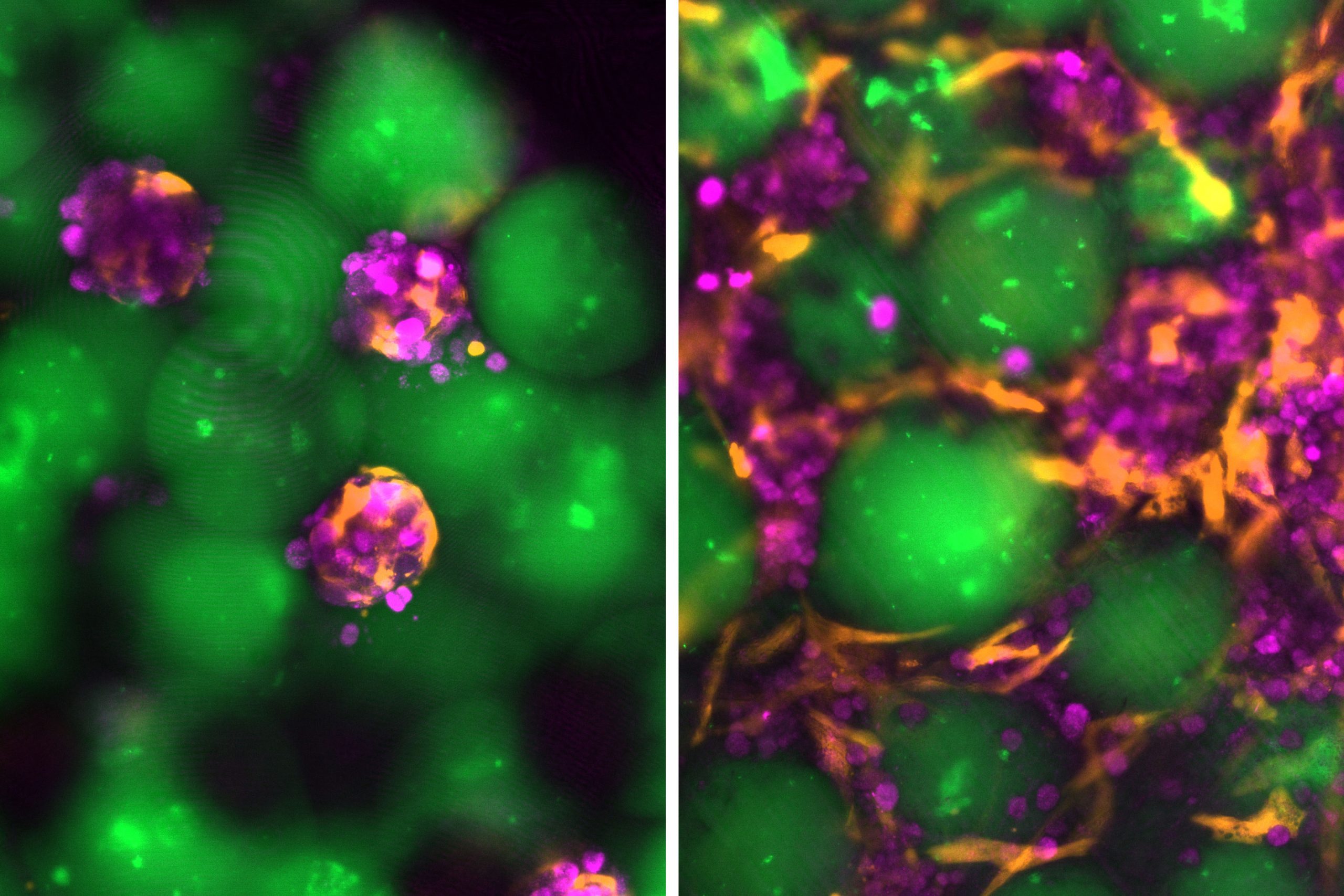
The solution was to inject the cells together with hydrogel microspheres. These tiny spheres help the cells remain clustered and connect with nearby blood vessels. They can behave like a liquid when packed together, which allows them to pass through a syringe, then return to a solid structure once inside the body.
In recent years, hydrogel microspheres have been studied as tools for wound healing because they allow cells to move into the spaces between the spheres and form new tissue. In the new work, the MIT group adapted the same basic idea to help hepatocytes build a stable graft after injection.
"What we did is use this technology to create an engineered niche for cell transplantation," Kumar says. "If the cells are injected in the absence of these spheres, they would not integrate efficiently with the host, but these microspheres provide the hepatocytes with a niche where they can stay localized and become connected to the host circulation much faster."
The injected material also contains fibroblast cells, which support hepatocyte survival and encourage blood vessels to grow into the graft.
Working with Nicole Henning, an ultrasound research specialist at the Koch Institute, Bhatia's lab developed an ultrasound-guided syringe method to place the cell mixture in the body. The same imaging method can also be used after injection to follow the implant's stability over time.
For this study, the mini livers were placed in fat tissue in the abdomen. Future versions could potentially be delivered to other parts of the body, including the spleen or areas near the kidneys. If the graft has enough room and a strong blood supply, the injected hepatocytes can act much like hepatocytes inside the liver.
"For a vast majority of liver disorders, the graft does not need to sit close to the liver," Kumar says.
An alternative to transplantation
In mouse experiments, the mixture of liver cells and microspheres was injected into fatty tissue called perigonadal adipose tissue. After the cells settled in place, they formed a dense and stable structure. As time passed, new blood vessels grew into the graft, helping keep the hepatocytes alive and functional.
"The new blood vessels formed right next to the hepatocytes, which is why they were able to survive," Kumar says. "They were able to get the nutrients delivered right to them, they were able to function the way they're supposed to, and they produced the proteins that we expect them to."
The cells remained alive and continued releasing specialized proteins into the animals' circulation for eight weeks, which was the full duration of the study. That result suggests the approach could one day serve as a long-term treatment for liver disease, according to Bhatia's lab.
"The way we see this technology is it can provide an alternative to surgery, but it can also serve as a bridge to transplantation where these grafts can provide support until a donor organ becomes available," Kumar says. "And if we think they might need another therapy or more grafts, the barriers to do that are much less with this injectable technology than undergoing another surgery."
With the current version of the technology, patients would probably need immunosuppressive drugs. Bhatia's lab is now studying possible ways around that limitation, including "stealthy" hepatocytes that could avoid immune attack or hydrogel microspheres that release immunosuppressants directly at the graft site.
Reference: "Image-guided injectable niche for hepatocyte transplantation" by Vardhman Kumar, Joa Yun, Susanna K. Elledge, Nicole Henning, Katarzyna A. Grzelak, Ashley D. Westerfield, Amy Stoddard, Favour A. Oladimeji, Virginia Spanoudaki, Kasturi Chakraborty, Savan K. Patel, Heather E. Fleming, Christopher S. Chen and Sangeeta N. Bhatia, 3 March 2026, Cell Biomaterials.
DOI: 10.1016/j.celbio.2026.100378

News – Curated by Amanda Scott, Alias Group Creative
Follow her on Bluesky

Back and shoulder surgery is often worse than useless
Millions of operations should be scrapped SIX IN TEN Britons have surgery at some point. So do lots of Americans, at a cost of perhaps $500bn a year, a third of all spending on [...]
Cocaine plays with mind, hijacks brain circuit, drives increasingly rigid and repetitive behavior
Researchers have found that cocaine hijacks brain circuit, which to drive increasingly rigid and repetitive behavior. The brain circuit that normally participates in selecting natural mouth and face movements, but which becomes disproportionately engaged [...]
Injectable nanodevices could provide effective treatment for drug-resistant glioblastoma
The brain cancer glioblastoma is one of the most aggressive and treatment-resistant cancers known to medicine, carrying a median survival of just 12-15 months, even with the best available care. Now, researchers at the [...]
New Treatment Cuts “Bad” Cholesterol in Half for a Full Year
A single infusion of an experimental CRISPR-Cas9 therapy was reported to safely lower LDL cholesterol by 52.5% and triglycerides by 47.8%, as measured 12 months after treatment. What if one infusion could keep cholesterol [...]
Too Much RNA Can Drain a Cell’s Energy, Scientists Discover
A virus may cripple a cell’s power supply simply by producing too much of a molecule the cell needs to survive. New research from the Texas A&M College of Veterinary Medicine and Biomedical Sciences [...]
West African scientists warn of weakening health systems and urge stronger outbreak detection
LOME, Togo (AP) — West African laboratory scientists called on governments Friday to strengthen capacity to detect disease outbreaks to avoid another major outbreak, saying health systems across the region are becoming weaker. Participants [...]

A Little-Known Protein Could Point to a New Way To Treat Alzheimer’s
A study suggests that increasing SORLA protein levels could help treat Alzheimer’s disease and other disorders involving tau protein. Increasing SORLA, a protein with a protective role in the brain, helped mice withstand damage [...]
Cancer’s Hidden Antioxidant Shield Helps It Escape the Immune System
Blocking an antioxidant protein that tumors use to suppress immune attacks improved cancer immunotherapy responses in mice. Cancer cells can release antioxidants that interfere with the immune cells trying to kill them. Researchers have [...]

Scientists Find a Berry Compound That Helps Muscle Cells Burn Fat
Pterostilbene, a compound found naturally in some foods, affects how skeletal muscles process fats by stabilizing a protein called PPARδ and increasing its signaling activity. Pterostilbene, a natural compound found in blueberries, grapes, and [...]
Two Hidden Forces Help Build the Human Brain Before Birth
Scientists have uncovered two surprising forces that help guide how the human brain forms before birth. Before birth, the human brain is shaped in large part by an unusual class of stem cells known [...]
Researchers Uncover a Hidden Trigger Behind Chronic Inflammation
The findings offer new insights that could help guide the development of future therapies. A protein called human resistin may help flip on one of the immune system’s most powerful inflammatory switches. Researchers at [...]
Scientists Have Uncovered Previously Hidden Microbial Activity on Human Skin
The most abundant microbes on your skin may not be the ones doing most of the work. Human skin supports vast communities of bacteria, fungi, and viruses that can influence its protective barrier, immune [...]
Brazilian Tree Compounds Fight COVID-19 on Multiple Fronts
Scientists found compounds in a Brazilian tree that hit SARS-CoV-2 on multiple fronts, revealing a promising new lead in the search for COVID-19 treatments. Researchers have found that galloylquinic acids extracted from the leaves [...]
Cutting Two Amino Acids Slowed Prostate Cancer in Mice
A newly identified link between amino acid metabolism and cholesterol production may help prostate tumors adapt to hormone therapy. Prostate cancer can find ways around treatments designed to deprive tumors of the hormones they [...]
Largest-Ever Physics Survey Raises New Doubts About Our Model of the Universe
Physicists around the world remain deeply divided on key mysteries of the universe, from dark matter to quantum gravity. The standard cosmological model failed to gain majority support, and no leading theory dominated the [...]
Scientists Just Overturned a 100-Year-Old Belief About Bacteria in the Lungs
New findings raise questions about the role of microbes living in the lungs. More than 35 trillion bacteria live throughout the human body, forming microbiomes in the gut, mouth, lungs, skin, and urogenital tract. [...]