A new study suggests plague was already a deadly threat 5,500 years ago, striking small hunter-gatherer communities long before cities and agriculture emerged.
For centuries, plague has been remembered as the disease that devastated medieval Europe, killing millions and reshaping societies. But new research suggests its deadly history stretches much further back than previously thought.
A study published in Nature has uncovered evidence that plague was already causing fatal outbreaks 5,500 years ago among small hunter-gatherer groups in Siberia. The discovery challenges the long-held idea that plague only became a major threat after the rise of agriculture, dense settlements, and the rat-infested urban environments that later fueled historic pandemics.
An international team of researchers analyzed ancient DNA from human remains buried at four hunter-gatherer cemeteries near Lake Baikal in eastern Siberia. By extracting and sequencing bacterial DNA preserved inside teeth, they reconstructed some of the oldest known genomes of Yersinia pestis, the bacterium responsible for plague.
The findings reveal that these ancient strains were far from harmless.
"Whether the earliest forms of plague were mild or virulent has been a matter of debate, but our findings demonstrate that these ancient strains were already highly lethal," said senior author Eske Willerslev, a professor at the University of Copenhagen and the University of Cambridge.
Reconstructing a prehistoric outbreak
Ancient DNA studies can reveal whether an individual carried a disease, but this project went much further. Researchers combined genetic evidence with radiocarbon dating, burial records, and family relationships preserved in DNA to reconstruct how the outbreaks unfolded within these prehistoric communities.
"Based on the plague DNA, the genetic relationships between the victims, the archaeological analysis and the radiocarbon dating, we've built a really clear, complete picture of what happened during these outbreaks," said lead author Ruairidh Macleod, who conducted the research while a PhD student at the University of Cambridge and is now a research fellow at the University of Oxford.
The team detected Yersinia pestis DNA in 18 of the 46 individuals examined, nearly 40% of those tested. That proportion is strikingly high and exceeds rates reported from some medieval plague burial sites.
A decades-old mystery finally solved
One of the strongest clues came from the cemeteries themselves.
For years, archaeologists were puzzled by an unusually large number of children and young teenagers buried at two of the sites. Unlike normal mortality patterns expected in hunter-gatherer populations, the graves appeared to reflect a sudden event that disproportionately affected younger individuals.
"The unusually high number of children and the short timespan was a real puzzle that we've been trying to solve since the 1990s. Finding out that plague was the cause is extraordinary, but it makes so much sense," said archaeologist Andrzej Weber of the University of Alberta and principal investigator of the Baikal Archaeology Project.
Radiocarbon dating revealed that many of the deaths occurred within a relatively short period. In some cases, close relatives, including siblings and parents with children, appear to have died around the same time and were buried together. Such patterns are often associated with infectious disease outbreaks.
Why was this early plague so deadly?
The discovery is surprising because these ancient strains lacked several genetic adaptations that later helped plague spread efficiently through fleas and rodents, the transmission route behind the infamous Black Death and other historical pandemics.
Because those traits were missing, many researchers assumed the earliest versions of plague were less dangerous.
Instead, the new study points to another possible explanation for their lethality.
The ancient strains carried a unique superantigen, a toxin-producing genetic factor absent from later plague lineages. Superantigens can trigger an overwhelming immune reaction, causing severe inflammation and potentially life-threatening complications.
"This finding changes our understanding of the earliest plague outbreaks: Even before the bacterium evolved efficient flea-borne transmission, these ancient strains appear to have carried a potent combination of virulence factors that could make infection highly lethal," said senior author Martin Sikora, an associate professor at the University of Copenhagen.
Clues to plague's ancient origins
The results suggest that some of the earliest known plague outbreaks may have been just as deadly as later historical epidemics, particularly for children, despite lacking flea-borne transmission.
The study also supports the idea that plague originated in Central or Northeast Asia before spreading across Eurasia through wild rodent populations. Archaeological evidence indicates that these hunter-gatherers had close contact with marmots, large burrowing rodents that still carry plague today. Researchers believe the disease may have passed directly from infected marmots to humans.
Reference: "Lethal plague outbreaks in Lake Baikal hunter-gatherers 5,500 years ago" by Ruairidh Macleod, Frederik V. Seersholm, Bianca De Sanctis, Angela Lieverse, Adrian Timpson, Rick Schulting, Jesper T. Stenderup, Charleen Gaunitz, Lasse Vinner, Olga Ivanovna Goriunova, Vladimir Ivanovich Bazaliiskii, Sergei V. Vasilyev, Erin Jessup, Yucheng Wang, Christopher Bronk Ramsey, Mark G. Thomas, Russell Corbett-Detig, Astrid K. N. Iversen, Andrzej W. Weber, Martin Sikora and Eske Willerslev, 17 June 2026, Nature.
DOI: 10.1038/s41586-026-10540-5

News – Curated by Amanda Scott, Alias Group Creative
Follow her on Bluesky
Cancer’s Hidden Antioxidant Shield Helps It Escape the Immune System
Blocking an antioxidant protein that tumors use to suppress immune attacks improved cancer immunotherapy responses in mice. Cancer cells can release antioxidants that interfere with the immune cells trying to kill them. Researchers have [...]

Scientists Find a Berry Compound That Helps Muscle Cells Burn Fat
Pterostilbene, a compound found naturally in some foods, affects how skeletal muscles process fats by stabilizing a protein called PPARδ and increasing its signaling activity. Pterostilbene, a natural compound found in blueberries, grapes, and [...]

Two Hidden Forces Help Build the Human Brain Before Birth
Scientists have uncovered two surprising forces that help guide how the human brain forms before birth. Before birth, the human brain is shaped in large part by an unusual class of stem cells known [...]

Researchers Uncover a Hidden Trigger Behind Chronic Inflammation
The findings offer new insights that could help guide the development of future therapies. A protein called human resistin may help flip on one of the immune system’s most powerful inflammatory switches. Researchers at [...]

Scientists Have Uncovered Previously Hidden Microbial Activity on Human Skin
The most abundant microbes on your skin may not be the ones doing most of the work. Human skin supports vast communities of bacteria, fungi, and viruses that can influence its protective barrier, immune [...]
Brazilian Tree Compounds Fight COVID-19 on Multiple Fronts
Scientists found compounds in a Brazilian tree that hit SARS-CoV-2 on multiple fronts, revealing a promising new lead in the search for COVID-19 treatments. Researchers have found that galloylquinic acids extracted from the leaves [...]
Cutting Two Amino Acids Slowed Prostate Cancer in Mice
A newly identified link between amino acid metabolism and cholesterol production may help prostate tumors adapt to hormone therapy. Prostate cancer can find ways around treatments designed to deprive tumors of the hormones they [...]

Largest-Ever Physics Survey Raises New Doubts About Our Model of the Universe
Physicists around the world remain deeply divided on key mysteries of the universe, from dark matter to quantum gravity. The standard cosmological model failed to gain majority support, and no leading theory dominated the [...]

Scientists Just Overturned a 100-Year-Old Belief About Bacteria in the Lungs
New findings raise questions about the role of microbes living in the lungs. More than 35 trillion bacteria live throughout the human body, forming microbiomes in the gut, mouth, lungs, skin, and urogenital tract. [...]

GHCE Concept
From the preface of the book Global Health Care Equivalency in the Age of Nanotechnology, Nanomedicine and Artificial Intelligence, Edited by Frank Boehm: Since the publication of my first book (Nanomedical Device and Systems [...]

Novartis, Ionis drug failure spurs questions
Pelacarsen didn’t protect heart health despite lowering levels of a protein particle, “Lp(a),” in a large clinical trial — a result with important implications for cardiovascular drug research. Dive Brief: An RNA drug from [...]

New injectable treatment helps the brain rebuild after stroke
Biomedical engineers at Duke University have created an injectable biomaterial that may help the brain recover from damage left behind by an ischemic stroke. In experiments with mice, the material transformed the cavity created [...]

Scientists Discover a Hidden “Immune Organ” Inside the Skull
Researchers discovered lymph node-like immune hubs inside skull bone marrow that appear to act as rapid-response centers for the brain. For decades, the brain was thought to operate largely apart from the immune system. [...]

Engineered tRNAs and lipid nanoparticles target nonsense mutation cystic fibrosis
Researchers have developed a potential new approach for treating a form of cystic fibrosis caused by so-called nonsense mutations, combining chemically modified transfer RNAs with lipid nanoparticles designed to deliver the therapy directly to [...]
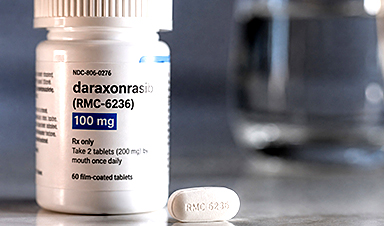
New pancreatic cancer drug carries a $39,800 monthly list price
A groundbreaking treatment for one of the most common forms of pancreatic cancer has been approved in pill form by the FDA. Revolution Medicines’ oral tablet daraxonrasib, branded as Rasonque, reduced the risk of [...]

Researchers Have Discovered a New Way To Reduce Chronic Nerve Pain
A cancer-linked protein called BRAF may help drive chronic nerve pain, and existing cancer drugs targeting it reduced pain sensitivity in preclinical models. Chronic nerve pain can persist long after an injury and often [...]