Researchers at the Francis Crick Institute and AlveoliX have developed the first human lung-on-chip model using stem cells taken from only one person. These chips simulate breathing motions and lung disease in an individual, holding promise for testing treatments for infections like tuberculosis (TB) and delivering personalized medicine.
The research is published in the journal Science Advances.
Air sacs in the lungs called alveoli are the essential site of gas exchange and also an important barrier against inhaled viruses and bacteria that cause respiratory diseases like flu or TB.
Researchers have been working to recreate the battle between human cells and bacteria in the lab by building a lung-on-a-chip: small units of human lung on a plastic chip containing tiny channels and compartments. In this case, they aimed to recreate air sacs to understand how they respond to infection.
Until now, these lung-on-chip devices have been made of a mixture of patient-derived and commercially available cells, meaning they can’t fully replicate the lung function or disease progression of a single individual.
In the study, the team at the Crick developed a new lung-on-chip model that contains only genetically identical cells derived from stem cells from a single donor.
Based on a protocol developed previously by the lab, the team produced type I and II alveolar epithelial cells and vascular endothelial cells from human-induced pluripotent stem cells, cells that can virtually become any cell in the body. These epithelial and endothelial cells are separately grown on the top and bottom of a very thin membrane in a device manufactured by biotechnology company AlveoliX to recreate an air sac barrier.
To further simulate the human lung, AlveoliX has designed specialized machines to impose rhythmic three-dimensional stretching forces on the recreated air sac barrier, mimicking the motion of breathing. This stimulates the formation of microvilli, a key feature of alveolar epithelial cells, to increase surface area for lung functions (image).
Next, the scientists added immune cells called macrophages into the chip, again produced from the stem cells of the same donor, before adding TB bacteria to simulate the early stages of the disease.
In the chips infected with TB, the team reported large macrophage clusters containing necrotic cores, a group of dead macrophages in the center, surrounded by live macrophages. Eventually, five days after infection, the endothelial and epithelial cell barriers collapsed, showing that the air sac function had broken down.
Max Gutierrez, Principal Group Leader of the Host-Pathogen Interactions in Tuberculosis Laboratory at the Crick and senior author, said, “Given the increasing need for non-animal technologies, organ-on-chip approaches are becoming ever more important to recreate human systems, avoiding differences in lung anatomy, makeup of immune cells and disease development between animals and humans.
“Composed of entirely genetically identical cells, the chips could be built from stem cells from people with particular genetic mutations. This would allow us to understand how infections like TB will impact an individual and test the effectiveness of treatments like antibiotics.”
Jakson Luk, Postdoctoral Fellow in the Host-Pathogen Interactions in Tuberculosis Laboratory and first author, said, “TB is a slow-moving disease, with months between infection and the development of symptoms, so there’s an increasing need to understand what’s happening in the unseen early stages.
“We were successfully able to mimic these initial events in TB progression, giving a holistic picture of how different lung cells respond to infections. We’re excited that the new model could be applied to a huge range of research, such as other respiratory infections or lung cancer, and we’re now looking at refining the chip by incorporating other important cell types.”
More information
Chak Hon Luk et al, Autologous human iPSC-derived Alveolus-on-Chip reveals early pathological events of M. tuberculosis infection, Science Advances (2026). DOI: 10.1126/sciadv.aea9874. www.science.org/doi/10.1126/sciadv.aea9874
Journal information: Science Advances

News
CEO of America’s largest public hospital system is ready to replace radiologists with AI
The chief executive of America’s largest public hospital system says he is prepared to start replacing radiologists with artificial intelligence in some circumstances, once the regulatory landscape catches up. Mitchell H. Katz, MD, president [...]
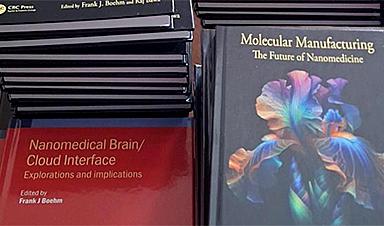
Our books now available worldwide!
Online Sellers other than Amazon, Routledge, and IOPP Indigo Global Health Care Equivalency in the Age of Nanotechnology, Nanomedicine and Artifcial Intelligence Global Health Care Equivalency In The Age Of Nanotechnology, Nanomedicine And Artificial [...]

Study finds higher heart disease risk in long COVID patients
People with long COVID are at increased risk of developing cardiovascular disease, according to a new study from Karolinska Institutet published in eClinicalMedicine. The results show that the risk of conditions such as cardiac arrhythmias [...]
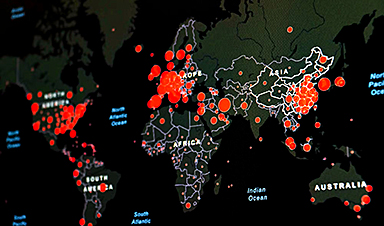
The Corona variant Cicada is here – we know that
Online and on social media, reports are piling up about a new Sars-Cov-2 variant that is currently on the rise: BA.3.2, also known as Cicada. That's what it's all about: The Omicron variant BA.3.2, [...]
A Simple Blood Test Could Predict Dementia Risk 25 Years Early
A single blood marker may quietly signal dementia risk decades in advance. Scientists at the University of California, San Diego, have identified a blood signal that could forecast dementia risk decades before symptoms begin. Their [...]

Sperm Get Lost in Space and Scientists Finally Know Why
Having a baby in space may be far more complicated than expected, as new research shows sperm struggle to find their way in microgravity. Starting a family beyond Earth could be more complicated than [...]
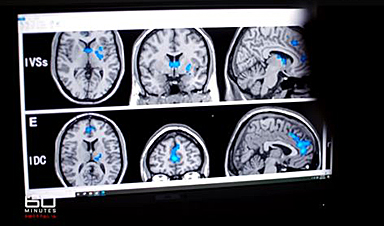
Digital Dementia – Brain fog and disassociation from being chronically online
New medical evidence, featured on 60 Minutes Australia, indicates excessive screen time is causing "digital dementia" in young Australians, with brain scans showing physical shrinkage and damage. Experts warn that high device usage (6-8 hours [...]
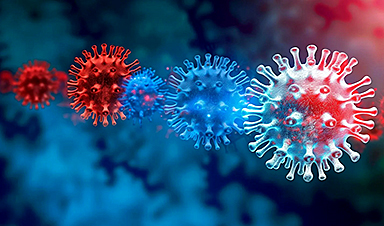
A new, highly mutated COVID variant called ‘Cicada’ is spreading in the US.
BA.3.2, a heavily mutated new COVID-19 variant which may be better able to escape immunity from vaccines or prior infection, is now spreading in the United States. Although COVID cases are currently low nationally, [...]
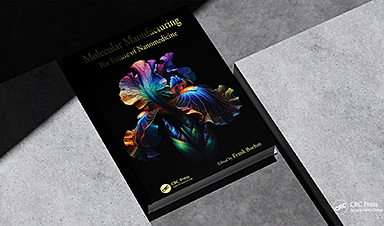
Molecular Manufacturing: The Future of Nanomedicine – New book from NanoappsMedical Inc.
This book explores the revolutionary potential of atomically precise manufacturing technologies to transform global healthcare, as well as practically every other sector across society. This forward-thinking volume examines how envisaged Factory@Home systems might enable the cost-effective [...]

Ancient bacteria strain discovered in ice cave is resistant to some modern antibiotics
In the depths of Scarisoara cave in Romania sits one of the world’s biggest underground glaciers, a monumental slab of ice the size of roughly 40 Olympic swimming pools that began to form around [...]

Scientists Identify “Good” Bacteria That May Prevent Long COVID
According to the WHO, about 6% of people worldwide who get COVID-19, roughly 400 million people, later develop a long-lasting form of the illness. That shows the condition remains a significant public health challenge. In [...]
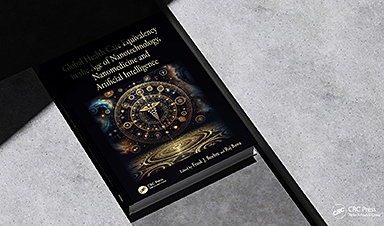
New book from Nanoappsmedical Inc. – Global Health Care Equivalency
A new book by Frank Boehm, NanoappsMedical Inc. Founder. This groundbreaking volume explores the vision of a Global Health Care Equivalency (GHCE) system powered by artificial intelligence and quantum computing technologies, operating on secure [...]
RNA Recycling Extends Lifespan
Summary: Researchers discovered a biological “trash disposal” mechanism that directly controls how fast we age. While circular RNA has long been known to accumulate in cells as we get older, this study proves for the [...]
Cancer’s Deadly Paradox: How Tumors Break Their Own DNA To Keep Growing
Cancer’s strongest gene switches push DNA into damaging overdrive, creating repeated breaks and repairs that may fuel tumor evolution while exposing possible therapeutic weak spots. A new study indicates that cancer can harm its own genetic [...]
NanoMedical Brain/Cloud Interface – Explorations and Implications. A new book from Frank Boehm
New book from Frank Boehm, NanoappsMedical Inc Founder: This book explores the future hypothetical possibility that the cerebral cortex of the human brain might be seamlessly, safely, and securely connected with the Cloud via [...]
Ryugu asteroid samples contain all DNA and RNA building blocks, bolstering origin-of-life theories
All the essential ingredients to make the DNA and RNA underpinning life on Earth have been discovered in samples collected from the asteroid Ryugu, scientists said Monday. The discovery comes after these building blocks [...]