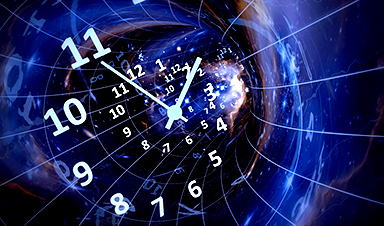
Is time something that flows — or just an illusion? Exploring space-time as either a fixed “block universe” or a dynamic fabric reveals deeper mysteries about existence, change, and the very nature of reality.
Few ideas in modern science have changed how we understand reality as deeply as space-time, the intertwined union of space and time at the core of Albert Einstein’s theory of relativity.
Space-time is often described as the “fabric of reality.” In some explanations, this fabric takes the form of a fixed, four dimensional “block universe,” a complete map of all events in the past, present, and future.
In other explanations, it is a dynamic field that bends and curves in response to gravity. This leads to a deeper question: what does it mean to say that space-time exists? What kind of thing is it: structure, substance, or metaphor?
The heart of modern physics
These questions are not purely philosophical. They lie at the foundation of how we interpret physics today and influence ideas ranging from our understanding of relativity to speculations about time travel, multiverses, and the origin of the cosmos.
They also shape theories about how space-time itself emerges, including proposals that treat it as a kind of memory for the universe. Yet the very language used to describe space-time is often vague, metaphorical, and inconsistent.
The Austrian-British philosopher Ludwig Wittgenstein once remarked that philosophical problems arise when “language goes on holiday.” Physics, in many respects, illustrates this point.
Over the last hundred years, common words like “time,” “exist,” and “timeless” have been given specialized technical meanings without fully addressing the assumptions carried over from everyday use.
This has led to widespread confusion about what these terms actually mean.
The problem with language
In the philosophy of physics, particularly in a view known as eternalism, the word “timeless” is used literally. Eternalism is the idea that time doesn’t flow or pass — that all events across all time are equally real within a four-dimensional structure known as the “block universe.”
According to this view, the entire history of the universe is already laid out, timelessly, in the structure of space-time. In this context, “timeless” means that the universe itself does not endure or unfold in any real sense. There is no becoming. There is no change. There is only a block, and all of eternity exists atemporally within it.
But this leads to a deeper problem. If everything that ever happens throughout eternity is equally real, and all events are already there, what does it actually mean to say that space-time exists?
An elephant in the room
There’s a structural difference between existence and occurrence. One is a mode of being, the other, of happening.
Imagine there’s an elephant standing beside you. You’d likely say: “This elephant exists.” You might describe it as a three-dimensional object, but importantly, it is a “three-dimensional object that exists.”
In contrast, imagine a purely three-dimensional elephant that flashes into the room for an instant: a cross-sectional moment in the life of an existing elephant, appearing and disappearing like a ghost. That elephant doesn’t really exist in the ordinary sense. It happens. It occurs.
An existing elephant endures over time, and space-time catalogues every moment of its existence as a four-dimensional world line — an object’s path through space and time throughout its existence. The imaginary “occurring elephant” is just one spacelike slice of that tube; one three-dimensional moment.
Now apply this distinction to space-time itself. What does it mean for four-dimensional space-time to exist in the sense that the elephant exists? Does space-time endure in the same sense? Does space-time have its own set of “now” moments? Or is space-time — the manifold of all the events that happen throughout eternity — merely something that occurs? Is space-time simply a descriptive framework for relating those events?
Eternalism muddies this distinction. It treats all of eternity — that is, all of space-time — as an existing structure, and takes the passage of time to be an illusion. But that illusion is impossible if all of space-time occurs in a flash.
To recover the illusion that time passes within this framework, four-dimensional space-time must exist in a manner more like the three-dimensional existing elephant — whose existence is described by four-dimensional space-time.
Every event
Let’s take this thought one step further.
If we imagine that every event throughout the universe’s history does “exist” within the block universe, then we might ask: when does the block itself exist? If it doesn’t unfold or change, does it exist timelessly? If so, then we’re layering another dimension of time onto something that was supposed to be timeless in the literal sense.
To make sense of this, we could construct a five-dimensional framework, using three spatial dimensions and two time dimensions. The second time axis would let us say that four-dimensional space-time exists in exactly the same way we commonly think of an elephant in the room as existing within the three dimensions of space that surround us, the events of which we catalogue as four-dimensional space-time.
At this point, we’re stepping outside established physics that describes space-time through four dimensions only. But it reveals a deep problem: we have no coherent way to talk about what it means for space-time to exist without accidentally smuggling time back in through an added dimension that isn’t part of the physics.
It’s like trying to describe a song that exists all at once, without being performed, heard, or unfolding.
From physics to fiction
This confusion shapes how we imagine time in fiction and pop science.
In the 1984 James Cameron film, The Terminator, all events are treated as fixed. Time travel is possible, but the timeline cannot be changed. Everything already exists in a fixed, timeless state.
In the fourth film in the Avengers franchise, Avengers: Endgame (2019), time travel allows characters to alter past events and reshape the timeline, suggesting a block universe that both exists and changes.
That change can only occur if the four-dimensional timeline exists in the same way our three-dimensional world exists.
But regardless of whether such change is possible, both scenarios assume that the past and future are there and ready to be traveled to. However, neither grapples with what kind of existence that implies, or how space-time differs from a map of events.
Understanding reality
When physicists say that space-time “exists,” they are often working within a framework that has quietly blurred the line between existence and occurrence. The result is a metaphysical model that, at best, lacks clarity, and, at worst obscures the very nature of reality.
None of this endangers the mathematical theory of relativity or the empirical science that confirms it. Einstein’s equations still work. But how we interpret those equations matters, especially when it shapes how we talk about reality and how we approach the deeper problems in physics.
These understandings include attempts to reconcile general relativity with quantum theory — a challenge explored both in philosophy and popular science discussions.
Defining space-time is more than a technical debate — it’s about what kind of world we think we’re living in.
Adapted from an article originally published in The Conversation.

News
Cocaine plays with mind, hijacks brain circuit, drives increasingly rigid and repetitive behavior
Researchers have found that cocaine hijacks brain circuit, which to drive increasingly rigid and repetitive behavior. The brain circuit that normally participates in selecting natural mouth and face movements, but which becomes disproportionately engaged [...]
Injectable nanodevices could provide effective treatment for drug-resistant glioblastoma
The brain cancer glioblastoma is one of the most aggressive and treatment-resistant cancers known to medicine, carrying a median survival of just 12-15 months, even with the best available care. Now, researchers at the [...]
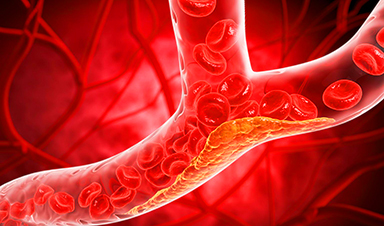
New Treatment Cuts “Bad” Cholesterol in Half for a Full Year
A single infusion of an experimental CRISPR-Cas9 therapy was reported to safely lower LDL cholesterol by 52.5% and triglycerides by 47.8%, as measured 12 months after treatment. What if one infusion could keep cholesterol [...]

Too Much RNA Can Drain a Cell’s Energy, Scientists Discover
A virus may cripple a cell’s power supply simply by producing too much of a molecule the cell needs to survive. New research from the Texas A&M College of Veterinary Medicine and Biomedical Sciences [...]

West African scientists warn of weakening health systems and urge stronger outbreak detection
LOME, Togo (AP) — West African laboratory scientists called on governments Friday to strengthen capacity to detect disease outbreaks to avoid another major outbreak, saying health systems across the region are becoming weaker. Participants [...]

A Little-Known Protein Could Point to a New Way To Treat Alzheimer’s
A study suggests that increasing SORLA protein levels could help treat Alzheimer’s disease and other disorders involving tau protein. Increasing SORLA, a protein with a protective role in the brain, helped mice withstand damage [...]

Cancer’s Hidden Antioxidant Shield Helps It Escape the Immune System
Blocking an antioxidant protein that tumors use to suppress immune attacks improved cancer immunotherapy responses in mice. Cancer cells can release antioxidants that interfere with the immune cells trying to kill them. Researchers have [...]

Scientists Find a Berry Compound That Helps Muscle Cells Burn Fat
Pterostilbene, a compound found naturally in some foods, affects how skeletal muscles process fats by stabilizing a protein called PPARδ and increasing its signaling activity. Pterostilbene, a natural compound found in blueberries, grapes, and [...]
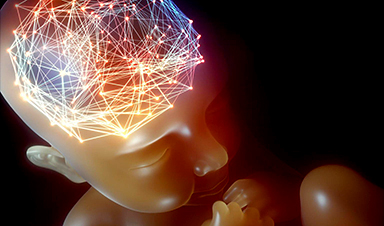
Two Hidden Forces Help Build the Human Brain Before Birth
Scientists have uncovered two surprising forces that help guide how the human brain forms before birth. Before birth, the human brain is shaped in large part by an unusual class of stem cells known [...]

Researchers Uncover a Hidden Trigger Behind Chronic Inflammation
The findings offer new insights that could help guide the development of future therapies. A protein called human resistin may help flip on one of the immune system’s most powerful inflammatory switches. Researchers at [...]
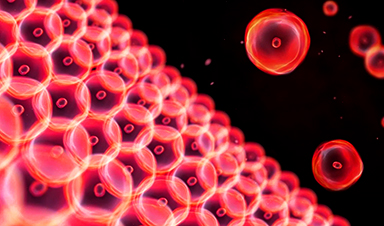
Scientists Have Uncovered Previously Hidden Microbial Activity on Human Skin
The most abundant microbes on your skin may not be the ones doing most of the work. Human skin supports vast communities of bacteria, fungi, and viruses that can influence its protective barrier, immune [...]
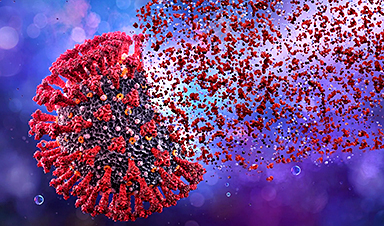
Brazilian Tree Compounds Fight COVID-19 on Multiple Fronts
Scientists found compounds in a Brazilian tree that hit SARS-CoV-2 on multiple fronts, revealing a promising new lead in the search for COVID-19 treatments. Researchers have found that galloylquinic acids extracted from the leaves [...]
Cutting Two Amino Acids Slowed Prostate Cancer in Mice
A newly identified link between amino acid metabolism and cholesterol production may help prostate tumors adapt to hormone therapy. Prostate cancer can find ways around treatments designed to deprive tumors of the hormones they [...]
Largest-Ever Physics Survey Raises New Doubts About Our Model of the Universe
Physicists around the world remain deeply divided on key mysteries of the universe, from dark matter to quantum gravity. The standard cosmological model failed to gain majority support, and no leading theory dominated the [...]

Scientists Just Overturned a 100-Year-Old Belief About Bacteria in the Lungs
New findings raise questions about the role of microbes living in the lungs. More than 35 trillion bacteria live throughout the human body, forming microbiomes in the gut, mouth, lungs, skin, and urogenital tract. [...]
GHCE Concept
From the preface of the book Global Health Care Equivalency in the Age of Nanotechnology, Nanomedicine and Artificial Intelligence, Edited by Frank Boehm: Since the publication of my first book (Nanomedical Device and Systems [...]