Researchers have found that cocaine hijacks brain circuit, which to drive increasingly rigid and repetitive behavior. The brain circuit that normally participates in selecting natural mouth and face movements, but which becomes disproportionately engaged as behavior narrows under repeated cocaine exposure.
The new study by researchers from Hebrew University of Jerusalem revealed that the striatum is a brain region involved in moment-to-moment action selection.
The team captured behavior as an observer
The team confirmed that disruption of the capacity to define actions is associated with the development of repetitive and rigid/maladaptive behaviors seen in a range of neurological and psychiatric conditions, including Tourette syndrome, Parkinson’s disease and drug-induced movement disorders.
“We wanted to capture behavior as an observer actually sees it: grooming, licking, exploring, but this was impossible to score manually,” said Itay Shalom, a PhD student from Hebrew University of Jerusalem. “STEREO allowed us to track the entire behavioral repertoire progressively narrowed until one type of action came to dominate.”
Repeated exposure to cocaine
Using repeated exposure to cocaine as an experimental model of behavioral rigidity, the researchers observed a striking shift. Diverse and exploratory behavior gradually gave way to persistent repetition. By the fifth day of exposure, licking the floor and walls of the enclosure accounted for more than 60% of the observed time. These behaviors were rarely seen in the absence of cocaine, illustrating how a normally varied set of actions can become restricted to a persistent behavioral pattern, according to a press release.
The team also mapped this change to the ventrolateral striatum (VLS), an area of the striatum involved particularly in movements of the mouth and tongue. Within this region are two major neural pathways, known as the direct and indirect pathways, which appear to exert opposing influences over which actions are expressed.
When the researchers activated neurons belonging to the indirect pathway, the cocaine-driven repetitive behavior was immediately interrupted, and behavior shifted toward alternative actions. Once the stimulation was terminated, the effect rapidly reversed and repetitive behavior resumed. Suppressing this same pathway produced the opposite result, limiting the ability to switch behavior, driving longer bouts of the repetitive behavior, as per the release.
The research team revealed that the direct pathway showed the opposite pattern. Reducing its activity weakened the drug-induced repetitive behavior, while activating it in the absence of cocaine was itself sufficient to produce rigid patterns of repetitive actions resembling those observed following drug exposure.
“Cocaine does not appear to create an entirely new behavioral program,” said Ben Jerry Gonzales, a student of Hebrew University. “It takes control of a circuit the brain already uses for natural actions and pushes behavior toward persistent repetition.”
The team also pointed out that the same circuit is responsible for the expression of normal, context-appropriate grooming and licking. Cocaine therefore appears to hijack a normal action-selection system rather than recruit a circuit dedicated to abnormal behavior.
The findings may help researchers better understand how repetitive motor behaviors emerge across different neurological and psychiatric conditions. Because different areas of the striatum correspond to different types of movement, the researchers propose that similar imbalances in other striatal circuits could potentially contribute to other forms of behavioral rigidity, as per the release.

News – Curated by Amanda Scott, Alias Group Creative
Follow her on Bluesky
Cocaine plays with mind, hijacks brain circuit, drives increasingly rigid and repetitive behavior
Researchers have found that cocaine hijacks brain circuit, which to drive increasingly rigid and repetitive behavior. The brain circuit that normally participates in selecting natural mouth and face movements, but which becomes disproportionately engaged [...]
Injectable nanodevices could provide effective treatment for drug-resistant glioblastoma
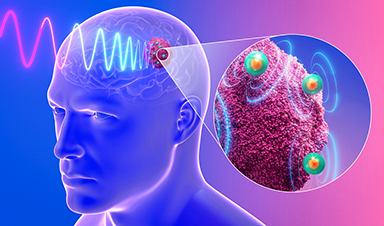
The brain cancer glioblastoma is one of the most aggressive and treatment-resistant cancers known to medicine, carrying a median survival of just 12-15 months, even with the best available care. Now, researchers at the [...]
New Treatment Cuts “Bad” Cholesterol in Half for a Full Year
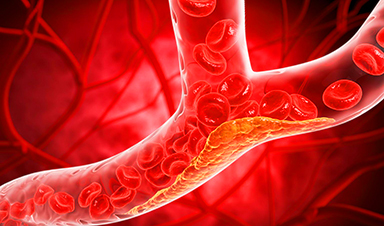
A single infusion of an experimental CRISPR-Cas9 therapy was reported to safely lower LDL cholesterol by 52.5% and triglycerides by 47.8%, as measured 12 months after treatment. What if one infusion could keep cholesterol [...]
Too Much RNA Can Drain a Cell’s Energy, Scientists Discover
A virus may cripple a cell’s power supply simply by producing too much of a molecule the cell needs to survive. New research from the Texas A&M College of Veterinary Medicine and Biomedical Sciences [...]

West African scientists warn of weakening health systems and urge stronger outbreak detection
LOME, Togo (AP) — West African laboratory scientists called on governments Friday to strengthen capacity to detect disease outbreaks to avoid another major outbreak, saying health systems across the region are becoming weaker. Participants [...]

A Little-Known Protein Could Point to a New Way To Treat Alzheimer’s
A study suggests that increasing SORLA protein levels could help treat Alzheimer’s disease and other disorders involving tau protein. Increasing SORLA, a protein with a protective role in the brain, helped mice withstand damage [...]
Cancer’s Hidden Antioxidant Shield Helps It Escape the Immune System
Blocking an antioxidant protein that tumors use to suppress immune attacks improved cancer immunotherapy responses in mice. Cancer cells can release antioxidants that interfere with the immune cells trying to kill them. Researchers have [...]

Scientists Find a Berry Compound That Helps Muscle Cells Burn Fat
Pterostilbene, a compound found naturally in some foods, affects how skeletal muscles process fats by stabilizing a protein called PPARδ and increasing its signaling activity. Pterostilbene, a natural compound found in blueberries, grapes, and [...]
Two Hidden Forces Help Build the Human Brain Before Birth
Scientists have uncovered two surprising forces that help guide how the human brain forms before birth. Before birth, the human brain is shaped in large part by an unusual class of stem cells known [...]
Researchers Uncover a Hidden Trigger Behind Chronic Inflammation
The findings offer new insights that could help guide the development of future therapies. A protein called human resistin may help flip on one of the immune system’s most powerful inflammatory switches. Researchers at [...]
Scientists Have Uncovered Previously Hidden Microbial Activity on Human Skin
The most abundant microbes on your skin may not be the ones doing most of the work. Human skin supports vast communities of bacteria, fungi, and viruses that can influence its protective barrier, immune [...]
Brazilian Tree Compounds Fight COVID-19 on Multiple Fronts
Scientists found compounds in a Brazilian tree that hit SARS-CoV-2 on multiple fronts, revealing a promising new lead in the search for COVID-19 treatments. Researchers have found that galloylquinic acids extracted from the leaves [...]
Cutting Two Amino Acids Slowed Prostate Cancer in Mice
A newly identified link between amino acid metabolism and cholesterol production may help prostate tumors adapt to hormone therapy. Prostate cancer can find ways around treatments designed to deprive tumors of the hormones they [...]
Largest-Ever Physics Survey Raises New Doubts About Our Model of the Universe
Physicists around the world remain deeply divided on key mysteries of the universe, from dark matter to quantum gravity. The standard cosmological model failed to gain majority support, and no leading theory dominated the [...]
Scientists Just Overturned a 100-Year-Old Belief About Bacteria in the Lungs
New findings raise questions about the role of microbes living in the lungs. More than 35 trillion bacteria live throughout the human body, forming microbiomes in the gut, mouth, lungs, skin, and urogenital tract. [...]

GHCE Concept
From the preface of the book Global Health Care Equivalency in the Age of Nanotechnology, Nanomedicine and Artificial Intelligence, Edited by Frank Boehm: Since the publication of my first book (Nanomedical Device and Systems [...]