Summary: Researchers have developed an AI-powered tool called chronODE that models how genes turn on and off during brain development. By combining mathematics, machine learning, and genomic data, the method identifies exact “switching points” that determine when genes reach maximum activity.
These findings reveal that most genes follow predictable activation patterns and can be classified into subtypes such as accelerators, switchers, and decelerators. The approach could eventually allow doctors to time gene therapies or drug interventions at the most effective moment.
Key Facts
- chronODE Tool: Uses math and AI to model real-time gene activation and chromatin changes.
- Switching Points: Identifies critical moments when intervention could alter disease progression.
- Gene Patterns: Reveals predictable categories of gene behavior during development.
Source: Yale
A Yale research team has created a new computer tool that can pinpoint when exactly genes turn on and off over time during brain development — a finding that may one day help doctors identify the optimal window to deploy gene therapy treatments.
Dubbed “chronODE,” the tool uses math and machine learning to model how gene activity and chromatin (the DNA and protein mix that forms chromosomes) patterns change over time. The tool may offer a variety of applications in disease modeling and basic genomic research and perhaps lead to future therapeutic uses.
“Basically, we have an equation that can determine the precise moment of gene activation, which may dictate important steps such as the transition from one developmental or disease stage to another,” said Mor Frank, a postdoctoral associate in the Department of Biophysics and Biochemistry in Yale’s Faculty of Arts and Sciences (FAS) and study co-author.
“Consequently, this may represent a potential way to identify, in the future, critical points for therapeutic intervention.”
Results of the study were published August 19 in the journal Nature Communications.
For the study, the research team wanted to determine not just when genes activate, but how their activation changes over the course of brain development. Genes activate at different points in cell development, but mapping gene development has been difficult. And past studies have focused on isolated moments in time, not on how gene expression evolves over time.
In this case, the researchers used a logistic equation (a mathematical equation useful for modeling dynamic processes) to measure when and how rapidly genes turn on and off in developing mouse brains.
They found that most genes follow simple and gradual activation patterns, and that genes can be grouped into subtypes, including accelerators that speed up during late stages of development; switchers that speed up and then slow down; and decelerators that just slow down.
Researchers then developed an AI model to predict gene expression over time based on changes in nearby chromatin. The model worked well, especially for genes with a more complex regulation, and the entire procedure established the chronODE method.
They found that most genes follow predictable developmental patterns, which are dictated by their role in a cell and determine how quickly they reach maximum influence on the cell.
“In a situation where you’re treating genetic disease, you’d want to shut down the gene before it reaches its full potential, after which it’s too late,” said co-author Beatrice Borsari, who is also a postdoctoral associate in biophysics and biochemistry.
“Our equation will tell you exactly the switching point — or the point of no return after which the drug will not have the same effect on the gene’s expression,” Borsari said.
“There are many cases where it’s not just important to characterize the developmental direction you go, but also how fast you reach a certain point, and that’s what this model is allowing us to do for the first time,” added Mark Gerstein, the Albert L. Williams Professor of Biomedical Informatics at Yale School of Medicine and a professor of molecular biophysics and biochemistry, computer science, and of statistics and data science in FAS, and the study’s lead author.
Borsari and Frank underscore that the potential applications in the pharmacokinetic area are major.
Researchers called their new method “chronODE,” a name that merges the concept of time (Chronos is the god of time in Greek mythology) with the mathematical framework of ordinary differential equations (ODEs.)
“We analyze time-series biological data using the logistic ODE,” Borsari said. “In a sense, the name captures the multidisciplinary nature of our research. We work where biology meets the beauty of math. We use mathematical models to describe and predict complex biological phenomena — in our case, temporal patterns in genomic data.”
Borsari is a computational biologist with expertise in genetics and bioinformatics, while Frank is a biomedical engineer with a strong foundation in machine learning and mathematics. “Our diverse skills create a highly synergistic collaboration, and we learn a lot from each other,” Borsari said.
Other study authors include research associates Eve S. Wattenberg, Ke Xu, Susanna X. Liu, and Xuezhu Yu.

News

Long-Acting HIV Shots Could Solve a Major Treatment Challenge for Young People
A major African trial suggests that changing how HIV treatment is delivered could significantly improve viral suppression in adolescents. Young people with HIV were more likely to keep the virus suppressed when they received [...]

WHO Factsheets – The top 10 causes of death
In 2023, the 10 leading causes of death accounted for 33 million deaths, or 54% of the total 61 million deaths worldwide. The top global causes of death, in order of total number of lives lost, [...]

Aging Cells May Be Hiding From the Immune System – Scientists Think They Know How
Your immune system is supposed to clear out damaged cells. Researchers may have found how some of them hide and linger as the body ages. Researchers led by Cedars-Sinai Health Sciences University have identified [...]

Your Voice May Reveal How Fast Your Brain Is Aging
Researchers have developed a machine-learning “speech clock” that estimates age from subtle patterns in how people speak and what they say. It is possible that people’s voices may contain certain signals of aging that [...]

Optogenetics Pioneers Win 2026 Nobel Prize in Physiology or Medicine
The 2026 Nobel Prize in Physiology or Medicine has been awarded to Peter Hegemann, Georg Nagel, and Karl Deisseroth for the development of optogenetics, a revolutionary technology that uses light to control individual neurons [...]

Molecular Manufacturing: The Future of Nanomedicine – From NanoappsMedical Inc.
This book explores the revolutionary potential of atomically precise manufacturing technologies to transform global healthcare, as well as practically every other sector across society. This forward-thinking volume examines how envisaged Factory@Home systems might enable the cost-effective [...]

What is ‘American Covid’ and how bad is it?
Cases of so-called ‘American Covid’ are on the rise in the UK. The strain is officially called XFG, or ‘Stratus’, and is the most common variant in North America, hence the name. It might soon [...]
Researcher at Russian plague laboratory dies of ‘unknown’ infection
Russian authorities have imposed "anti-epidemic measures" after a laboratory worker at an institute in Siberia dedicated to studying the plague and other infectious diseases died of a mysterious illness. The researcher, a 28-year-old female [...]

GHCE Concept
From the preface of the book Global Health Care Equivalency in the Age of Nanotechnology, Nanomedicine and Artificial Intelligence, Edited by Frank Boehm: Since the publication of my first book (Nanomedical Device and Systems [...]

A Surprising Brain Signal Could Explain Why Eating Less Protein Extends Lifespan
A new paper suggests that limiting protein intake triggers a coordinated response throughout the body that may help explain how protein restriction affects healthy aging. Animals respond to protein restriction, or reduced protein in [...]

Back and shoulder surgery is often worse than useless
Millions of operations should be scrapped SIX IN TEN Britons have surgery at some point. So do lots of Americans, at a cost of perhaps $500bn a year, a third of all spending on [...]
Cocaine plays with mind, hijacks brain circuit, drives increasingly rigid and repetitive behavior
Researchers have found that cocaine hijacks brain circuit, which to drive increasingly rigid and repetitive behavior. The brain circuit that normally participates in selecting natural mouth and face movements, but which becomes disproportionately engaged [...]
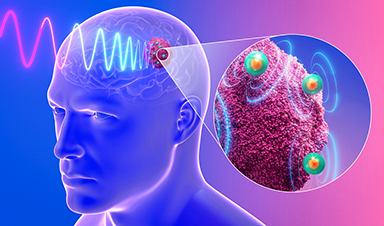
Injectable nanodevices could provide effective treatment for drug-resistant glioblastoma
The brain cancer glioblastoma is one of the most aggressive and treatment-resistant cancers known to medicine, carrying a median survival of just 12-15 months, even with the best available care. Now, researchers at the [...]

New Treatment Cuts “Bad” Cholesterol in Half for a Full Year
A single infusion of an experimental CRISPR-Cas9 therapy was reported to safely lower LDL cholesterol by 52.5% and triglycerides by 47.8%, as measured 12 months after treatment. What if one infusion could keep cholesterol [...]

Too Much RNA Can Drain a Cell’s Energy, Scientists Discover
A virus may cripple a cell’s power supply simply by producing too much of a molecule the cell needs to survive. New research from the Texas A&M College of Veterinary Medicine and Biomedical Sciences [...]

West African scientists warn of weakening health systems and urge stronger outbreak detection
LOME, Togo (AP) — West African laboratory scientists called on governments Friday to strengthen capacity to detect disease outbreaks to avoid another major outbreak, saying health systems across the region are becoming weaker. Participants [...]