- Eliezer Yudkowsky says superintelligent AI could wipe out humanity by design or by accident.
- The researcher dismissed Geoffrey Hinton's "AI as mom" idea: "We don't have the technology."
- Leaders, from Elon Musk to Roman Yampolskiy, have voiced similar doomsday fears.
AI researcher Eliezer Yudkowsky doesn't lose sleep over whether AI models sound "woke" or "reactionary."
Yudkowsky, the founder of the Machine Intelligence Research Institute, sees the real threat as what happens when engineers create a system that's vastly more powerful than humans and completely indifferent to our survival.
"If you have something that is very, very powerful and indifferent to you, it tends to wipe you out on purpose or as a side effect," he said in an episode of The New York Times podcast "Hard Fork" released last Saturday.
Yudkowsky, coauthor of the new book If Anyone Builds It, Everyone Dies, has spent two decades warning that superintelligence poses an existential risk to humanity.
His central claim is that humanity doesn't have the technology to align such systems with human values.
He described grim scenarios in which a superintelligence might deliberately eliminate humanity to prevent rivals from building competing systems or wipe us out as collateral damage while pursuing its goals.
Yudkowsky pointed to physical limits like Earth's ability to radiate heat. If AI-driven fusion plants and computing centers expanded unchecked, "the humans get cooked in a very literal sense," he said.
He dismissed debates over whether chatbots sound as though they are "woke" or have certain political affiliations, calling them distractions: "There's a core difference between getting things to talk to you a certain way and getting them to act a certain way once they are smarter than you."
Yudkowsky also brushed off the idea of training advanced systems to behave like mothers — a theory suggested by Geoffrey Hinton, often called the "godfather of AI — arguing it wouldn't make the technology safer. He argued that such schemes are unrealistic at best.
"We just don't have the technology to make it be nice," he said, adding that even if someone devised a "clever scheme" to make a superintelligence love or protect us, hitting "that narrow target will not work on the first try" — and if it fails, "everybody will be dead and we won't get to try again."
Critics argue that Yudkowsky's perspective is overly gloomy, but he pointed to cases of chatbots encouraging users toward self-harm, saying that's evidence of a system-wide design flaw.
"If a particular AI model ever talks anybody into going insane or committing suicide, all the copies of that model are the same AI," he said.
Other leaders are sounding alarms, too
Yudkowsky is not the only AI researcher or tech leader to warn that advanced systems could one day annihilate humanity.
In February, Elon Musk told Joe Rogan that he sees "only a 20% chance of annihilation" of AI — a figure he framed as optimistic.
In April, Hinton said in a CBS interview that there was a "10 to 20% chance" that AI could seize control.
A March 2024 report commissioned by the US State Department warned that the rise of artificial general intelligence could bring catastrophic risks up to human extinction, pointing to scenarios ranging from bioweapons and cyberattacks to swarms of autonomous agents.
In June 2024, AI safety researcher Roman Yampolskiy estimated a 99.9% chance of extinction within the next century, arguing that no AI model has ever been fully secure.
Across Silicon Valley, some researchers and entrepreneurs have responded by reshaping their lives — stockpiling food, building bunkers, or spending down retirement savings — in preparation for what they see as a looming AI apocalypse.

News

Back and shoulder surgery is often worse than useless
Millions of operations should be scrapped SIX IN TEN Britons have surgery at some point. So do lots of Americans, at a cost of perhaps $500bn a year, a third of all spending on [...]
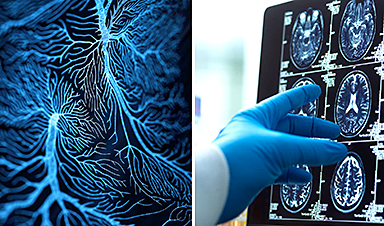
Cocaine plays with mind, hijacks brain circuit, drives increasingly rigid and repetitive behavior
Researchers have found that cocaine hijacks brain circuit, which to drive increasingly rigid and repetitive behavior. The brain circuit that normally participates in selecting natural mouth and face movements, but which becomes disproportionately engaged [...]
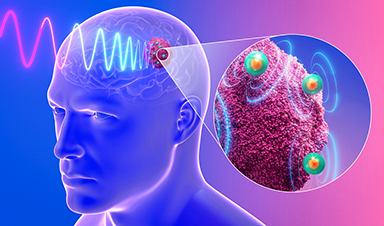
Injectable nanodevices could provide effective treatment for drug-resistant glioblastoma
The brain cancer glioblastoma is one of the most aggressive and treatment-resistant cancers known to medicine, carrying a median survival of just 12-15 months, even with the best available care. Now, researchers at the [...]
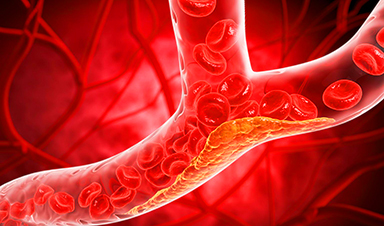
New Treatment Cuts “Bad” Cholesterol in Half for a Full Year
A single infusion of an experimental CRISPR-Cas9 therapy was reported to safely lower LDL cholesterol by 52.5% and triglycerides by 47.8%, as measured 12 months after treatment. What if one infusion could keep cholesterol [...]
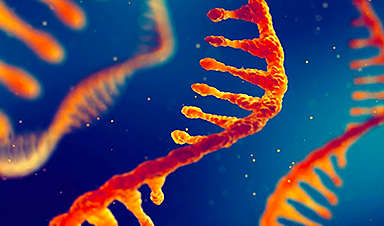
Too Much RNA Can Drain a Cell’s Energy, Scientists Discover
A virus may cripple a cell’s power supply simply by producing too much of a molecule the cell needs to survive. New research from the Texas A&M College of Veterinary Medicine and Biomedical Sciences [...]
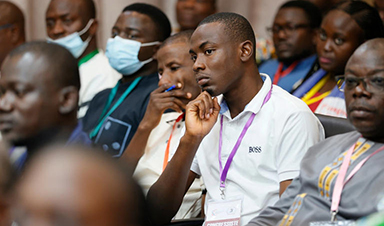
West African scientists warn of weakening health systems and urge stronger outbreak detection
LOME, Togo (AP) — West African laboratory scientists called on governments Friday to strengthen capacity to detect disease outbreaks to avoid another major outbreak, saying health systems across the region are becoming weaker. Participants [...]

A Little-Known Protein Could Point to a New Way To Treat Alzheimer’s
A study suggests that increasing SORLA protein levels could help treat Alzheimer’s disease and other disorders involving tau protein. Increasing SORLA, a protein with a protective role in the brain, helped mice withstand damage [...]
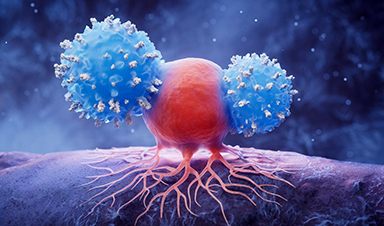
Cancer’s Hidden Antioxidant Shield Helps It Escape the Immune System
Blocking an antioxidant protein that tumors use to suppress immune attacks improved cancer immunotherapy responses in mice. Cancer cells can release antioxidants that interfere with the immune cells trying to kill them. Researchers have [...]

Scientists Find a Berry Compound That Helps Muscle Cells Burn Fat
Pterostilbene, a compound found naturally in some foods, affects how skeletal muscles process fats by stabilizing a protein called PPARδ and increasing its signaling activity. Pterostilbene, a natural compound found in blueberries, grapes, and [...]
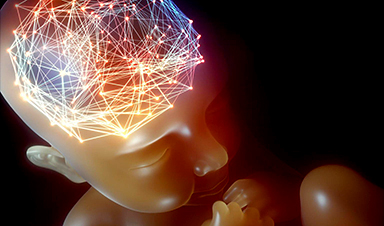
Two Hidden Forces Help Build the Human Brain Before Birth
Scientists have uncovered two surprising forces that help guide how the human brain forms before birth. Before birth, the human brain is shaped in large part by an unusual class of stem cells known [...]
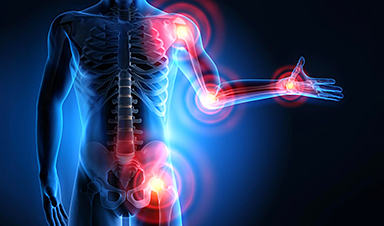
Researchers Uncover a Hidden Trigger Behind Chronic Inflammation
The findings offer new insights that could help guide the development of future therapies. A protein called human resistin may help flip on one of the immune system’s most powerful inflammatory switches. Researchers at [...]
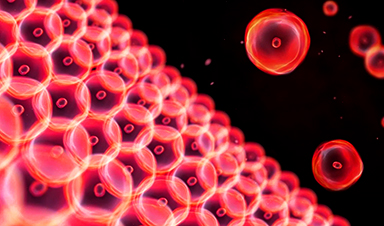
Scientists Have Uncovered Previously Hidden Microbial Activity on Human Skin
The most abundant microbes on your skin may not be the ones doing most of the work. Human skin supports vast communities of bacteria, fungi, and viruses that can influence its protective barrier, immune [...]
Brazilian Tree Compounds Fight COVID-19 on Multiple Fronts
Scientists found compounds in a Brazilian tree that hit SARS-CoV-2 on multiple fronts, revealing a promising new lead in the search for COVID-19 treatments. Researchers have found that galloylquinic acids extracted from the leaves [...]
Cutting Two Amino Acids Slowed Prostate Cancer in Mice
A newly identified link between amino acid metabolism and cholesterol production may help prostate tumors adapt to hormone therapy. Prostate cancer can find ways around treatments designed to deprive tumors of the hormones they [...]
Largest-Ever Physics Survey Raises New Doubts About Our Model of the Universe
Physicists around the world remain deeply divided on key mysteries of the universe, from dark matter to quantum gravity. The standard cosmological model failed to gain majority support, and no leading theory dominated the [...]

Scientists Just Overturned a 100-Year-Old Belief About Bacteria in the Lungs
New findings raise questions about the role of microbes living in the lungs. More than 35 trillion bacteria live throughout the human body, forming microbiomes in the gut, mouth, lungs, skin, and urogenital tract. [...]