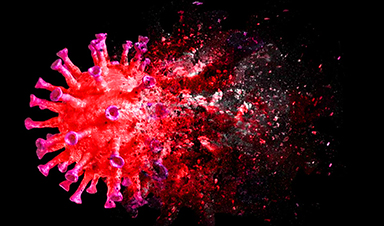
Using AI, researchers identified one tiny molecular interaction that viruses need to infect cells. Disrupting it stopped the virus before infection could begin.
Washington State University scientists have uncovered a method to interfere with a key viral protein, stopping viruses from getting inside cells where they can cause disease. The discovery points toward a possible new strategy for developing antiviral treatments in the future.
The work, published in the journal Nanoscale, involved researchers from the School of Mechanical and Materials Engineering and the Department of Veterinary Microbiology and Pathology. Together, they identified and disrupted a specific molecular interaction that herpes viruses depend on to enter cells.
"Viruses are very smart," said Jin Liu, corresponding author of the study and a professor in the School of Mechanical and Materials Engineering. "The whole process of invading cells is very complex, and there are a lot of interactions. Not all of the interactions are equally important — most of them may just be background noise, but there are some critical interactions."
Targeting the Protein Viruses Use to Break In
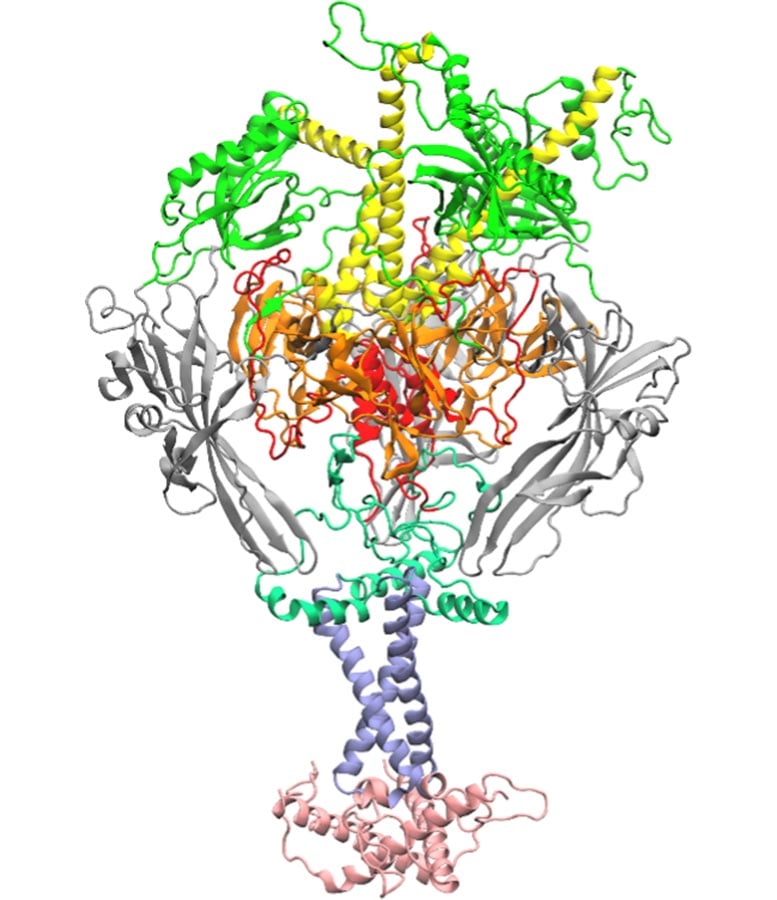
The researchers focused on a viral "fusion" protein, which herpes viruses use to attach to cells and merge with them, triggering infection and disease. Scientists still lack a clear understanding of how this large and complicated protein changes shape to allow viruses inside cells. This limited knowledge is one reason vaccines for many common herpes viruses have remained elusive.
How AI Narrowed Down Thousands of Possibilities
To tackle this challenge, the team turned to artificial intelligence and molecular scale simulations. Professors Prashanta Dutta and Jin Liu analyzed thousands of possible interactions within the fusion protein to find a single amino acid that plays a central role in viral entry. They designed an algorithm to examine interactions among amino acids, the basic building blocks of proteins, and then applied machine learning to sort through the data and identify which interactions mattered most.
A Single Mutation That Blocks Infection
Once the key amino acid was identified, laboratory experiments led by Anthony Nicola from the Department of Veterinary Microbiology and Pathology put the findings to the test. By altering that one amino acid, the researchers found that the virus could no longer successfully fuse with cells. As a result, the herpes virus was effectively prevented from entering the cells.
According to Liu, the computational work was essential because testing even one interaction in the lab can take months. Narrowing the focus ahead of time made the experimental phase far more efficient.
"It was just a single interaction from thousands of interactions. If we don't do the simulation and instead did this work by trial and error, it could have taken years to find," said Liu. "The combination of theoretical computational work with the experiments is so efficient and can accelerate the discovery of these important biological interactions."
What Scientists Still Need to Understand
Although the team confirmed the importance of this specific interaction, many questions remain about how changing one amino acid affects the structure of the entire fusion protein. The researchers plan to continue using simulations and machine learning to better understand how small molecular changes influence the protein at larger scales.
"There is a gap between what the experimentalists see and what we can see in the simulation," said Liu. "The next step is how this small interaction affects the structural change at larger scales. That is also very challenging for us."
Reference: "Modulation of specific interactions within a viral fusion protein predicted from machine learning blocks membrane fusion" by Ryan E. Odstrcil, Albina O. Makio, McKenna A. Hull, Prashanta Dutta, Anthony V. Nicola and Jin Liu, 4 November 2025, Nanoscale.
DOI: 10.1039/D5NR03235K
In addition to Liu, Dutta and Nicola, the project was conducted by PhD students Ryan Odstrcil, Albina Makio, and McKenna Hull. The work was funded by the National Institutes of Health.

News
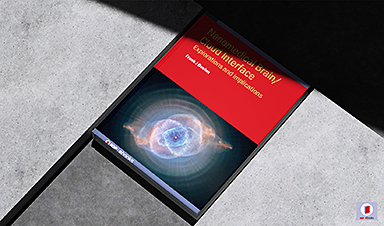
NanoMedical Brain/Cloud Interface – Explorations and Implications. A new book from Frank Boehm
New book from Frank Boehm, NanoappsMedical Inc Founder: This book explores the future hypothetical possibility that the cerebral cortex of the human brain might be seamlessly, safely, and securely connected with the Cloud via [...]
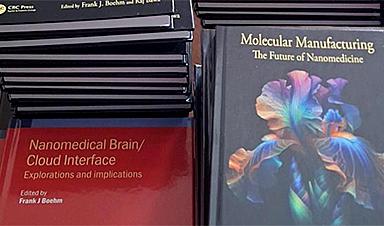
Our books now available worldwide!
Online Sellers other than Amazon, Routledge, and IOPP Indigo Global Health Care Equivalency in the Age of Nanotechnology, Nanomedicine and Artifcial Intelligence Global Health Care Equivalency In The Age Of Nanotechnology, Nanomedicine And Artificial [...]
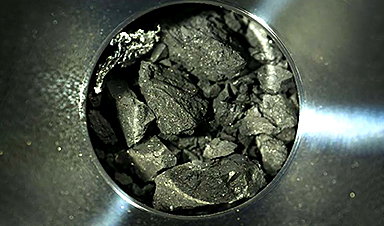
Ryugu asteroid samples contain all DNA and RNA building blocks, bolstering origin-of-life theories
All the essential ingredients to make the DNA and RNA underpinning life on Earth have been discovered in samples collected from the asteroid Ryugu, scientists said Monday. The discovery comes after these building blocks [...]

Is Berberine Really a “Natural Ozempic”?
Often labeled a “natural Ozempic,” berberine is widely discussed as a metabolic aid. Yet research suggests its influence may lie deeper. In recent years, berberine has gained significant attention as a supposed “natural way” [...]
Viagra Ingredient Shows Promise for Rare Childhood Brain Disease in Surprising Study
A rare childhood disease with no approved treatment may have an unexpected new therapeutic candidate. Sildenafil, the active ingredient also sold under the brand name Viagra, may help reduce symptoms in people with Leigh [...]

In a first for China, Neuracle’s implantable brain-computer interface wins approval
In a landmark development, Neuracle Medical Technology has secured the country’s first-ever approval for an implantable brain-computer interface (BCI) system designed to restore hand motor function in patients with spinal cord injuries, in a [...]
A Cambridge Lab Mistake Reveals a Powerful New Way to Modify Drug Molecules
A surprising lab discovery reveals a light-powered way to tweak complex drugs faster, cleaner, and later in development. Researchers at the University of Cambridge have created a new technique for altering complex drug molecules [...]
New book from NanoappsMedical Inc – Molecular Manufacturing: The Future of Nanomedicine
This book explores the revolutionary potential of atomically precise manufacturing technologies to transform global healthcare, as well as practically every other sector across society. This forward-thinking volume examines how envisaged Factory@Home systems might enable the cost-effective [...]

Scientists Discover Simple Saliva Test That Reveals Hidden Diabetes Risk
Researchers have identified a potential new way to assess metabolic health using saliva instead of blood. High insulin levels in the blood, known as hyperinsulinemia, can reveal metabolic problems long before obvious symptoms appear. It is [...]

One Nasal Spray Could Protect Against COVID, Flu, Pneumonia, and More
A single nasal spray vaccine may one day protect against viruses, pneumonia, and even allergies. For decades, scientists have dreamed of creating a universal vaccine capable of protecting against many different pathogens. The idea [...]
New AI Model Predicts Cancer Spread With Incredible Accuracy
Scientists have developed an AI system that analyzes complex gene-expression signatures to estimate the likelihood that a tumor will spread. Why do some tumors spread throughout the body while others remain confined to their [...]

Scientists Discover DNA “Flips” That Supercharge Evolution
In Lake Malawi, hundreds of species of cichlid fish have evolved with astonishing speed, offering scientists a rare opportunity to study how biodiversity arises. Researchers have identified segments of “flipped” DNA that may allow fish to adapt rapidly [...]

Scientists Discover Why Some COVID Survivors Still Can’t Taste Food Years Later
A new study provides the first direct biological evidence explaining why some people continue to experience taste loss long after recovering from COVID-19. Researchers have uncovered specific biological changes in taste buds that could help [...]

Catching COVID significantly raises the risk of developing kidney disease, researchers find
Catching Covid significantly raises the risk of developing deadly kidney disease, research has shown. The virus was found to increase the chances that patients will develop the incurable condition by around 50 per cent. [...]
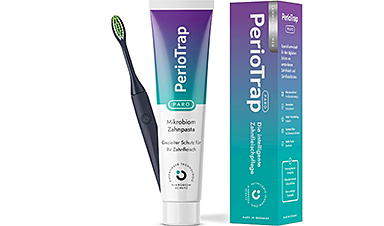
New Toothpaste Stops Gum Disease Without Harming Healthy Bacteria
Researchers have developed a targeted approach to combat periodontitis without disrupting the natural balance of the oral microbiome. The innovation could reshape how gum disease is treated while preserving beneficial bacteria. The human mouth [...]

Plastic Without End: Are We Polluting the Planet for Eternity?
The Kunming Montreal Global Biodiversity Framework calls for the elimination of plastic pollution by 2030. If that goal has been clearly set, why have meaningful measures that create real change still not been implemented? [...]