A widely available and inexpensive drug that is used to ease the symptoms of indigestion may prove a worthy contender for treating COVID-19 infection in those whose disease doesn’t require admission to hospital, suggest the findings of a small case series, published online in the journal Gut.
The effects were felt within 24 to 48 hours of taking famotidine, and a rigorous clinical trial is now warranted to see if the drug could be an effective treatment for COVID-19, say the researchers.
Famotidine (Pepcid AC) belongs to a class of drugs known as histamine-2 receptor antagonists, which reduce the amount of stomach acid produced. Famotidine can be taken in doses of 20-160 mg, up to four times a day, for the treatment of acid reflux and heartburn.
The researchers report on 10 people (6 men; 4 women) who developed COVID-19 infection, all of whom happened to have been taking famotidine during their illness.
The severity of five cardinal symptoms–cough; shortness of breath; fatigue; headache and loss of taste/smell as well as general unwellness–was measured using a version of a 4-point scale normally applied to assess the severity of cancer symptoms (ECOG PS).
Seven of the patients tested positive for COVID-19, using a swab test; two had antibodies to the infection; and one patient wasn’t tested but was diagnosed with the infection by a doctor.
Their ages ranged from 23 to 71 and they had a diverse range of ethnic backgrounds and known risk factors for COVID-19 severity, including high blood pressure and obesity.
All started taking famotidine when they were feeling very poorly with COVID-19, the symptoms of which had been going on from 2 up to 26 days at that point.
The most frequently used dose was 80 mg taken three times a day, with the average treatment period lasting 11 days, but ranging from 5 to 21 days.
All 10 patients said that symptoms quickly improved within 24-48 hours of starting famotidine and had mostly cleared up after 14 days.

Image Credit: The image is in the public domain.
Thanks to Heinz V. Hoenen. Follow him on twitter: @HeinzVHoenen

News This Week
Cancer’s Hidden Antioxidant Shield Helps It Escape the Immune System
Blocking an antioxidant protein that tumors use to suppress immune attacks improved cancer immunotherapy responses in mice. Cancer cells can release antioxidants that interfere with the immune cells trying to kill them. Researchers have [...]

Scientists Find a Berry Compound That Helps Muscle Cells Burn Fat
Pterostilbene, a compound found naturally in some foods, affects how skeletal muscles process fats by stabilizing a protein called PPARδ and increasing its signaling activity. Pterostilbene, a natural compound found in blueberries, grapes, and [...]

Two Hidden Forces Help Build the Human Brain Before Birth
Scientists have uncovered two surprising forces that help guide how the human brain forms before birth. Before birth, the human brain is shaped in large part by an unusual class of stem cells known [...]
Researchers Uncover a Hidden Trigger Behind Chronic Inflammation
The findings offer new insights that could help guide the development of future therapies. A protein called human resistin may help flip on one of the immune system’s most powerful inflammatory switches. Researchers at [...]
Scientists Have Uncovered Previously Hidden Microbial Activity on Human Skin
The most abundant microbes on your skin may not be the ones doing most of the work. Human skin supports vast communities of bacteria, fungi, and viruses that can influence its protective barrier, immune [...]
Brazilian Tree Compounds Fight COVID-19 on Multiple Fronts
Scientists found compounds in a Brazilian tree that hit SARS-CoV-2 on multiple fronts, revealing a promising new lead in the search for COVID-19 treatments. Researchers have found that galloylquinic acids extracted from the leaves [...]
Cutting Two Amino Acids Slowed Prostate Cancer in Mice
A newly identified link between amino acid metabolism and cholesterol production may help prostate tumors adapt to hormone therapy. Prostate cancer can find ways around treatments designed to deprive tumors of the hormones they [...]

Largest-Ever Physics Survey Raises New Doubts About Our Model of the Universe
Physicists around the world remain deeply divided on key mysteries of the universe, from dark matter to quantum gravity. The standard cosmological model failed to gain majority support, and no leading theory dominated the [...]

Scientists Just Overturned a 100-Year-Old Belief About Bacteria in the Lungs
New findings raise questions about the role of microbes living in the lungs. More than 35 trillion bacteria live throughout the human body, forming microbiomes in the gut, mouth, lungs, skin, and urogenital tract. [...]

GHCE Concept
From the preface of the book Global Health Care Equivalency in the Age of Nanotechnology, Nanomedicine and Artificial Intelligence, Edited by Frank Boehm: Since the publication of my first book (Nanomedical Device and Systems [...]

Novartis, Ionis drug failure spurs questions
Pelacarsen didn’t protect heart health despite lowering levels of a protein particle, “Lp(a),” in a large clinical trial — a result with important implications for cardiovascular drug research. Dive Brief: An RNA drug from [...]

New injectable treatment helps the brain rebuild after stroke
Biomedical engineers at Duke University have created an injectable biomaterial that may help the brain recover from damage left behind by an ischemic stroke. In experiments with mice, the material transformed the cavity created [...]

Scientists Discover a Hidden “Immune Organ” Inside the Skull
Researchers discovered lymph node-like immune hubs inside skull bone marrow that appear to act as rapid-response centers for the brain. For decades, the brain was thought to operate largely apart from the immune system. [...]
Engineered tRNAs and lipid nanoparticles target nonsense mutation cystic fibrosis
Researchers have developed a potential new approach for treating a form of cystic fibrosis caused by so-called nonsense mutations, combining chemically modified transfer RNAs with lipid nanoparticles designed to deliver the therapy directly to [...]
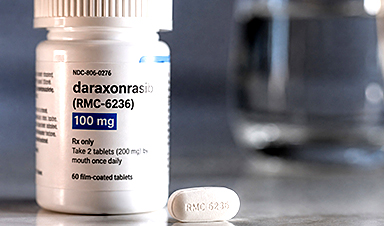
New pancreatic cancer drug carries a $39,800 monthly list price
A groundbreaking treatment for one of the most common forms of pancreatic cancer has been approved in pill form by the FDA. Revolution Medicines’ oral tablet daraxonrasib, branded as Rasonque, reduced the risk of [...]
Researchers Have Discovered a New Way To Reduce Chronic Nerve Pain
A cancer-linked protein called BRAF may help drive chronic nerve pain, and existing cancer drugs targeting it reduced pain sensitivity in preclinical models. Chronic nerve pain can persist long after an injury and often [...]