Blocking an antioxidant protein that tumors use to suppress immune attacks improved cancer immunotherapy responses in mice.
Cancer cells can release antioxidants that interfere with the immune cells trying to kill them. Researchers have discovered how this chemical defense works, raising the possibility of switching it off to make cancer immunotherapy more effective.
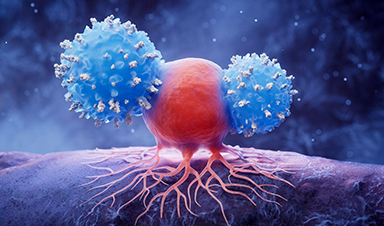
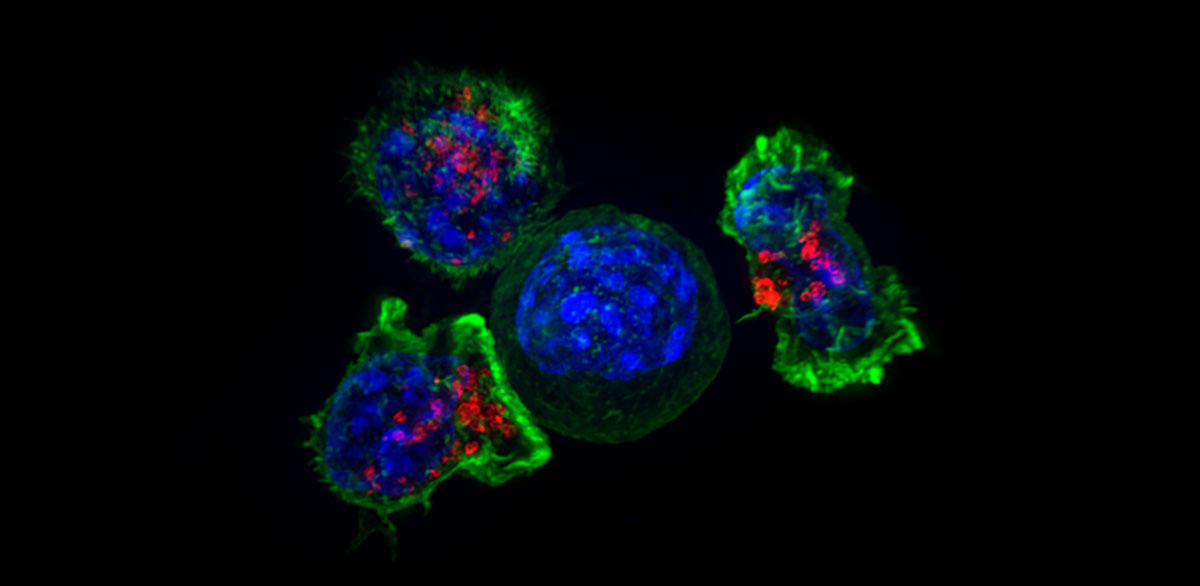
The defense takes advantage of a requirement of cancer-fighting immune cells called T cells. To activate their attack, T cells need small amounts of reactive oxygen species, chemically reactive molecules that can damage cells but also help transmit signals inside them. Tumors release an antioxidant protein that clears away those molecules, leaving T cells without the signals they need.
Researchers at the University of Cambridge and Oregon Health & Science University identified this mechanism by analyzing fluid surrounding cells in tumors grown in mice. The cancers released large amounts of Peroxiredoxin 1, or PRDX1, a protein that acts as a natural antioxidant. The findings were published in Science.
Cell-damaging molecules help T cells activate
Reactive oxygen species have long been viewed as damaging byproducts of metabolism, helping drive interest in antioxidant supplements as a possible way to reduce cancer risk. Their role in activating T cells shows why removing them can also interfere with the body’s defenses.
Evidence from human cancers also pointed to PRDX1 being released into the surrounding environment. The team analyzed published data on proteins released by human cancer cell lines, examined gene activity across thousands of human tumors, and collected fluid surrounding tumors removed from patients. All three approaches indicated that human cancers release PRDX1 into their surroundings, where it can remove the reactive oxygen species that T cells depend on.
To test what happens when cancer cells lose this defense, the researchers used CRISPR gene-editing technology to create mouse cancer cells that could no longer make PRDX1. Removing that ability increased immune-cell activity and limited tumor growth. It also improved the cancers’ response to immunotherapy, which uses the immune system to fight the disease.
Immunotherapies can be highly effective, but they work only in some patients. The mouse results suggest that targeting PRDX1 could help overcome one barrier to treatment.
Professor Rahul Roychoudhuri, also from Cambridge’s Department of Pathology, said: “We’ve found a new way by which cancers shut down the immune system. When we block this process, tumors that don’t respond to some immunotherapies start responding to treatment. That tells us this is a pathway worth targeting therapeutically, and there are several ways we might be able to achieve this.”
Antioxidant supplements may undermine immune defenses
The findings may also help explain why antioxidant supplements have disappointed in cancer prevention research. Several large randomized clinical trials have found that these supplements fail to reduce cancer risk and, in some cases, worsen outcomes. Antioxidants could inadvertently weaken the immune system’s attack on cancer by removing molecules needed to activate T cells.
Prooxidants promote the formation or activity of reactive molecules, the opposite of what antioxidants do. Whether that approach could safely improve cancer treatment in people remains to be established. The team stresses that its treatment findings come from preclinical laboratory models, and people living with cancer should not change their treatment or diet without medical advice.
Reference: “Tumor-derived antioxidants suppress immunity by depriving T cells of reactive oxygen species” by Alexander J. Wesolowski, Ardon M. Pillay, Panagiota Vardaka, Rabab Nasrallah, Randy Greaves, Housaiyin Li, Iliana Loffreda, Chelsea Jenkin, Andrew M. James, Alica Nübling, Christopher J. Ward, Teresa von Linde, Alberto G. Conti, Sheue-Fen Tzeng, Layla Dahmani, Alexander C. Evans, Sarah K. Whiteside, Yumi Yamashita-Kanemaru, Charlotte J. Imianowski, Jie Yang, Ignacio Moraga Gonzalez, Jack Chapman, Aws Al-Deka, Klaus Okkenhaug, Michael P. Murphy, Bartlomiej Swiatczak, Geoffrey Guittard, Enrico Lugli, Lukas Flatz, Ping-Chih Ho, Robert L. Eil and Rahul Roychoudhuri, 3 September 2026, Science.
DOI: 10.1126/science.adz8203
The research was largely funded by the Medical Research Council, European Research Council, Wellcome and the National Institutes of Health/National Cancer Institute.

News – Curated by Amanda Scott, Alias Group Creative
Follow her on Bluesky
Researcher at Russian plague laboratory dies of ‘unknown’ infection
Russian authorities have imposed "anti-epidemic measures" after a laboratory worker at an institute in Siberia dedicated to studying the plague and other infectious diseases died of a mysterious illness. The researcher, a 28-year-old female [...]

GHCE Concept
From the preface of the book Global Health Care Equivalency in the Age of Nanotechnology, Nanomedicine and Artificial Intelligence, Edited by Frank Boehm: Since the publication of my first book (Nanomedical Device and Systems [...]
A Surprising Brain Signal Could Explain Why Eating Less Protein Extends Lifespan
A new paper suggests that limiting protein intake triggers a coordinated response throughout the body that may help explain how protein restriction affects healthy aging. Animals respond to protein restriction, or reduced protein in [...]

Back and shoulder surgery is often worse than useless
Millions of operations should be scrapped SIX IN TEN Britons have surgery at some point. So do lots of Americans, at a cost of perhaps $500bn a year, a third of all spending on [...]
Cocaine plays with mind, hijacks brain circuit, drives increasingly rigid and repetitive behavior
Researchers have found that cocaine hijacks brain circuit, which to drive increasingly rigid and repetitive behavior. The brain circuit that normally participates in selecting natural mouth and face movements, but which becomes disproportionately engaged [...]
Injectable nanodevices could provide effective treatment for drug-resistant glioblastoma
The brain cancer glioblastoma is one of the most aggressive and treatment-resistant cancers known to medicine, carrying a median survival of just 12-15 months, even with the best available care. Now, researchers at the [...]
New Treatment Cuts “Bad” Cholesterol in Half for a Full Year
A single infusion of an experimental CRISPR-Cas9 therapy was reported to safely lower LDL cholesterol by 52.5% and triglycerides by 47.8%, as measured 12 months after treatment. What if one infusion could keep cholesterol [...]
Too Much RNA Can Drain a Cell’s Energy, Scientists Discover
A virus may cripple a cell’s power supply simply by producing too much of a molecule the cell needs to survive. New research from the Texas A&M College of Veterinary Medicine and Biomedical Sciences [...]
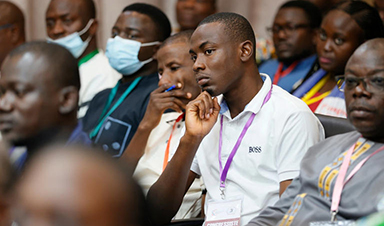
West African scientists warn of weakening health systems and urge stronger outbreak detection
LOME, Togo (AP) — West African laboratory scientists called on governments Friday to strengthen capacity to detect disease outbreaks to avoid another major outbreak, saying health systems across the region are becoming weaker. Participants [...]

A Little-Known Protein Could Point to a New Way To Treat Alzheimer’s
A study suggests that increasing SORLA protein levels could help treat Alzheimer’s disease and other disorders involving tau protein. Increasing SORLA, a protein with a protective role in the brain, helped mice withstand damage [...]
Cancer’s Hidden Antioxidant Shield Helps It Escape the Immune System
Blocking an antioxidant protein that tumors use to suppress immune attacks improved cancer immunotherapy responses in mice. Cancer cells can release antioxidants that interfere with the immune cells trying to kill them. Researchers have [...]

Scientists Find a Berry Compound That Helps Muscle Cells Burn Fat
Pterostilbene, a compound found naturally in some foods, affects how skeletal muscles process fats by stabilizing a protein called PPARδ and increasing its signaling activity. Pterostilbene, a natural compound found in blueberries, grapes, and [...]
Two Hidden Forces Help Build the Human Brain Before Birth
Scientists have uncovered two surprising forces that help guide how the human brain forms before birth. Before birth, the human brain is shaped in large part by an unusual class of stem cells known [...]
Researchers Uncover a Hidden Trigger Behind Chronic Inflammation
The findings offer new insights that could help guide the development of future therapies. A protein called human resistin may help flip on one of the immune system’s most powerful inflammatory switches. Researchers at [...]
Scientists Have Uncovered Previously Hidden Microbial Activity on Human Skin
The most abundant microbes on your skin may not be the ones doing most of the work. Human skin supports vast communities of bacteria, fungi, and viruses that can influence its protective barrier, immune [...]
Brazilian Tree Compounds Fight COVID-19 on Multiple Fronts
Scientists found compounds in a Brazilian tree that hit SARS-CoV-2 on multiple fronts, revealing a promising new lead in the search for COVID-19 treatments. Researchers have found that galloylquinic acids extracted from the leaves [...]