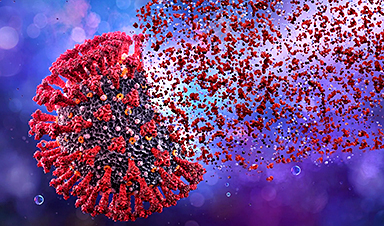
Scientists found compounds in a Brazilian tree that hit SARS-CoV-2 on multiple fronts, revealing a promising new lead in the search for COVID-19 treatments.
Researchers have found that galloylquinic acids extracted from the leaves of Copaifera lucens Dwyer, a tree native to Brazil and found mainly in the Atlantic Forest, can act against SARS-CoV-2 in several different ways. SARS-CoV-2 is the virus responsible for COVID-19.
The team selected this species because researchers led by Jairo Kenupp Bastos have extensive experience studying the chemistry and pharmacology of Copaifera plants. Bastos is a pharmacist and professor at the Ribeirão Preto School of Pharmaceutical Sciences at the University of São Paulo (FCFRP-USP) and coordinated the study.
Plant Compounds With Broad Biological Activity
Galloylquinic acids have already attracted scientific interest because of their wide range of reported biological effects. Previous research has found antifungal and anticancer activity in vitro and in vivo, along with broad-spectrum antiviral properties.
Derivatives of these compounds have also shown strong inhibitory effects against HIV-1 in biochemical tests and cell cultures, while displaying lower toxicity than some of the other molecules tested.
For the new study, which was supported by FAPESP, the researchers first prepared and characterized fractions from the plant leaves that were rich in galloylquinic acids. They then performed cytotoxicity tests to determine how safely the compounds could be introduced into host cells.
Testing the Compounds Against SARS-CoV-2
The team evaluated antiviral activity using plaque reduction assays, which measure how effectively antibodies or antiviral compounds can neutralize a virus. The tests showed strong activity against SARS-CoV-2.
The researchers also examined viral protein production and the way the compounds interacted with several important viral targets. These included the receptor-binding domain of the spike protein, which helps SARS-CoV-2 enter human cells, papain-like protease (PLpro), an enzyme involved in helping the virus evade host defenses, and RNA polymerase, an enzyme the virus needs to copy its genetic material and reproduce.
“This integrated approach allowed us to understand how the compounds work and how they act at the molecular level,” said Mohamed Abdelsalam, an assistant professor of pharmacognosy and natural product chemistry at the Faculty of Pharmacy at the Delta University of Science and Technology in Egypt.
A Multi-Target Attack on the Virus
The findings, published in the journal Scientific Reports, showed that galloylquinic acids had strong activity against the coronavirus variant tested. The compounds interfered with viral entry into cells, viral replication, and the production of viral proteins.
The substances also have anti-inflammatory and immunomodulatory properties, meaning they may influence how the immune system responds during infection. That effect could be especially relevant in severe cases of COVID-19, when an overly aggressive immune response can contribute to complications.
“An important aspect revealed by this information is the multi-target mechanism of the compound, which reduces the likelihood of resistance developing. This is because many current antivirals act on only one viral protein, which promotes this effect,” says Bastos.
More Testing Is Still Needed
The findings are promising, but the compounds are not yet ready to be developed into a COVID-19 treatment. Additional work will be required, including in vivo studies and clinical trials, before researchers can determine whether they could become safe and effective medicines.
Even so, the results highlight the potential value of biodiversity and natural-product research in the search for new therapeutic candidates. They also reinforce the idea that Brazil’s rich plant life could serve as an important source of molecules for future drug development.
Reference: “Bioactive galloylquinic acids from Copaifera lucens as dual inhibitors of SARS-CoV-2 Spike and RdRp proteins” by Rasha M. El-Morsi, Lamiaa A. Al-Madboly, Jairo K. Bastos, Shaimaa M. Aboukhatwa, Samah A. Nasr, Doaa A. Ghareeb, Heba A. Ramadan, Ivan Kushkevych and Mohamed A. Abd El-Salam, 2 February 2026, Scientific Reports.
DOI: 10.1038/s41598-025-25217-8

News – Curated by Amanda Scott, Alias Group Creative
Follow her on Bluesky
Brazilian Tree Compounds Fight COVID-19 on Multiple Fronts
Scientists found compounds in a Brazilian tree that hit SARS-CoV-2 on multiple fronts, revealing a promising new lead in the search for COVID-19 treatments. Researchers have found that galloylquinic acids extracted from the leaves [...]
Cutting Two Amino Acids Slowed Prostate Cancer in Mice
A newly identified link between amino acid metabolism and cholesterol production may help prostate tumors adapt to hormone therapy. Prostate cancer can find ways around treatments designed to deprive tumors of the hormones they [...]
Largest-Ever Physics Survey Raises New Doubts About Our Model of the Universe
Physicists around the world remain deeply divided on key mysteries of the universe, from dark matter to quantum gravity. The standard cosmological model failed to gain majority support, and no leading theory dominated the [...]

Scientists Just Overturned a 100-Year-Old Belief About Bacteria in the Lungs
New findings raise questions about the role of microbes living in the lungs. More than 35 trillion bacteria live throughout the human body, forming microbiomes in the gut, mouth, lungs, skin, and urogenital tract. [...]

GHCE Concept
From the preface of the book Global Health Care Equivalency in the Age of Nanotechnology, Nanomedicine and Artificial Intelligence, Edited by Frank Boehm: Since the publication of my first book (Nanomedical Device and Systems [...]
Novartis, Ionis drug failure spurs questions
Pelacarsen didn’t protect heart health despite lowering levels of a protein particle, “Lp(a),” in a large clinical trial — a result with important implications for cardiovascular drug research. Dive Brief: An RNA drug from [...]
New injectable treatment helps the brain rebuild after stroke
Biomedical engineers at Duke University have created an injectable biomaterial that may help the brain recover from damage left behind by an ischemic stroke. In experiments with mice, the material transformed the cavity created [...]
Scientists Discover a Hidden “Immune Organ” Inside the Skull
Researchers discovered lymph node-like immune hubs inside skull bone marrow that appear to act as rapid-response centers for the brain. For decades, the brain was thought to operate largely apart from the immune system. [...]
Engineered tRNAs and lipid nanoparticles target nonsense mutation cystic fibrosis
Researchers have developed a potential new approach for treating a form of cystic fibrosis caused by so-called nonsense mutations, combining chemically modified transfer RNAs with lipid nanoparticles designed to deliver the therapy directly to [...]
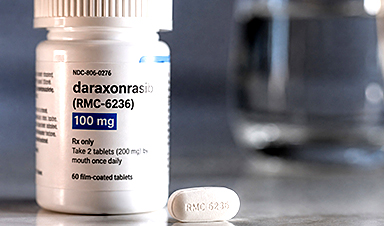
New pancreatic cancer drug carries a $39,800 monthly list price
A groundbreaking treatment for one of the most common forms of pancreatic cancer has been approved in pill form by the FDA. Revolution Medicines’ oral tablet daraxonrasib, branded as Rasonque, reduced the risk of [...]
Researchers Have Discovered a New Way To Reduce Chronic Nerve Pain
A cancer-linked protein called BRAF may help drive chronic nerve pain, and existing cancer drugs targeting it reduced pain sensitivity in preclinical models. Chronic nerve pain can persist long after an injury and often [...]
Our books now available worldwide!
Online Sellers other than Amazon, Routledge, and IOPP Indigo Global Health Care Equivalency in the Age of Nanotechnology, Nanomedicine and Artifcial Intelligence Global Health Care Equivalency In The Age Of Nanotechnology, Nanomedicine And Artificial [...]

Quantum-Enabled Regenerative Health: Reimagining Wellness, Precision Health and Longevity Medicine
Introduction Healthcare is approaching a frontier where the quantum portfolio could influence not only how disease is diagnosed and treated, but how health itself is measured, modeled, predicted and preserved. Quantum computing, quantum simulation, [...]

FDA Clears First-of-Its-Kind Nonmedication Treatment for PTSD
The FDA has cleared a system that uses brain activity data to personalize magnetic stimulation for PTSD, adding a new nonmedication treatment option. Every day in the United States, approximately 17.5 veterans die by suicide, [...]

FDA approves breakthrough drug to treat advanced pancreatic cancer
The Food and Drug Administration (FDA) approved on Wednesday a drug that could extend the survival of those with metastatic pancreatic cancer. The drug, called daraxonrasib, will be sold under the brand name Rasonque [...]
AI Decodes a Hidden DNA Signal Linked to Disease-Causing Mutations
Machine learning identifies the likely “initiator” and enables new predictions about DNA mutations that can cause disease. Every human cell depends on tens of thousands of genes being switched on at the right time [...]