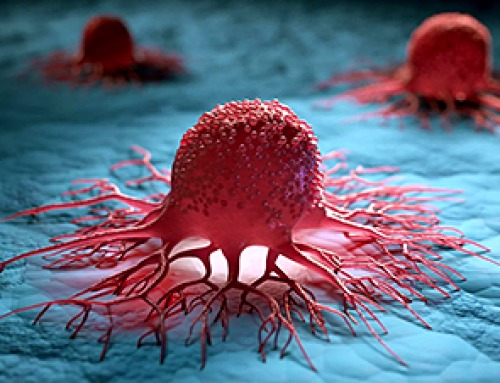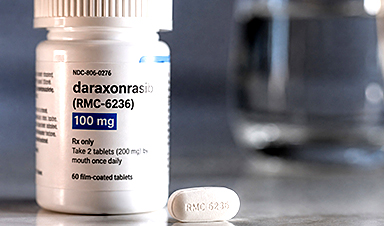
A groundbreaking treatment for one of the most common forms of pancreatic cancer has been approved in pill form by the FDA.
Revolution Medicines’ oral tablet daraxonrasib, branded as Rasonque, reduced the risk of death by 60% in phase 3 trials. Patients who received the medication in trials lived 13.2 months, compared with those on chemotherapy, who survived 6.7 months.
The drug is approved for adults with metastatic pancreatic adenocarcinoma (PDAC). Pancreatic cancer is the third-leading cause of cancer death in the U.S. behind lung and colorectal cancers, according to the American Cancer Society.
However, the treatment comes with a steep list price of roughly $477,000 a year. What patients actually pay will depend on their insurance coverage and eligibility for financial assistance.
Double the cost of the top-selling cancer drug
In a filing with the Securities and Exchange Commission, Revolution Medicines said Rasonque has a wholesale acquisition cost, or list price before insurance discounts and rebates, of approximately $39,800 for a 30-day supply at the recommended daily dose, or about $477,000 per year.
Trade publication BioPharma Dive noted the figure is more than double the list price of Merck’s Keytruda, the top-selling cancer medication.
The list price isn’t necessarily what patients will pay, however. On the investor conference call held to announce the FDA approval on Wednesday, Revolution Medicines CFO Jack Anders said some eligible patients would be covered by Medicare Part D. Additional government discounts would lower the price by an estimated 20% to 30%.
The pharmaceutical company’s (ON)Path program says it can help patients “find the best programs and resources to help you or your loved one start on treatment as soon as possible.”
Revolution Medicines’ investor call announcing Rasonque included a presentation stating that the drug could be purchased with “as little as $0 co-pay for eligible commercially insured patients.”
A major advance in treating pancreatic cancer
Daraxonrasib is not a cure for pancreatic cancer but is a life-extending option for patients who have undergone chemotherapy with limited success.
The FDA approved the drug 35 days after accepting Revolution Medicines’ application, citing it as a “critical new option for patients facing an extraordinarily difficult and historically hard-to-treat cancer.”
The FDA noted the most common side effects as rash, diarrhea, inflammation of the mouth’s mucous membranes, nausea, fatigue, vomiting, abdominal pain, edema, decreased appetite, and hemorrhage.
Anna Berkenblit, M.D., chief scientific and medical officer for the Pancreatic Cancer Action Network (PanCAN), called the FDA’s approval “the most significant advance we have seen in the fight against pancreatic cancer, a devastating disease. In addition, an oral pill can offer a less burdensome treatment experience than standard intravenous chemotherapy.”
Some 67,000 people are expected to be diagnosed with pancreatic cancer in 2026, according to the American Cancer Society. Because there are often few or no symptoms, most patients learn they have the disease after it has spread, and treatment options are limited.

News – Curated by Amanda Scott, Alias Group Creative
Follow her on Bluesky

Scientists Discover Aspirin May Slash Dementia Risk by 70% – but Only for Certain People
Aspirin was linked to a sharply lower dementia risk in some older adults, and their genes may hold the clue. A Monash University analysis found that older adults with a particular genetic profile had [...]
Inflammation May Awaken Dormant Cancer Cells Years After Treatment
The body’s response to inflammation may disturb cancer cells that have been lying silent for years, giving them an opportunity to grow again. Researchers at the Francis Crick Institute have found that gut inflammation [...]

Where do nanoparticles go once they enter the body?
New international best practice guidance, co-written at ANSTO, sets out how to measure where nanoparticles like titanium dioxide end up in the body and how long they remain. The guidance has been shared by [...]

Long-Acting HIV Shots Could Solve a Major Treatment Challenge for Young People
A major African trial suggests that changing how HIV treatment is delivered could significantly improve viral suppression in adolescents. Young people with HIV were more likely to keep the virus suppressed when they received [...]

WHO Factsheets – The top 10 causes of death
In 2023, the 10 leading causes of death accounted for 33 million deaths, or 54% of the total 61 million deaths worldwide. The top global causes of death, in order of total number of lives lost, [...]

Aging Cells May Be Hiding From the Immune System – Scientists Think They Know How
Your immune system is supposed to clear out damaged cells. Researchers may have found how some of them hide and linger as the body ages. Researchers led by Cedars-Sinai Health Sciences University have identified [...]

Your Voice May Reveal How Fast Your Brain Is Aging
Researchers have developed a machine-learning “speech clock” that estimates age from subtle patterns in how people speak and what they say. It is possible that people’s voices may contain certain signals of aging that [...]

Optogenetics Pioneers Win 2026 Nobel Prize in Physiology or Medicine
The 2026 Nobel Prize in Physiology or Medicine has been awarded to Peter Hegemann, Georg Nagel, and Karl Deisseroth for the development of optogenetics, a revolutionary technology that uses light to control individual neurons [...]

Molecular Manufacturing: The Future of Nanomedicine – From NanoappsMedical Inc.
This book explores the revolutionary potential of atomically precise manufacturing technologies to transform global healthcare, as well as practically every other sector across society. This forward-thinking volume examines how envisaged Factory@Home systems might enable the cost-effective [...]

What is ‘American Covid’ and how bad is it?
Cases of so-called ‘American Covid’ are on the rise in the UK. The strain is officially called XFG, or ‘Stratus’, and is the most common variant in North America, hence the name. It might soon [...]
Researcher at Russian plague laboratory dies of ‘unknown’ infection
Russian authorities have imposed "anti-epidemic measures" after a laboratory worker at an institute in Siberia dedicated to studying the plague and other infectious diseases died of a mysterious illness. The researcher, a 28-year-old female [...]

GHCE Concept
From the preface of the book Global Health Care Equivalency in the Age of Nanotechnology, Nanomedicine and Artificial Intelligence, Edited by Frank Boehm: Since the publication of my first book (Nanomedical Device and Systems [...]

A Surprising Brain Signal Could Explain Why Eating Less Protein Extends Lifespan
A new paper suggests that limiting protein intake triggers a coordinated response throughout the body that may help explain how protein restriction affects healthy aging. Animals respond to protein restriction, or reduced protein in [...]

Back and shoulder surgery is often worse than useless
Millions of operations should be scrapped SIX IN TEN Britons have surgery at some point. So do lots of Americans, at a cost of perhaps $500bn a year, a third of all spending on [...]

Cocaine plays with mind, hijacks brain circuit, drives increasingly rigid and repetitive behavior
Researchers have found that cocaine hijacks brain circuit, which to drive increasingly rigid and repetitive behavior. The brain circuit that normally participates in selecting natural mouth and face movements, but which becomes disproportionately engaged [...]

Injectable nanodevices could provide effective treatment for drug-resistant glioblastoma
The brain cancer glioblastoma is one of the most aggressive and treatment-resistant cancers known to medicine, carrying a median survival of just 12-15 months, even with the best available care. Now, researchers at the [...]