A cancer-linked protein called BRAF may help drive chronic nerve pain, and existing cancer drugs targeting it reduced pain sensitivity in preclinical models.
Chronic nerve pain can persist long after an injury and often responds poorly to standard pain medications. Researchers at The University of Texas MD Anderson Cancer Center now report evidence that BRAF, a protein best known for its role in cancer, may also help initiate, intensify, and sustain pain signaling after nerve damage.
In preclinical models, drugs that inhibit BRAF signaling reduced pain sensitivity, pointing to a possible new use for treatments already developed for cancer.
The research was published in Science Signaling. It was co-led by Shao-Rui Chen, M.D., professor of Anesthesiology and Perioperative Medicine, and Hui-Lin Pan, M.D., Ph.D., endowed chair of Anesthesiology and Perioperative Medicine.
“Our findings identify the cancer-promoting protein BRAF as a key driver of pathological pain signaling following nerve injury,” Pan said. “Because BRAF inhibitors are already approved for cancer treatment, this discovery raises the possibility of rapidly repurposing existing therapies to reduce the level of pain signals entering the spinal cord and improve patient quality of life.”

Neuropathic pain, or chronic pain caused by damaged nerves, can result from injury, disease, or even life-saving cancer treatments. It can be severe and long lasting, and conventional pain medicines often provide limited relief.
The researchers focused on NMDA receptors, protein channels in the brain and spinal cord that help nerve cells communicate. Following nerve damage, these receptors can become overly active and strengthen pain signals. The researchers investigated whether BRAF helps drive that change.
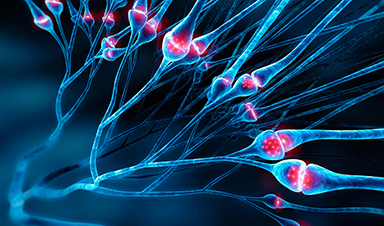
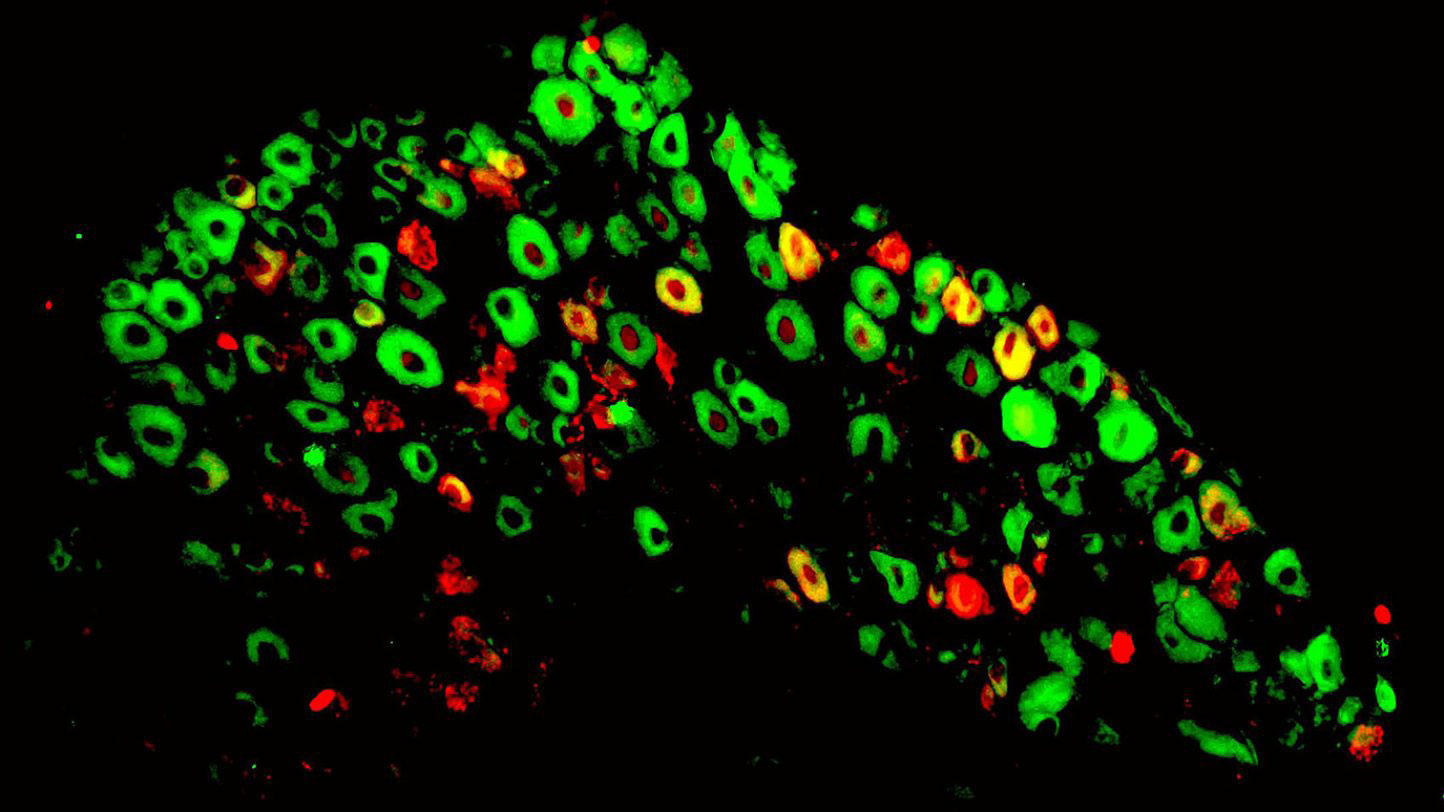
In preclinical nerve injury models, BRAF traveled from peripheral sensory nerve cells to their endings in the spinal cord. Once there, it activated molecular signaling that increased NMDA receptor activity. The researchers also observed a correlation between proteins involved in BRAF signaling and NMDA receptors in samples of human spinal cord tissue.
Together, those observations suggested that blocking BRAF might reduce excessive NMDA receptor activity and, in turn, lessen pain signaling.
Existing cancer drugs reduced pain sensitivity
The researchers then tested drugs that interfere with this pathway. In preclinical models, the BRAF inhibitor vemurafenib and the MEK inhibitor selumetinib reduced sensitivity to touch, pressure, and heat. Neither drug altered normal responses in models without nerve injury.

Genetic experiments provided additional evidence for BRAF’s role. Removing the Braf gene produced less persistent pain sensitivity, while directly activating BRAF triggered pain sensitivity even in models without nerve damage. These opposing results further supported the idea that BRAF contributes to both the development and persistence of neuropathic pain.
The findings remain preclinical. Before BRAF inhibitors could move into human trials for neuropathic pain, researchers will need to determine appropriate doses, delivery methods, and potential side effects. They also want to learn what causes BRAF to move from peripheral nerves to the spinal cord after an injury.
Even with those questions unresolved, the results link BRAF signaling with NMDA receptor activation in the spinal cord and suggest that currently available BRAF inhibitors could have therapeutic potential for neuropathic pain.
Reference: “BRAF recruitment to spinal sensory synapses promotes neuropathic pain by potentiating transsynaptic NMDA receptor activity” by Daozhong Jin, Hong Chen, Yuying Huang, Shao-Rui Chen and Hui-Lin Pan, 25 August 2026, Science Signaling.
DOI: 10.1126/scisignal.aeh6852
This study was funded by the National Institutes of Health and the Pamela and Wayne Garrison Distinguished Chair Endowment.

News – Curated by Amanda Scott, Alias Group Creative
Follow her on Bluesky

Scientists Discover Aspirin May Slash Dementia Risk by 70% – but Only for Certain People
Aspirin was linked to a sharply lower dementia risk in some older adults, and their genes may hold the clue. A Monash University analysis found that older adults with a particular genetic profile had [...]
Inflammation May Awaken Dormant Cancer Cells Years After Treatment
The body’s response to inflammation may disturb cancer cells that have been lying silent for years, giving them an opportunity to grow again. Researchers at the Francis Crick Institute have found that gut inflammation [...]

Where do nanoparticles go once they enter the body?
New international best practice guidance, co-written at ANSTO, sets out how to measure where nanoparticles like titanium dioxide end up in the body and how long they remain. The guidance has been shared by [...]

Long-Acting HIV Shots Could Solve a Major Treatment Challenge for Young People
A major African trial suggests that changing how HIV treatment is delivered could significantly improve viral suppression in adolescents. Young people with HIV were more likely to keep the virus suppressed when they received [...]

WHO Factsheets – The top 10 causes of death
In 2023, the 10 leading causes of death accounted for 33 million deaths, or 54% of the total 61 million deaths worldwide. The top global causes of death, in order of total number of lives lost, [...]
Aging Cells May Be Hiding From the Immune System – Scientists Think They Know How
Your immune system is supposed to clear out damaged cells. Researchers may have found how some of them hide and linger as the body ages. Researchers led by Cedars-Sinai Health Sciences University have identified [...]

Your Voice May Reveal How Fast Your Brain Is Aging
Researchers have developed a machine-learning “speech clock” that estimates age from subtle patterns in how people speak and what they say. It is possible that people’s voices may contain certain signals of aging that [...]

Optogenetics Pioneers Win 2026 Nobel Prize in Physiology or Medicine
The 2026 Nobel Prize in Physiology or Medicine has been awarded to Peter Hegemann, Georg Nagel, and Karl Deisseroth for the development of optogenetics, a revolutionary technology that uses light to control individual neurons [...]

Molecular Manufacturing: The Future of Nanomedicine – From NanoappsMedical Inc.
This book explores the revolutionary potential of atomically precise manufacturing technologies to transform global healthcare, as well as practically every other sector across society. This forward-thinking volume examines how envisaged Factory@Home systems might enable the cost-effective [...]

What is ‘American Covid’ and how bad is it?
Cases of so-called ‘American Covid’ are on the rise in the UK. The strain is officially called XFG, or ‘Stratus’, and is the most common variant in North America, hence the name. It might soon [...]
Researcher at Russian plague laboratory dies of ‘unknown’ infection
Russian authorities have imposed "anti-epidemic measures" after a laboratory worker at an institute in Siberia dedicated to studying the plague and other infectious diseases died of a mysterious illness. The researcher, a 28-year-old female [...]

GHCE Concept
From the preface of the book Global Health Care Equivalency in the Age of Nanotechnology, Nanomedicine and Artificial Intelligence, Edited by Frank Boehm: Since the publication of my first book (Nanomedical Device and Systems [...]

A Surprising Brain Signal Could Explain Why Eating Less Protein Extends Lifespan
A new paper suggests that limiting protein intake triggers a coordinated response throughout the body that may help explain how protein restriction affects healthy aging. Animals respond to protein restriction, or reduced protein in [...]

Back and shoulder surgery is often worse than useless
Millions of operations should be scrapped SIX IN TEN Britons have surgery at some point. So do lots of Americans, at a cost of perhaps $500bn a year, a third of all spending on [...]
Cocaine plays with mind, hijacks brain circuit, drives increasingly rigid and repetitive behavior
Researchers have found that cocaine hijacks brain circuit, which to drive increasingly rigid and repetitive behavior. The brain circuit that normally participates in selecting natural mouth and face movements, but which becomes disproportionately engaged [...]
Injectable nanodevices could provide effective treatment for drug-resistant glioblastoma
The brain cancer glioblastoma is one of the most aggressive and treatment-resistant cancers known to medicine, carrying a median survival of just 12-15 months, even with the best available care. Now, researchers at the [...]