
The most abundant microbes on your skin may not be the ones doing most of the work.
Human skin supports vast communities of bacteria, fungi, and viruses that can influence its protective barrier, immune defenses, and overall health. Yet simply cataloging these organisms cannot reveal which ones are active, how they respond to their surroundings, or what substances they produce.
Researchers at the A*STAR Genome Institute of Singapore (A*STAR GIS) and the A*STAR Skin Research Labs (A*STAR SRL) have now developed a way to analyze microbial RNA collected directly from the skin. Described in Nature Biotechnology, the method captures gene activity rather than microbial presence alone, offering a closer look at how these communities behave on the body.
Beyond a Microbial Head Count
Most skin microbiome studies examine DNA. This can identify organisms and the genes they carry, but it cannot show whether those genes are being used. DNA may also come from inactive or dead cells, meaning abundance does not necessarily reflect biological influence.
RNA provides a more immediate record of which genes microbes have switched on. Recovering it from skin is difficult, however, because microbial material is scarce compared with samples from environments such as the gut. Human genetic material can overwhelm the microbial signal, while RNA itself is fragile and can deteriorate quickly.
The researchers overcame these obstacles with a workflow designed to enrich microbial RNA and filter out misleading signals. They tested it at five skin sites in 27 healthy adults, pairing metatranscriptomics, which measures RNA activity, with metagenomics, which identifies organisms through DNA.
The Busiest Microbes Were Not Always the Most Common
The comparison exposed a striking mismatch between population size and activity. Cutibacterium acnes accounted for 46% to 90% of the microbial DNA at most sites outside the toe webs, yet contributed only 2% to 31% of the RNA. By contrast, Malassezia fungi and Staphylococcus bacteria generated an unexpectedly large share of microbial transcripts despite sometimes appearing far less prominent in the DNA data.
This means a microbe that looks minor in a conventional survey may still be performing a major role. Measuring activity could therefore help researchers distinguish organisms that merely occupy the skin from those actively shaping its chemistry and microbial community.
Microbial activity also varied sharply across different parts of the body. Microbes altered their gene activity across the scalp, cheek, forearm, inner elbow, and toe web, each of which offers a different combination of oils, moisture, nutrients, and environmental exposure.
On the scalp and cheek, for example, microbes expressed different lipid-related genes as they adapted to the distinct oils available at each site. Organisms in toe webs showed activity suited to a moist, sweat-rich environment, while microbes on exposed forearms increased genes involved in protection against oxidative stress. Such local specialization may help explain why acne, eczema, psoriasis, and other skin conditions tend to favor particular parts of the body.
A Chemical Battle on the Skin
The team also detected genes used to produce antimicrobial substances directly on human skin. Among them were previously uncharacterized bacteriocins, compounds that bacteria can deploy against microbial competitors. Some were expressed at levels comparable to known antimicrobial genes, suggesting they may be active participants in maintaining the skin’s ecological balance.
By comparing gene expression with changes in microbial abundance, the researchers identified more than 20 genes that may help mediate interactions among skin organisms. These findings offer potential starting points for discovering natural antimicrobial molecules or developing treatments that influence selected microbes without broadly disrupting the microbiome.
Dr. Chia Minghao, Senior Scientist at A*STAR GIS, said, “With this workflow, we can now see what skin microbes are actually doing on the skin. That gives us a much richer picture of how microbial communities function, adapt to different skin sites, and potentially influence health and disease.”
New Clues for Skin Disease Research
The workflow can now be combined with genomics, metabolic modeling, and culture-based experiments to investigate how microbial activity affects human skin. Researchers could use it to identify pathways associated with disease, search for useful microbial molecules, and examine whether shifts in gene activity appear before or during symptoms.
Dr. Niranjan Nagarajan, Associate Director, AI & Compute, at A*STAR GIS, said, “This approach gives researchers and clinicians a new way to profile microbial activity directly on the skin. By revealing biological pathways linked to microbial activity and skin health, it can help identify markers and mechanisms that may be relevant for prediction, diagnosis, and treatment.”
The current research involved a relatively small group of healthy adults, so it does not yet establish which patterns cause or predict skin disease. The team plans to refine the technique and apply it in clinical studies, where comparisons between healthy and affected skin could eventually support more precise and personalized approaches to diagnosis and treatment.
Reference: “Skin metatranscriptomics reveals a landscape of variation in microbial activity and gene expression across the human body” by Minghao Chia, Amanda Hui Qi Ng, Aarthi Ravikrishnan, Ahmad Nazri Mohamed Naim, Stephen Wearne, John Common and Niranjan Nagarajan, 28 August 2025, Nature Biotechnology.
DOI: 10.1038/s41587-025-02797-4

News – Curated by Amanda Scott, Alias Group Creative
Follow her on Bluesky
Scientists Have Uncovered Previously Hidden Microbial Activity on Human Skin
The most abundant microbes on your skin may not be the ones doing most of the work. Human skin supports vast communities of bacteria, fungi, and viruses that can influence its protective barrier, immune [...]

Brazilian Tree Compounds Fight COVID-19 on Multiple Fronts
Scientists found compounds in a Brazilian tree that hit SARS-CoV-2 on multiple fronts, revealing a promising new lead in the search for COVID-19 treatments. Researchers have found that galloylquinic acids extracted from the leaves [...]

Cutting Two Amino Acids Slowed Prostate Cancer in Mice
A newly identified link between amino acid metabolism and cholesterol production may help prostate tumors adapt to hormone therapy. Prostate cancer can find ways around treatments designed to deprive tumors of the hormones they [...]

Largest-Ever Physics Survey Raises New Doubts About Our Model of the Universe
Physicists around the world remain deeply divided on key mysteries of the universe, from dark matter to quantum gravity. The standard cosmological model failed to gain majority support, and no leading theory dominated the [...]

Scientists Just Overturned a 100-Year-Old Belief About Bacteria in the Lungs
New findings raise questions about the role of microbes living in the lungs. More than 35 trillion bacteria live throughout the human body, forming microbiomes in the gut, mouth, lungs, skin, and urogenital tract. [...]

GHCE Concept
From the preface of the book Global Health Care Equivalency in the Age of Nanotechnology, Nanomedicine and Artificial Intelligence, Edited by Frank Boehm: Since the publication of my first book (Nanomedical Device and Systems [...]

Novartis, Ionis drug failure spurs questions
Pelacarsen didn’t protect heart health despite lowering levels of a protein particle, “Lp(a),” in a large clinical trial — a result with important implications for cardiovascular drug research. Dive Brief: An RNA drug from [...]

New injectable treatment helps the brain rebuild after stroke
Biomedical engineers at Duke University have created an injectable biomaterial that may help the brain recover from damage left behind by an ischemic stroke. In experiments with mice, the material transformed the cavity created [...]

Scientists Discover a Hidden “Immune Organ” Inside the Skull
Researchers discovered lymph node-like immune hubs inside skull bone marrow that appear to act as rapid-response centers for the brain. For decades, the brain was thought to operate largely apart from the immune system. [...]
Engineered tRNAs and lipid nanoparticles target nonsense mutation cystic fibrosis
Researchers have developed a potential new approach for treating a form of cystic fibrosis caused by so-called nonsense mutations, combining chemically modified transfer RNAs with lipid nanoparticles designed to deliver the therapy directly to [...]
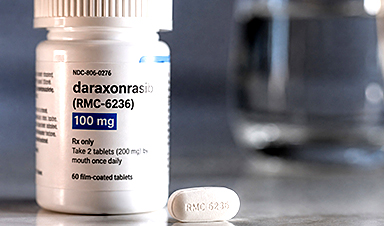
New pancreatic cancer drug carries a $39,800 monthly list price
A groundbreaking treatment for one of the most common forms of pancreatic cancer has been approved in pill form by the FDA. Revolution Medicines’ oral tablet daraxonrasib, branded as Rasonque, reduced the risk of [...]

Researchers Have Discovered a New Way To Reduce Chronic Nerve Pain
A cancer-linked protein called BRAF may help drive chronic nerve pain, and existing cancer drugs targeting it reduced pain sensitivity in preclinical models. Chronic nerve pain can persist long after an injury and often [...]

Our books now available worldwide!
Online Sellers other than Amazon, Routledge, and IOPP Indigo Global Health Care Equivalency in the Age of Nanotechnology, Nanomedicine and Artifcial Intelligence Global Health Care Equivalency In The Age Of Nanotechnology, Nanomedicine And Artificial [...]

Quantum-Enabled Regenerative Health: Reimagining Wellness, Precision Health and Longevity Medicine
Introduction Healthcare is approaching a frontier where the quantum portfolio could influence not only how disease is diagnosed and treated, but how health itself is measured, modeled, predicted and preserved. Quantum computing, quantum simulation, [...]

FDA Clears First-of-Its-Kind Nonmedication Treatment for PTSD
The FDA has cleared a system that uses brain activity data to personalize magnetic stimulation for PTSD, adding a new nonmedication treatment option. Every day in the United States, approximately 17.5 veterans die by suicide, [...]

FDA approves breakthrough drug to treat advanced pancreatic cancer
The Food and Drug Administration (FDA) approved on Wednesday a drug that could extend the survival of those with metastatic pancreatic cancer. The drug, called daraxonrasib, will be sold under the brand name Rasonque [...]