Temporarily anesthetizing the retina briefly reverts the activity of the visual system to that observed in early development and enables growth of responses to the amblyopic eye, new research shows.
In the common vision disorder amblyopia, impaired vision in one eye during development causes neural connections in the brain’s visual system to shift toward supporting the other eye, leaving the amblyopic eye less capable even after the original impairment is corrected. Current interventions are only effective during infancy and early childhood while the neural connections are still being formed.
But a new study in mice by neuroscientists in The Picower Institute for Learning and Memory at MIT shows that if the retina of the amblyopic eye is temporarily and reversibly anesthetized just for a couple of days, the brain’s visual response to the eye can be restored even in adulthood.
The findings, published in Cell Reports, may improve the clinical potential of the idea of temporarily anesthetizing a retina to restore the strength of the amblyopic eye’s neural connections.
In 2021, the lab of Picower Professor Mark Bear and collaborators showed that anesthetizing the non-amblyopic eye could improve vision in the amblyopic one—an approach analogous in that way to the treatment used in childhood for patching the unimpaired eye. Those 2021 findings have now been replicated in adults of multiple species.
But the new evidence on how inactivation works suggests that the proposed treatment also could be effective when applied directly to the amblyopic eye, Bear said, though a key next step will be to again show that it works in additional species and, ultimately, people.
“If it does, it’s a pretty substantial step forward because it would be reassuring to know that vision in the good eye would not have to be interrupted by treatment,” said Bear, a faculty member in MIT’s Department of Brain and Cognitive Sciences. “The amblyopic eye, which is not doing much, could be inactivated and ‘brought back to life’ instead. Still, I think that especially with any invasive treatment, it’s extremely important to confirm the results in higher species with visual systems closer to our own.”
Madison Echavarri-Leet, a former graduate student whose doctoral thesis included this research, is the lead author of the study, which also demonstrates the underlying process in the brain that makes the potential treatment work.
A beneficial burst
Bear’s lab has been studying the science underlying amblyopia for decades, for instance, by working to understand the molecular mechanisms that enable neural circuits to change their connections in response to visual experience or deprivation. The research has produced ideas about how to address amblyopia in adulthood.
In a 2016 study with collaborators at Dalhousie University, they showed that temporarily anesthetizing both retinas could restore vision loss in amblyopia. Then five years later, they published a study showing that anesthetizing just the non-amblyopic eye produced visual recovery for the amblyopic eye.
Throughout that time, the lab weighed multiple hypotheses to explain how retinal inactivation works its magic. Lingering in the lab’s archive of results, Bear said, was an unexplored finding in the lateral geniculate nucleus (LGN) that relays information from the eyes to the visual cortex, where vision is processed: Back in 2008, they had found that blocking inputs from a retina to neurons in the LGN caused those neurons to fire synchronous “bursts” of electrical signals to downstream neurons in the visual cortex. Similar patterns of activity occur in the visual system before birth and guide early synaptic development.
The new study tested whether those bursts might have a role in the potential amblyopia treatments the lab was reporting. To get started, Leet and Bear’s team used a single injection of tetrodotoxin (TTX) to anesthetize retinas in the lab animals. They found that the bursting occurred not only in LGN neurons that received input from the anesthetized eye, but also in LGN neurons that received input from the unaffected eye.
From there they showed that the bursting response depended on a particular “T-type” channel for calcium in the LGN neurons. This was important because knowing this gave the scientists a way to turn it off. Once they gained that ability, then they could test whether doing so prevented TTX from having a therapeutic effect in mice with amblyopia.
Sure enough, when the researchers genetically knocked out the channels and disrupted the bursting, they found that anesthetizing the non-amblyopic eye could no longer help amblyopic mice. That showed the bursting is necessary for the treatment to work.
Aiding amblyopia
Given their finding that bursting occurs when either retina is anesthetized, the scientists hypothesized it might be enough to just do it in the amblyopic eye. To test this, they ran an experiment in which some mice modeling amblyopia received TTX in their amblyopic eye and some did not. The injection took the retina offline for two days.
After a week, the scientists then measured activity in neurons in the visual cortex to calculate a ratio of input from each eye. They found that the ratio was much higher even in mice that received the treatment vs. those left untreated, indicating that after the amblyopic eye was anesthetized, its input in the brain rose to be at parity with input from the non-amblyopic one.
Further testing is needed, Bear notes, but the team wrote in the study that the results were encouraging.
“We are cautiously optimistic that these findings may lead to a new treatment approach for human amblyopia, particularly given the discovery that silencing the amblyopic eye is effective,” the scientists wrote.
In addition to Leet and Bear, the paper’s authors are Tushar Chauhan, Teresa Cramer and Ming-fai Fong.
More information: Madison Echavarri-Leet et al, Temporary retinal inactivation reverses effects of long-term monocular deprivation in visual cortex by induction of burst mode firing in the thalamus, Cell Reports (2025). DOI: 10.1016/j.celrep.2025.116566

News

GHCE Concept
From the preface of the book Global Health Care Equivalency in the Age of Nanotechnology, Nanomedicine and Artificial Intelligence, Edited by Frank Boehm: Since the publication of my first book (Nanomedical Device and Systems [...]

A Surprising Brain Signal Could Explain Why Eating Less Protein Extends Lifespan
A new paper suggests that limiting protein intake triggers a coordinated response throughout the body that may help explain how protein restriction affects healthy aging. Animals respond to protein restriction, or reduced protein in [...]

Back and shoulder surgery is often worse than useless
Millions of operations should be scrapped SIX IN TEN Britons have surgery at some point. So do lots of Americans, at a cost of perhaps $500bn a year, a third of all spending on [...]
Cocaine plays with mind, hijacks brain circuit, drives increasingly rigid and repetitive behavior
Researchers have found that cocaine hijacks brain circuit, which to drive increasingly rigid and repetitive behavior. The brain circuit that normally participates in selecting natural mouth and face movements, but which becomes disproportionately engaged [...]
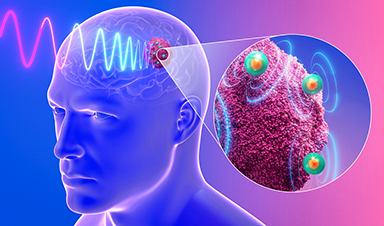
Injectable nanodevices could provide effective treatment for drug-resistant glioblastoma
The brain cancer glioblastoma is one of the most aggressive and treatment-resistant cancers known to medicine, carrying a median survival of just 12-15 months, even with the best available care. Now, researchers at the [...]

New Treatment Cuts “Bad” Cholesterol in Half for a Full Year
A single infusion of an experimental CRISPR-Cas9 therapy was reported to safely lower LDL cholesterol by 52.5% and triglycerides by 47.8%, as measured 12 months after treatment. What if one infusion could keep cholesterol [...]

Too Much RNA Can Drain a Cell’s Energy, Scientists Discover
A virus may cripple a cell’s power supply simply by producing too much of a molecule the cell needs to survive. New research from the Texas A&M College of Veterinary Medicine and Biomedical Sciences [...]

West African scientists warn of weakening health systems and urge stronger outbreak detection
LOME, Togo (AP) — West African laboratory scientists called on governments Friday to strengthen capacity to detect disease outbreaks to avoid another major outbreak, saying health systems across the region are becoming weaker. Participants [...]

A Little-Known Protein Could Point to a New Way To Treat Alzheimer’s
A study suggests that increasing SORLA protein levels could help treat Alzheimer’s disease and other disorders involving tau protein. Increasing SORLA, a protein with a protective role in the brain, helped mice withstand damage [...]

Cancer’s Hidden Antioxidant Shield Helps It Escape the Immune System
Blocking an antioxidant protein that tumors use to suppress immune attacks improved cancer immunotherapy responses in mice. Cancer cells can release antioxidants that interfere with the immune cells trying to kill them. Researchers have [...]

Scientists Find a Berry Compound That Helps Muscle Cells Burn Fat
Pterostilbene, a compound found naturally in some foods, affects how skeletal muscles process fats by stabilizing a protein called PPARδ and increasing its signaling activity. Pterostilbene, a natural compound found in blueberries, grapes, and [...]
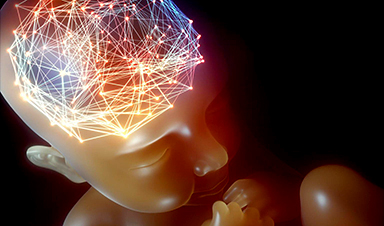
Two Hidden Forces Help Build the Human Brain Before Birth
Scientists have uncovered two surprising forces that help guide how the human brain forms before birth. Before birth, the human brain is shaped in large part by an unusual class of stem cells known [...]

Researchers Uncover a Hidden Trigger Behind Chronic Inflammation
The findings offer new insights that could help guide the development of future therapies. A protein called human resistin may help flip on one of the immune system’s most powerful inflammatory switches. Researchers at [...]
Scientists Have Uncovered Previously Hidden Microbial Activity on Human Skin
The most abundant microbes on your skin may not be the ones doing most of the work. Human skin supports vast communities of bacteria, fungi, and viruses that can influence its protective barrier, immune [...]

Brazilian Tree Compounds Fight COVID-19 on Multiple Fronts
Scientists found compounds in a Brazilian tree that hit SARS-CoV-2 on multiple fronts, revealing a promising new lead in the search for COVID-19 treatments. Researchers have found that galloylquinic acids extracted from the leaves [...]

Cutting Two Amino Acids Slowed Prostate Cancer in Mice
A newly identified link between amino acid metabolism and cholesterol production may help prostate tumors adapt to hormone therapy. Prostate cancer can find ways around treatments designed to deprive tumors of the hormones they [...]