Brigham and Women’s Hospital’s TIMI Study Group reports that in patients with prior ischemic stroke, very low achieved LDL-cholesterol correlated with fewer major adverse cardiovascular events and fewer recurrent strokes, without an apparent increase in hemorrhagic stroke.
Study background and patient population
Patients with prior ischemic stroke face a high risk for recurrence and other cardiovascular events. Previous randomized trials of PCSK9 inhibitors and ezetimibe showed benefits of intensive LDL-cholesterol reduction in unselected atherosclerotic disease populations. Limited data existed for the specific subgroup with prior ischemic stroke, leaving uncertainty about the benefits and safety of achieving very low LDL-cholesterol levels in this cohort.
In the study, “Efficacy and Safety of Very Low Achieved LDL-Cholesterol in Patients with Prior Ischemic Stroke,” published as an accepted manuscript in Circulation, researchers analyzed data from FOURIER and its open-label extension to examine the relationship between achieved LDL-cholesterol and long-term incidence of a composite cardiovascular endpoint and stroke outcomes.
Analysis included 5,291 patients with prior ischemic stroke more than 4 weeks before enrollment. Median age was 65 years with 34.1% women. Median time from prior stroke to trial entry was 3.3 years.
LDL-cholesterol categories and outcomes
LDL-cholesterol categories included under 20 mg/dL for 666 patients, 20 to 39 mg/dL for 1,410 patients, 40 to 54 mg/dL for 586 patients, 55 to 69 mg/dL for 508 patients, and 70 mg/dL or more for 2,121 patients.
Analyses demonstrated monotonic decreases in the adjusted annualized incidence of the primary composite and key secondary composite with lower achieved LDL-cholesterol levels on a continuous scale, with p-trend <0.001 for each.
Compared with ≥70 mg/dL, LDL-cholesterol <40 mg/dL corresponded to an incidence rate ratio of 0.69 for the primary endpoint and 0.73 for the key secondary endpoint.
Stroke recurrence
Recurrent stroke incidence declined as LDL-cholesterol decreased for all stroke and ischemic stroke.
Comparison of <40 mg/dL with ≥70 mg/dL yielded an incidence rate ratio of 0.73 for all stroke and 0.75 for ischemic stroke. Hemorrhagic stroke events were infrequent and showed no relationship to achieved LDL-cholesterol with a p-trend of 0.85.
Patients with prior ischemic stroke receiving lipid-lowering therapy, lower LDL-cholesterol below 40 mg/dL appeared to be associated with lower incidence of major adverse cardiovascular events and recurrent stroke.
Findings tentatively support consideration of more intensive LDL-cholesterol lowering in this population.
Written for you by our author Justin Jackson, edited by Gaby Clark, and fact-checked and reviewed by Robert Egan—this article is the result of careful human work. We rely on readers like you to keep independent science journalism alive. If this reporting matters to you, please consider a donation (especially monthly). You’ll get an ad-free account as a thank-you.
More information: Victorien Monguillon et al, Efficacy and Safety of Very Low Achieved LDL-Cholesterol in Patients with Prior Ischemic Stroke, Circulation (2025). DOI: 10.1161/circulationaha.125.077549

News

Long-Acting HIV Shots Could Solve a Major Treatment Challenge for Young People
A major African trial suggests that changing how HIV treatment is delivered could significantly improve viral suppression in adolescents. Young people with HIV were more likely to keep the virus suppressed when they received [...]

WHO Factsheets – The top 10 causes of death
In 2023, the 10 leading causes of death accounted for 33 million deaths, or 54% of the total 61 million deaths worldwide. The top global causes of death, in order of total number of lives lost, [...]
Aging Cells May Be Hiding From the Immune System – Scientists Think They Know How
Your immune system is supposed to clear out damaged cells. Researchers may have found how some of them hide and linger as the body ages. Researchers led by Cedars-Sinai Health Sciences University have identified [...]

Your Voice May Reveal How Fast Your Brain Is Aging
Researchers have developed a machine-learning “speech clock” that estimates age from subtle patterns in how people speak and what they say. It is possible that people’s voices may contain certain signals of aging that [...]
Optogenetics Pioneers Win 2026 Nobel Prize in Physiology or Medicine
The 2026 Nobel Prize in Physiology or Medicine has been awarded to Peter Hegemann, Georg Nagel, and Karl Deisseroth for the development of optogenetics, a revolutionary technology that uses light to control individual neurons [...]
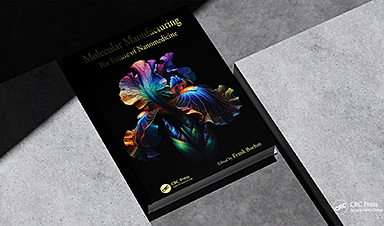
Molecular Manufacturing: The Future of Nanomedicine – From NanoappsMedical Inc.
This book explores the revolutionary potential of atomically precise manufacturing technologies to transform global healthcare, as well as practically every other sector across society. This forward-thinking volume examines how envisaged Factory@Home systems might enable the cost-effective [...]

What is ‘American Covid’ and how bad is it?
Cases of so-called ‘American Covid’ are on the rise in the UK. The strain is officially called XFG, or ‘Stratus’, and is the most common variant in North America, hence the name. It might soon [...]

Researcher at Russian plague laboratory dies of ‘unknown’ infection
Russian authorities have imposed "anti-epidemic measures" after a laboratory worker at an institute in Siberia dedicated to studying the plague and other infectious diseases died of a mysterious illness. The researcher, a 28-year-old female [...]
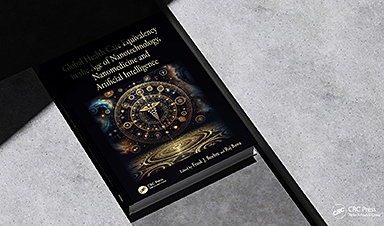
GHCE Concept
From the preface of the book Global Health Care Equivalency in the Age of Nanotechnology, Nanomedicine and Artificial Intelligence, Edited by Frank Boehm: Since the publication of my first book (Nanomedical Device and Systems [...]
A Surprising Brain Signal Could Explain Why Eating Less Protein Extends Lifespan
A new paper suggests that limiting protein intake triggers a coordinated response throughout the body that may help explain how protein restriction affects healthy aging. Animals respond to protein restriction, or reduced protein in [...]

Back and shoulder surgery is often worse than useless
Millions of operations should be scrapped SIX IN TEN Britons have surgery at some point. So do lots of Americans, at a cost of perhaps $500bn a year, a third of all spending on [...]

Cocaine plays with mind, hijacks brain circuit, drives increasingly rigid and repetitive behavior
Researchers have found that cocaine hijacks brain circuit, which to drive increasingly rigid and repetitive behavior. The brain circuit that normally participates in selecting natural mouth and face movements, but which becomes disproportionately engaged [...]
Injectable nanodevices could provide effective treatment for drug-resistant glioblastoma
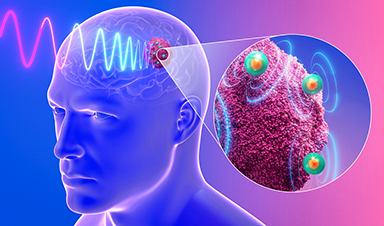
The brain cancer glioblastoma is one of the most aggressive and treatment-resistant cancers known to medicine, carrying a median survival of just 12-15 months, even with the best available care. Now, researchers at the [...]
New Treatment Cuts “Bad” Cholesterol in Half for a Full Year
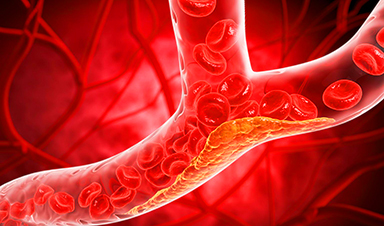
A single infusion of an experimental CRISPR-Cas9 therapy was reported to safely lower LDL cholesterol by 52.5% and triglycerides by 47.8%, as measured 12 months after treatment. What if one infusion could keep cholesterol [...]
Too Much RNA Can Drain a Cell’s Energy, Scientists Discover
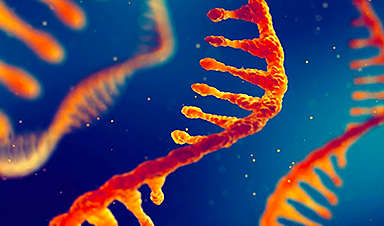
A virus may cripple a cell’s power supply simply by producing too much of a molecule the cell needs to survive. New research from the Texas A&M College of Veterinary Medicine and Biomedical Sciences [...]

West African scientists warn of weakening health systems and urge stronger outbreak detection
LOME, Togo (AP) — West African laboratory scientists called on governments Friday to strengthen capacity to detect disease outbreaks to avoid another major outbreak, saying health systems across the region are becoming weaker. Participants [...]