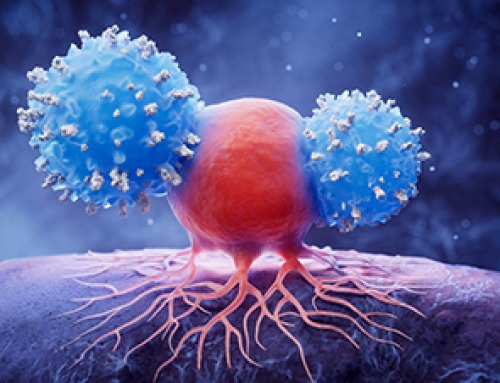
A new ultrasound-guided nanotherapy wipes out liver tumors while training the immune system to keep them from coming back.
The study, published in Nano Today, introduces a biodegradable nanoparticle system that combines sonodynamic therapy and cell death induction (ferroptosis) to treat hepatocellular carcinoma, the most common type of liver cancer.
The platform uses ultrasound-triggered generation of reactive oxygen species and controlled release of the blood thinner warfarin to trigger cancer cell death and stimulate anti-tumor immunity.
Hepatocellular carcinoma is one of the most challenging types of liver cancer to treat due to poor immune responsiveness and high recurrence.
While ferroptosis inducement, an iron-dependent form of regulated cell death, has shown promise, its standalone effectiveness is limited.
The study’s strategy enhances ferroptosis by combining ultrasound-activated reactive oxygen species with warfarin, an inhibitor of VKORC1L1, a key enzyme that helps cells neutralize oxidative damage.
Nanoplatform Design and Mechanism
Researchers synthesized a pseudo-conjugated sonodynamic polymer (BSD) via a Palladium-catalyzed coupling method.
This polymer was co-assembled with warfarin and DSPE-PEG2000 to form NP-BSD@WFR, a nanoparticle featuring a biodegradable core and a PEG shell, which promotes stability and passive tumor targeting via the enhanced permeability and retention (EPR) effect.
Upon ultrasound exposure, the nanoparticles disintegrate rapidly, releasing both ROS and warfarin in the tumor microenvironment. This dual action both damages cancer cells and disrupts their antioxidant defenses, tipping the balance toward ferroptotic cell death.
Killing Liver Cancer Cells Through ROS and Ferroptosis
Tests in hepatocellular carcinoma cell lines (HUH-7, HepG2, H22) showed that NP-BSD@WFR was efficiently taken up and, when activated by ultrasound, generated substantial ROS.
This led to glutathione (GSH) depletion, downregulation of glutathione peroxidase 4 (GPX4), and accumulation of lipid peroxides, all key hallmarks of ferroptosis.
Compared to controls, cells treated with NP-BSD@WFR plus ultrasound exhibited significantly higher apoptosis and reduced colony formation. 3D tumor spheroid models confirmed this enhanced cytotoxicity.
Tumor Targeting and Immune Activation
In a subcutaneous hepatocellular carcinoma mouse model, NP-BSD@WFR showed strong tumor accumulation due to the EPR effect.
Upon systemic administration and ultrasound activation, the treatment achieved 92 % tumor inhibition over 12 days, with no significant weight loss or visible organ toxicity.
Importantly, the therapy induced immunogenic cell death, evidenced by:
- Increased dendritic cell (DC) maturation
- Elevated levels of CD8+ T cell infiltration
- Enhanced systemic T cell activation in spleens and lymph nodes
These findings suggest that, as well as attacking tumor cells directly, the platform also primes the immune system to recognize and attack cancer.
A Future in Liver Cancer Treatment
This study demonstrates a promising approach to treating liver cancer by combining sonodynamic therapy with ferroptosis amplification and immune stimulation.
The biodegradable design, targeted activation, and robust immune engagement make NP-BSD@WFR a strong candidate for further development.
While the results are encouraging, further studies will be necessary to assess long-term safety, refine dosing, and investigate efficacy in other tumor types.
Journal Reference
Wang P., et al. (2025). Nanoplatform for ferroptosis-based liver cancer therapy via sonodynamic activation and immune response. Nano Today, 66, 102891. DOI: 10.1016/j.nantod.2025.102891


News

Back and shoulder surgery is often worse than useless
Millions of operations should be scrapped SIX IN TEN Britons have surgery at some point. So do lots of Americans, at a cost of perhaps $500bn a year, a third of all spending on [...]
Cocaine plays with mind, hijacks brain circuit, drives increasingly rigid and repetitive behavior
Researchers have found that cocaine hijacks brain circuit, which to drive increasingly rigid and repetitive behavior. The brain circuit that normally participates in selecting natural mouth and face movements, but which becomes disproportionately engaged [...]
Injectable nanodevices could provide effective treatment for drug-resistant glioblastoma
The brain cancer glioblastoma is one of the most aggressive and treatment-resistant cancers known to medicine, carrying a median survival of just 12-15 months, even with the best available care. Now, researchers at the [...]
New Treatment Cuts “Bad” Cholesterol in Half for a Full Year
A single infusion of an experimental CRISPR-Cas9 therapy was reported to safely lower LDL cholesterol by 52.5% and triglycerides by 47.8%, as measured 12 months after treatment. What if one infusion could keep cholesterol [...]
Too Much RNA Can Drain a Cell’s Energy, Scientists Discover
A virus may cripple a cell’s power supply simply by producing too much of a molecule the cell needs to survive. New research from the Texas A&M College of Veterinary Medicine and Biomedical Sciences [...]
West African scientists warn of weakening health systems and urge stronger outbreak detection
LOME, Togo (AP) — West African laboratory scientists called on governments Friday to strengthen capacity to detect disease outbreaks to avoid another major outbreak, saying health systems across the region are becoming weaker. Participants [...]

A Little-Known Protein Could Point to a New Way To Treat Alzheimer’s
A study suggests that increasing SORLA protein levels could help treat Alzheimer’s disease and other disorders involving tau protein. Increasing SORLA, a protein with a protective role in the brain, helped mice withstand damage [...]
Cancer’s Hidden Antioxidant Shield Helps It Escape the Immune System
Blocking an antioxidant protein that tumors use to suppress immune attacks improved cancer immunotherapy responses in mice. Cancer cells can release antioxidants that interfere with the immune cells trying to kill them. Researchers have [...]

Scientists Find a Berry Compound That Helps Muscle Cells Burn Fat
Pterostilbene, a compound found naturally in some foods, affects how skeletal muscles process fats by stabilizing a protein called PPARδ and increasing its signaling activity. Pterostilbene, a natural compound found in blueberries, grapes, and [...]
Two Hidden Forces Help Build the Human Brain Before Birth
Scientists have uncovered two surprising forces that help guide how the human brain forms before birth. Before birth, the human brain is shaped in large part by an unusual class of stem cells known [...]
Researchers Uncover a Hidden Trigger Behind Chronic Inflammation
The findings offer new insights that could help guide the development of future therapies. A protein called human resistin may help flip on one of the immune system’s most powerful inflammatory switches. Researchers at [...]
Scientists Have Uncovered Previously Hidden Microbial Activity on Human Skin
The most abundant microbes on your skin may not be the ones doing most of the work. Human skin supports vast communities of bacteria, fungi, and viruses that can influence its protective barrier, immune [...]
Brazilian Tree Compounds Fight COVID-19 on Multiple Fronts
Scientists found compounds in a Brazilian tree that hit SARS-CoV-2 on multiple fronts, revealing a promising new lead in the search for COVID-19 treatments. Researchers have found that galloylquinic acids extracted from the leaves [...]
Cutting Two Amino Acids Slowed Prostate Cancer in Mice
A newly identified link between amino acid metabolism and cholesterol production may help prostate tumors adapt to hormone therapy. Prostate cancer can find ways around treatments designed to deprive tumors of the hormones they [...]
Largest-Ever Physics Survey Raises New Doubts About Our Model of the Universe
Physicists around the world remain deeply divided on key mysteries of the universe, from dark matter to quantum gravity. The standard cosmological model failed to gain majority support, and no leading theory dominated the [...]
Scientists Just Overturned a 100-Year-Old Belief About Bacteria in the Lungs
New findings raise questions about the role of microbes living in the lungs. More than 35 trillion bacteria live throughout the human body, forming microbiomes in the gut, mouth, lungs, skin, and urogenital tract. [...]