Consciousness may emerge not from code, but from the way living brains physically compute.
Discussions about consciousness often stall between two deeply rooted viewpoints. One is computational functionalism, which holds that cognition can be fully explained as abstract information processing. According to this view, if a system has the right functional organization (regardless of the material it runs on), consciousness should emerge. The opposing view, biological naturalism, argues that consciousness cannot be separated from the unique features of living brains and bodies. From this perspective, biology is not just a carrier of cognition, it is a core part of what cognition is. Both positions capture important truths, but their ongoing standoff suggests that an essential element is missing.
A Third Perspective on How Brains Compute
In our new paper, we propose an alternative framework called biological computationalism. The term is intentionally provocative, but also meant to clarify the debate. Our central argument is that the standard model of computation is either broken or poorly aligned with how real brains function. For many years, it has been tempting to assume that brains compute in much the same way traditional computers do, as if cognition were software running on neural hardware. However, brains do not operate like von Neumann machines, and forcing that analogy leads to strained metaphors and fragile explanations. To seriously understand how brains compute, and what it would take to create minds in other substrates, we need to expand our definition of what computation actually means.
Biological computation, as we define it, has three key characteristics.
Hybrid Computation in the Living Brain
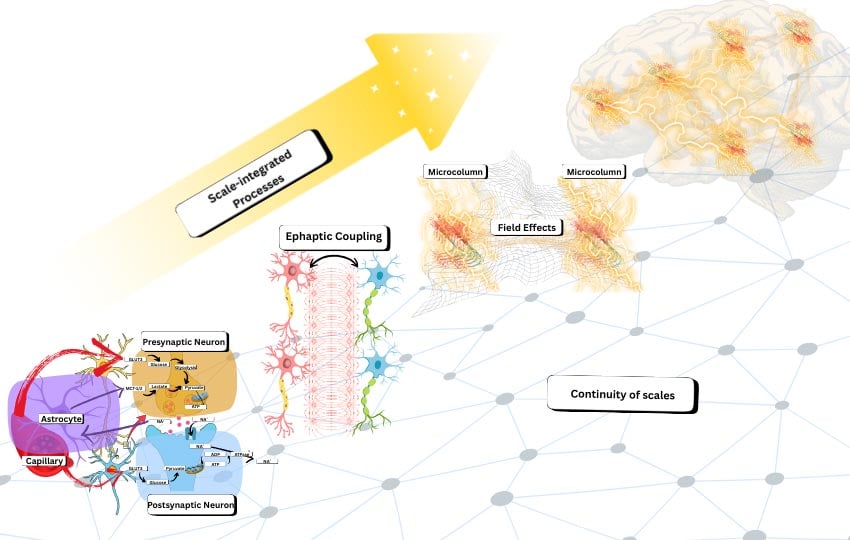
First, biological computation is hybrid. It blends discrete events with continuous processes. Neurons fire spikes, synapses release neurotransmitters, and neural networks shift between event-like states. At the same time, these events unfold within constantly changing physical environments that include voltage fields, chemical gradients, ionic diffusion, and time-varying conductances. The brain is neither purely digital nor simply analog. Instead, it operates as a layered system in which continuous dynamics influence discrete events, and discrete events reshape the surrounding continuous processes through ongoing feedback.
Why Brain Computation Cannot Be Separated by Scale
Second, biological computation is scale-inseparable. In conventional computing, it is usually possible to draw a clear boundary between software and hardware, or between a functional description and its physical implementation. In the brain, that boundary does not exist. There is no clean point where one can say, here is the algorithm, and over there is the physical machinery that carries it out. Instead, causal interactions span many levels at once, from ion channels to dendrites to neural circuits to whole-brain dynamics. These levels do not behave like neatly stacked modules. In biological systems, altering the so-called implementation also alters the computation itself, because the two are tightly intertwined.
Energy Constraints Shape Intelligence
Third, biological computation is metabolically grounded. The brain operates under strict energy limits, and those limits influence its organization at every level. This is not a minor engineering detail. Energy constraints affect what the brain can represent, how it learns, which patterns remain stable, and how information is coordinated and routed. From this perspective, the tight coupling across scales is not unnecessary complexity. It is an energy optimization strategy that supports flexible and resilient intelligence under severe metabolic constraints.
When the Algorithm Is the Physical System
Together, these three features lead to a conclusion that may feel unsettling to anyone used to classical ideas about computation. In the brain, computation is not abstract symbol manipulation. It is not simply a matter of moving representations according to formal rules while treating the physical medium as "mere implementation." In biological computation, the algorithm is the substrate. The physical organization does not just enable computation, it constitutes it. Brains do not merely run programs. They are specific kinds of physical processes that compute by unfolding through time.
Limits of Current AI Models
This perspective also exposes a limitation in how contemporary artificial intelligence is often described. Even highly capable AI systems primarily simulate functions. They learn mappings from inputs to outputs, sometimes with impressive generalization, but the underlying computation remains a digital procedure running on hardware designed for a very different style of processing. Brains, in contrast, carry out computation in physical time. Continuous fields, ion flows, dendritic integration, local oscillatory coupling, and emergent electromagnetic interactions are not just biological "details" that can be ignored when extracting an abstract algorithm. In our view, these processes are the computational primitives of the brain. They are what allow real-time integration, robustness, and adaptive control.
Not Biology Only, But Biology Like Computation
This does not mean we believe consciousness is exclusive to carbon-based life. We are not making a "biology or nothing" claim. Our argument is more precise. If consciousness (or mind-like cognition) depends on this particular kind of computation, then it may require biological-style computational organization, even when implemented in new substrates. The critical question is not whether a system is literally biological, but whether it instantiates the right kind of hybrid, scale-inseparable, metabolically (or more generally energetically) grounded computation.
Rethinking the Goal of Synthetic Minds
This shift has major implications for efforts to build synthetic minds. If brain computation cannot be separated from its physical realization, then simply scaling up digital AI may not be enough. This is not because digital systems cannot become more capable, but because capability alone does not capture what matters. The deeper risk is that we may be optimizing the wrong target by refining algorithms while leaving the underlying computational framework unchanged. Biological computationalism suggests that creating truly mind-like systems may require new kinds of physical machines, ones in which computation is not neatly divided into software and hardware, but spread across levels, dynamically linked, and shaped by real-time physical and energy constraints.
So if the goal is something like synthetic consciousness, the central question may not be, "What algorithm should we run?" Instead, it may be, "What kind of physical system must exist for that algorithm to be inseparable from its own dynamics?" What features are required, including hybrid event-field interactions, multi-scale coupling without clean interfaces, and energetic constraints that shape inference and learning, so that computation is not an abstract layer added on top, but an intrinsic property of the system itself?
That is the shift biological computationalism calls for. It moves the challenge away from finding the right program and toward identifying the right kind of computing matter.
Reference: "On biological and artificial consciousness: A case for biological computationalism" by Borjan Milinkovic and Jaan Aru, 17 December 2025, Neuroscience & Biobehavioral Reviews.
DOI: 10.1016/j.neubiorev.2025.106524

News

Back and shoulder surgery is often worse than useless
Millions of operations should be scrapped SIX IN TEN Britons have surgery at some point. So do lots of Americans, at a cost of perhaps $500bn a year, a third of all spending on [...]
Cocaine plays with mind, hijacks brain circuit, drives increasingly rigid and repetitive behavior
Researchers have found that cocaine hijacks brain circuit, which to drive increasingly rigid and repetitive behavior. The brain circuit that normally participates in selecting natural mouth and face movements, but which becomes disproportionately engaged [...]
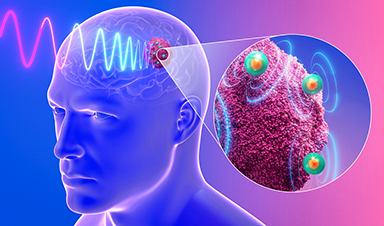
Injectable nanodevices could provide effective treatment for drug-resistant glioblastoma
The brain cancer glioblastoma is one of the most aggressive and treatment-resistant cancers known to medicine, carrying a median survival of just 12-15 months, even with the best available care. Now, researchers at the [...]
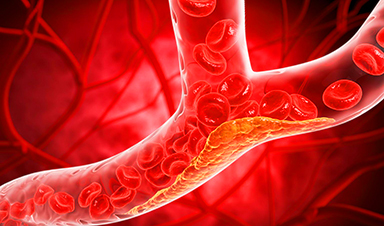
New Treatment Cuts “Bad” Cholesterol in Half for a Full Year
A single infusion of an experimental CRISPR-Cas9 therapy was reported to safely lower LDL cholesterol by 52.5% and triglycerides by 47.8%, as measured 12 months after treatment. What if one infusion could keep cholesterol [...]
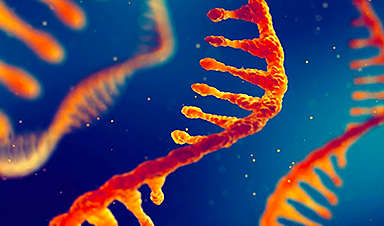
Too Much RNA Can Drain a Cell’s Energy, Scientists Discover
A virus may cripple a cell’s power supply simply by producing too much of a molecule the cell needs to survive. New research from the Texas A&M College of Veterinary Medicine and Biomedical Sciences [...]

West African scientists warn of weakening health systems and urge stronger outbreak detection
LOME, Togo (AP) — West African laboratory scientists called on governments Friday to strengthen capacity to detect disease outbreaks to avoid another major outbreak, saying health systems across the region are becoming weaker. Participants [...]

A Little-Known Protein Could Point to a New Way To Treat Alzheimer’s
A study suggests that increasing SORLA protein levels could help treat Alzheimer’s disease and other disorders involving tau protein. Increasing SORLA, a protein with a protective role in the brain, helped mice withstand damage [...]
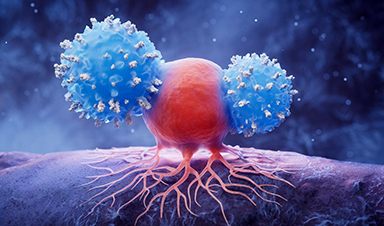
Cancer’s Hidden Antioxidant Shield Helps It Escape the Immune System
Blocking an antioxidant protein that tumors use to suppress immune attacks improved cancer immunotherapy responses in mice. Cancer cells can release antioxidants that interfere with the immune cells trying to kill them. Researchers have [...]
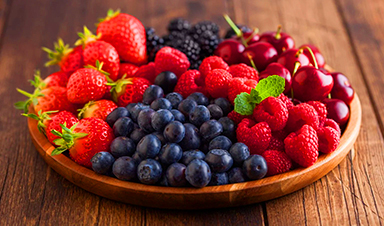
Scientists Find a Berry Compound That Helps Muscle Cells Burn Fat
Pterostilbene, a compound found naturally in some foods, affects how skeletal muscles process fats by stabilizing a protein called PPARδ and increasing its signaling activity. Pterostilbene, a natural compound found in blueberries, grapes, and [...]
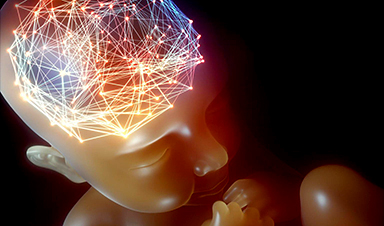
Two Hidden Forces Help Build the Human Brain Before Birth
Scientists have uncovered two surprising forces that help guide how the human brain forms before birth. Before birth, the human brain is shaped in large part by an unusual class of stem cells known [...]
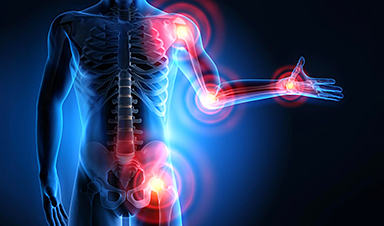
Researchers Uncover a Hidden Trigger Behind Chronic Inflammation
The findings offer new insights that could help guide the development of future therapies. A protein called human resistin may help flip on one of the immune system’s most powerful inflammatory switches. Researchers at [...]
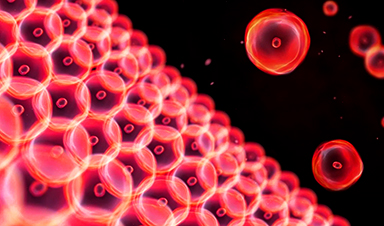
Scientists Have Uncovered Previously Hidden Microbial Activity on Human Skin
The most abundant microbes on your skin may not be the ones doing most of the work. Human skin supports vast communities of bacteria, fungi, and viruses that can influence its protective barrier, immune [...]
Brazilian Tree Compounds Fight COVID-19 on Multiple Fronts
Scientists found compounds in a Brazilian tree that hit SARS-CoV-2 on multiple fronts, revealing a promising new lead in the search for COVID-19 treatments. Researchers have found that galloylquinic acids extracted from the leaves [...]
Cutting Two Amino Acids Slowed Prostate Cancer in Mice
A newly identified link between amino acid metabolism and cholesterol production may help prostate tumors adapt to hormone therapy. Prostate cancer can find ways around treatments designed to deprive tumors of the hormones they [...]
Largest-Ever Physics Survey Raises New Doubts About Our Model of the Universe
Physicists around the world remain deeply divided on key mysteries of the universe, from dark matter to quantum gravity. The standard cosmological model failed to gain majority support, and no leading theory dominated the [...]

Scientists Just Overturned a 100-Year-Old Belief About Bacteria in the Lungs
New findings raise questions about the role of microbes living in the lungs. More than 35 trillion bacteria live throughout the human body, forming microbiomes in the gut, mouth, lungs, skin, and urogenital tract. [...]