Scientists have engineered dual-membrane nanoparticles that home in on heart tissue after a heart attack, delivering regenerative molecules while evading the body’s immune defences.
Myocardial infarction, better known as a heart attack, is a leading cause of death worldwide. After an injury like this, the heart struggles to regenerate to its previous health. Current treatments, while lifesaving, can rarely restore function or prevent harmful structural changes.
But new nanotechnology could provide an answer. By designing targeted, biomimetic drug carriers, scientists aim to overcome biological barriers, avoid rapid immune clearance, and deliver therapies directly to damaged tissue.
Building Biomimetic Nanoparticles
Published in Bioactive Materials, researchers have created stromal-platelet membrane-inspired nanoparticles (SPINs), combining a synthetic biodegradable core with natural cell membranes.
The core is made from poly(lactic-co-glycolic acid) (PLGA), a widely used polymer for drug delivery, which encapsulates concentrated secretomes derived from cardiac stromal cells. To create this core-like structure, the secretome was dissolved in an aqueous phase and trapped within PLGA via a solvent evaporation process.
The resulting nanoparticles were then characterized for size, charge, and integrity using techniques such as dynamic light scattering and electron microscopy.
For optimized targeting and immune protection, the nanoparticles are coated with membranes from stromal cells and platelets. These are processed through ultrasonication and extrusion, preserving surface proteins that help the particles attach to injured tissue and avoid immune detection.
Microscopy confirmed the formation of a uniform ~200-nanometre shell, while zeta potential measurements showed a shift towards a less negative charge, indicating an improved compatibility in the bloodstream.
Designed For Stability And Sustained Release
SPINs are built to last through storage, freeze-thaw cycles, and exposure to serum. The PLGA core steadily releases growth factors over up to two weeks, ensuring prolonged regenerative signalling rather than a short burst of activity.
Surface molecules from platelet membranes guide the particles to injured heart tissue, where they accumulate with far greater precision than uncoated or single-membrane designs. The dual coating also extends circulation time, increasing the chance of the therapy reaching its target.
Results In Preclinical Models
In vivo studies of the SPINs showed their strong preferential accumulation in the infarcted myocardium, with minimal off-target organ retention and a specificity that surpassed uncoated and single-membrane nanoparticles. Imaging confirmed that the membrane coatings remained intact in the body, preserving both targeting and immune-evasive properties.
By combining injury-site adhesion with controlled release of growth factors, the nanoparticles promoted tissue healing and regeneration, presenting a new possibility for post-myocardial infarction therapy.
Next Steps
The researchers say their work represents a step forward for regenerative nanomedicine, bringing together biomimicry, controlled delivery, and immune evasion in a single platform.
The next challenge will be to refine large-scale manufacturing and ensure the technology meets regulatory and safety requirements before it is tested on human patients.
Journal Reference
He M., et al. (2025). Stromal-platelet membrane-inspired nanoparticles (SPIN) for targeted heart repair. Bioactive Materials, 53, 45-57. DOI: 10.1016/j.bioactmat.2025.01.029, https://www.sciencedirect.com/science/article/pii/S2452199X25002919


News
Scientists Just Overturned a 100-Year-Old Belief About Bacteria in the Lungs
New findings raise questions about the role of microbes living in the lungs. More than 35 trillion bacteria live throughout the human body, forming microbiomes in the gut, mouth, lungs, skin, and urogenital tract. [...]

GHCE Concept
From the preface of the book Global Health Care Equivalency in the Age of Nanotechnology, Nanomedicine and Artificial Intelligence, Edited by Frank Boehm: Since the publication of my first book (Nanomedical Device and Systems [...]

Novartis, Ionis drug failure spurs questions
Pelacarsen didn’t protect heart health despite lowering levels of a protein particle, “Lp(a),” in a large clinical trial — a result with important implications for cardiovascular drug research. Dive Brief: An RNA drug from [...]
New injectable treatment helps the brain rebuild after stroke
Biomedical engineers at Duke University have created an injectable biomaterial that may help the brain recover from damage left behind by an ischemic stroke. In experiments with mice, the material transformed the cavity created [...]
Scientists Discover a Hidden “Immune Organ” Inside the Skull
Researchers discovered lymph node-like immune hubs inside skull bone marrow that appear to act as rapid-response centers for the brain. For decades, the brain was thought to operate largely apart from the immune system. [...]
Engineered tRNAs and lipid nanoparticles target nonsense mutation cystic fibrosis
Researchers have developed a potential new approach for treating a form of cystic fibrosis caused by so-called nonsense mutations, combining chemically modified transfer RNAs with lipid nanoparticles designed to deliver the therapy directly to [...]
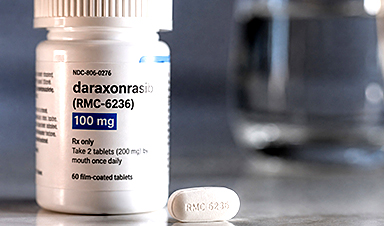
New pancreatic cancer drug carries a $39,800 monthly list price
A groundbreaking treatment for one of the most common forms of pancreatic cancer has been approved in pill form by the FDA. Revolution Medicines’ oral tablet daraxonrasib, branded as Rasonque, reduced the risk of [...]
Researchers Have Discovered a New Way To Reduce Chronic Nerve Pain
A cancer-linked protein called BRAF may help drive chronic nerve pain, and existing cancer drugs targeting it reduced pain sensitivity in preclinical models. Chronic nerve pain can persist long after an injury and often [...]
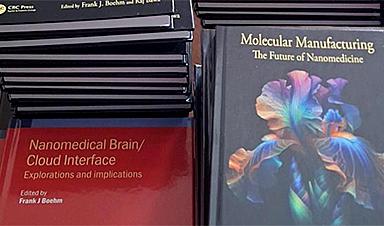
Our books now available worldwide!
Online Sellers other than Amazon, Routledge, and IOPP Indigo Global Health Care Equivalency in the Age of Nanotechnology, Nanomedicine and Artifcial Intelligence Global Health Care Equivalency In The Age Of Nanotechnology, Nanomedicine And Artificial [...]

Quantum-Enabled Regenerative Health: Reimagining Wellness, Precision Health and Longevity Medicine
Introduction Healthcare is approaching a frontier where the quantum portfolio could influence not only how disease is diagnosed and treated, but how health itself is measured, modeled, predicted and preserved. Quantum computing, quantum simulation, [...]

FDA Clears First-of-Its-Kind Nonmedication Treatment for PTSD
The FDA has cleared a system that uses brain activity data to personalize magnetic stimulation for PTSD, adding a new nonmedication treatment option. Every day in the United States, approximately 17.5 veterans die by suicide, [...]
FDA approves breakthrough drug to treat advanced pancreatic cancer
The Food and Drug Administration (FDA) approved on Wednesday a drug that could extend the survival of those with metastatic pancreatic cancer. The drug, called daraxonrasib, will be sold under the brand name Rasonque [...]
AI Decodes a Hidden DNA Signal Linked to Disease-Causing Mutations
Machine learning identifies the likely “initiator” and enables new predictions about DNA mutations that can cause disease. Every human cell depends on tens of thousands of genes being switched on at the right time [...]

Pope Leo Urges Global Response to Congo’s Deadliest Ebola Outbreak
Pope Leo called for international action to address the Ebola outbreak in the Democratic Republic of Congo. The epidemic has claimed over 2,500 lives and is the nation's largest recorded outbreak. The Pope emphasized [...]

Is there a summer COVID-19 surge this year? Yep, it’s ramping up again
Hantavirus. Ebola. West Nile. Measles. And, of course, cyclospora — that stomach parasite making people miserable across the country. Americans have plenty to worry about this summer. But remember COVID-19? It may not be [...]

Natural Compound in Broccoli Could Help Treat a Rare, Incurable Neurological Disease
Swinburne researchers have discovered how broccoli could help treat an extremely rare and incurable disease that affects only about 200 Australians. A naturally occurring compound in broccoli is being investigated as a possible treatment [...]