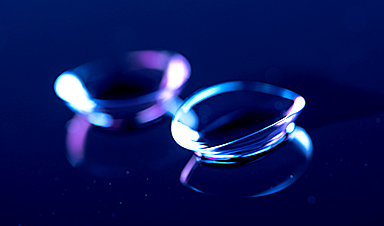
| Scientists from the Terasaki Institute for Biomedical Innovation (TIBI) have developed a contact lens that can capture and detect exosomes, nanometer-sized vesicles found in bodily secretions which have the potential for being diagnostic cancer biomarkers (Advanced Functional Materials, “A microchambers containing contact lens for the non-invasive detection of tear exosomes”). | |
| The lens was designed with microchambers bound to antibodies that can capture exosomes found in tears. This antibody- conjugated signaling microchamber contact lens (ACSM-CL) can be stained for detection with nanoparticle-tagged specific antibodies for selective visualization. This offers a potential platform for cancer pre-screening and a supportive diagnostic tool that is easy, rapid, sensitive, cost-effective, and non-invasive. | |
| Exosomes are formed within most cells and secreted into many bodily fluids, such as plasma, saliva, urine, and tears. Once thought to be the dumping grounds for unwanted materials from their cells of origin, it is now known that exosomes can transport different biomolecules between cells. It has also been shown that there is a wealth of surface proteins on exosomes – some that are common to all exosomes and others that are increased in response to cancer, viral infections, or injury. In addition, exosomes derived from tumors can strongly influence tumor regulation, progression, and metastasis. | |
| Because of these capabilities, there has been much interest in using exosomes for cancer diagnosis and prognosis/treatment prediction. However, this has been hampered by the difficulty in isolating exosomes in sufficient quantity and purity for this purpose. Current methods involve tedious and time-consuming ultracentrifuge and density gradients, lasting at least ten hours to complete. Further difficulties are posed in detection of the isolated exosomes; commonly used methods require expensive and space-consuming equipment. | |
| The TIBI team has leveraged their expertise in contact lens biosensor design and fabrication to eliminate the need for these isolation methods by devising their ACSM-CL for capturing exosomes from tears, an optimum and cleaner source of exosomes than blood, urine, and saliva. | |
| They also facilitated and optimized the preparation of their ACSM-CL by the use of alternative approaches. When fabricating the microchambers for their lens, the team used a direct laser cutting and engraving approach rather than conventional cast molding for structural retention of both the chambers and the lens. | |
| In addition, the team introduced a method that chemically modified the microchamber surfaces to activate them for antibody binding. This method was used in place of standard approaches, in which metallic or nanocarbon materials must be used in expensive clean-room settings. | |
| The team then optimized procedures for binding a capture antibody to the ACSM-CL microchambers and a different (positive control) detection antibody onto gold nanoparticles that can be visualized spectroscopically. Both these antibodies are specific for two different surface markers found on all exosomes. | |
| In an initial validation experiment, the ACSM-CL was tested against exosomes secreted into supernatants from ten different tissue and cancer cell lines. The ability to capture and detect exosomes was validated by the spectroscopic shifts observed in all the test samples, in comparison with the negative controls. Similar results were obtained when the ACSM-CL was tested against ten different tear samples collected from volunteers. | |
| In final experiments, exosomes in supernatants collected from three different cell lines with different surface marker expressions were tested against the ACSM-CL, along with different combinations of marker-specific detection antibodies. The resultant patterns of detection and non-detection of exosomes from the three different cell lines were as expected, thus validating the ACSM-CL’s ability to accurately capture and detect exosomes with different surface markers. | |
| “Exosomes are a rich source of markers and biomolecules which can be targeted for several biomedical applications,” said Ali Khademhosseini, Ph.D., TIBI’s Director and CEO. “The methodology that our team has developed greatly facilitates our ability to tap into this source.” |

News
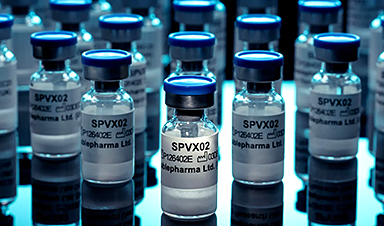
Half of vaccines are binned – ‘fridge-free’ versions could change that
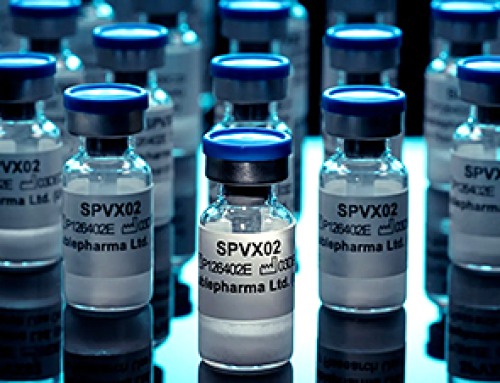
Vaccines that do not need to be kept cool in a fridge have been successfully trialed in patients for the first time, say UK scientists. Currently, most vaccines need to be refrigerated or frozen [...]
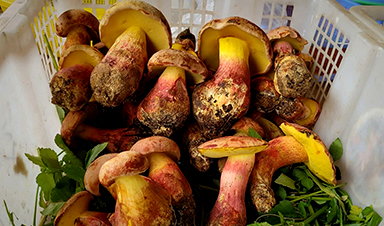
Mushroom Mystery: The Fungus That Makes People See Tiny Humans
A mushroom sold in markets and served in restaurants in Southwest China has an unusual warning attached to it: cook it thoroughly, or you may start seeing tiny people. For decades, people have reported [...]

Artificial intelligence used to design brand new viruses
Artificial Intelligence has been used to design brand new viruses that are fully functional and can replicate in the laboratory, say US researchers. It is the first time whole genomes have been successfully designed [...]
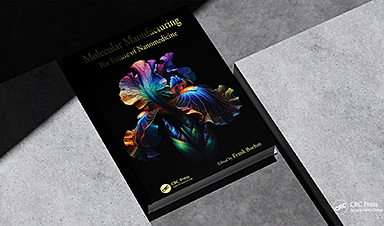
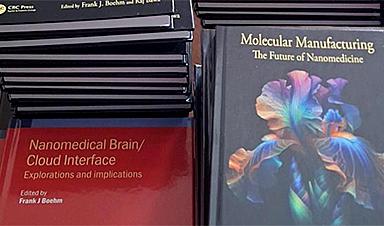
Molecular Manufacturing: The Future of Nanomedicine – New book from NanoappsMedical Inc.
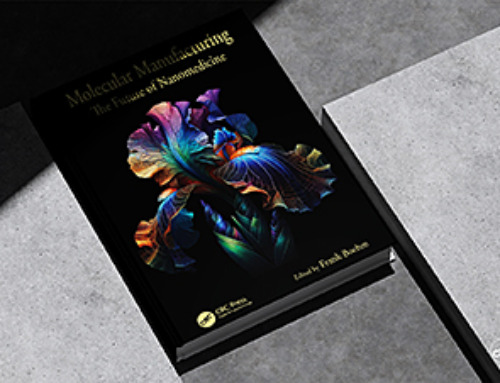
This book explores the revolutionary potential of atomically precise manufacturing technologies to transform global healthcare, as well as practically every other sector across society. This forward-thinking volume examines how envisaged Factory@Home systems might enable the cost-effective [...]
Moderna kicks off Phase I Ebola trial as Africa readies itself for research
If the Phase I trial is successful, Moderna plans to quickly initiate Phase II and Phase III trials of its Ebola vaccine. Moderna has initiated a Phase I trial of its mRNA Ebola vaccine [...]
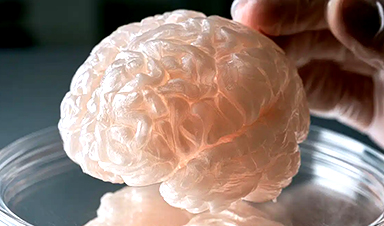
3D Human Brain Tissue Model Replicates Alzheimer’s Pathology
Summary: Researchers introduced a highly reproducible three-dimensional human brain tissue model capable of replicating complex neurodegenerative processes in Alzheimer’s disease. Developed over nine years using human stem cells, the self-organizing tissue spheroids integrate functional neurons, [...]
A Common Sugar May Loosen Cancer Cells and Help Them Spread
Chemotherapy may kill most ovarian cancer cells, but the few that survive can turn dangerously active. By releasing fructose, they may help nearby tumor cells break free and spread. Researchers at The Wistar Institute [...]
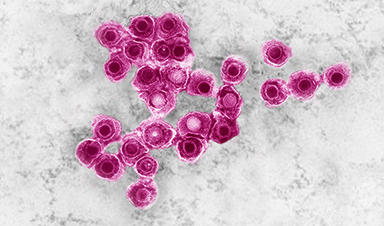
COVID-19 can wake up dormant viruses in the body, large study confirms
Virus reactivations by SARS-CoV-2 could worsen initial symptoms and increase risk of Long Covid. Early in the COVID-19 pandemic, scientists noticed that a SARS-CoV-2 infection can “wake up” other, dormant viruses already present in [...]
Scientists Discover the Brain May Enter a New Biological Phase Between 50 and 75
A single-cell study reveals major changes in immune cells, genome organization, and gene regulation within the aging human hippocampus, offering important insights into brain aging and dementias associated with age. Between roughly ages 50 [...]
Our books now available worldwide!
Online Sellers other than Amazon, Routledge, and IOPP Indigo Global Health Care Equivalency in the Age of Nanotechnology, Nanomedicine and Artifcial Intelligence Global Health Care Equivalency In The Age Of Nanotechnology, Nanomedicine And Artificial [...]
Unzipping the Code of Life: Scientists Pinpoint Where DNA First Opens
Researchers mapped where DNA first opens and how a helicase gate may release one strand as genome copying begins. Before a cell can divide, it must open its tightly wound DNA and begin copying the entire [...]
Scientists Tested an 8-Hour Eating Window and Found a Surprising Brain Benefit
Limiting the daily eating window may provide brain benefits beyond those associated with weight loss. Eating within a shorter daily window may provide cognitive benefits beyond those associated with weight loss alone, according to [...]
Focused Ultrasound Opens Blood-Brain Barrier to Treat Brain Cancer
Summary: A new study demonstrates that primary brain tumors (gliomas) are particularly receptive to targeted drug delivery using focused ultrasound (FUS) combined with microbubbles. The team developed a high-resolution MRI protocol to track blood-brain barrier [...]
AI’s promise and practical limits in drug discovery
AI tools are becoming increasingly common in early drug discovery, allowing scientists to analyse data and navigate large volumes of research. However, according to Dr Raminderpal Singh, turning that potential into consistent scientific workflows [...]
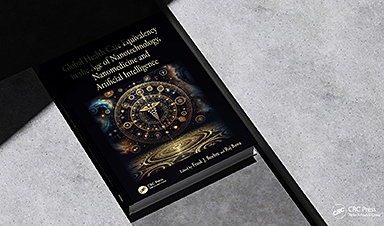
GHCE Concept
From the preface of the book Global Health Care Equivalency in the Age of Nanotechnology, Nanomedicine and Artificial Intelligence, Edited by Frank Boehm: Since the publication of my first book (Nanomedical Device and Systems [...]
Healthcare Headlines: Challenges and Advances in 2026
Health-related updates reveal financial adjustments by Universal Health Services due to Medicaid reimbursement uncertainties, significant pollution-linked health concerns from French-British oil firm Perenco in Congo, drug trial setbacks, potential restructuring at major medical firms, [...]