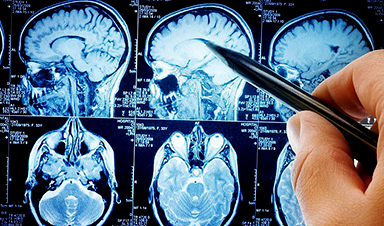
Scientists have, for the first time, directly visualised the protein clusters in the brain believed to trigger Parkinson's disease, bringing them one step closer to potential treatments.
Parkinson's is a progressive incurable neurological disorder that affects the brain, but also the body more widely, and blights the lives of millions.
Patients typically suffer progressive tremors and movement problems that can eventually rob them of the independence.
While scientists have known for years that tiny clusters—called alpha-synuclein oligomers—likely cause Parkinson's to start developing in the brain, until now they have not been able to visualise these proteins in human brain tissue.
But in a breakthrough, experts from the University of Cambridge, University College London, the Francis Crick Institute and Polytechnique Montreal have developed a technique that allows them not only to see these clusters in the brain, but also count them.
For over a century, doctors have confirmed Parkinson's by the presence of large protein deposits, known as Lewy bodies. But now experts say these smaller, earlier-forming clusters may cause the damage to the brain cells associated with Parkinson's.
'If we can observe Parkinson's at its earliest stages, that would tell us a whole lot more about how the disease develops in the brain and how we might be able to treat it.'
Until now, these oligomers were too small to see at just a few nanometres long, but now the team have developed a technique called Advanced Sensing of Aggregates for Parkinson's Disease (ASA-PD) which uses lasers to mark proteins in post-mortem brain tissue.
Dr Rebecca Andrews, who carried out the lab study, added: 'This is the first time we've been able to look at oligomers directly in human brain tissue at this scale: it's like seeing stars in broad daylight.'
'Oligomers have been the needle in the haystack, but now that we know where those needles are, it could help us target specific cell types in certain regions of the brain,' added Professor Lucien Weiss, study co-lead author, from Polytechnique Montreal.
In the current study, published in the journal Nature Biomedical Engineering, researchers first analysed post-mortem brain tissue samples from people with Parkinson's and compared them to healthy individuals of a similar age.
Whilst the proteins were detected in both healthy and Parkinson's brains, in Parkinson's patients the oligomers were much larger, brighter and there were more of them—suggesting a direct link to the progression of the disease.
The team also identified a subclass of oligomers that appeared only in Parkinson's patients, which experts say could be the earliest visible markers of the disease—potentially years before classic symptoms appear.
'This method doesn't just give us a snapshot,' explained Prof Weiss.
'It offers a whole atlas of protein changes across the brain and similar technologies could be applied to other neurodegenerative diseases like Alzheimer's and Huntington's.'
Professor Sonia Gandhi, an expert in neurodegeneration at The Francis Crick Institute, added: 'The only real way to understand what is happening in human disease is to study the human brain directly, but because of the brain's sheer complexity, this is very challenging.'
The researchers now hope that this breakthrough will foster a better understanding of why, where and how these protein clusters form and leads to disease.
Currently diagnosis is normally based on the development of later stage symptoms like terms after other potential health conditions have been ruled out.
Parkinson's charities estimate more than one in four patients with the condition are misdiagnosed before getting the correct diagnosis.
Around 166,000 people in the UK are thought to be living with the debilitating disease, and the number is rising. By 2050, the number of people with Parkinson's worldwide is expected to double to a staggering 25million.
Early signs of Parkinson's include a tremor, stiffness, slowness of movement and loss of smell.
Balance problems such as issues with coordination and muscle cramps are other common signs.
Patients can also, as a consequence of their disease, frequently suffer from mental health problems like depression and anxiety.
While there are drugs that can help alleviate some of the symptoms, caused by the death of nerve cells in the brain that produce dopamine, there are no drugs that can slow to stop the disease itself.
Experts are still working to uncover what triggers the death of these nerves.
However, current thinking is that it's due to a combination of genetic changes and environmental factors.
Risk of developing the condition broadly increases with age, with most patients are diagnosed over 50.

News
Your Bones May Hold a Hidden Clue to Blood Cancer Survival
For people with blood cancers called myelodysplastic syndromes, osteoporosis may hold an overlooked clue to survival, a three-year observational study suggests. In blood cancers that develop in the bone marrow, an important clue to [...]

Researchers Discover What Reading for Pleasure May Be Doing to Your Brain
Reading for pleasure may offer surprising benefits for the brain, with research linking the habit to better mental health, stronger cognitive abilities, and a lower risk of dementia. Reading for pleasure may do far [...]
Scientists Discover a Hidden Trigger That Keeps Inflammation Alive
Inflammation persists after proteins detach from immune receptors, revealing a potential target for autoimmune treatments. Since a Nobel Prize-winning discovery in the 1990s identified molecules called Toll-like Receptors as the guardians of the human [...]
A Virus Gives Itself Away the Moment It Attacks
Researchers have found the trigger behind a powerful bacterial defense against viruses. Viruses that prey on bacteria could become an increasingly important tool for treating bacterial infections, particularly as antibiotic resistance makes some infections [...]

Scientists Discover Aspirin May Slash Dementia Risk by 70% – but Only for Certain People
Aspirin was linked to a sharply lower dementia risk in some older adults, and their genes may hold the clue. A Monash University analysis found that older adults with a particular genetic profile had [...]
Inflammation May Awaken Dormant Cancer Cells Years After Treatment
The body’s response to inflammation may disturb cancer cells that have been lying silent for years, giving them an opportunity to grow again. Researchers at the Francis Crick Institute have found that gut inflammation [...]

Where do nanoparticles go once they enter the body?
New international best practice guidance, co-written at ANSTO, sets out how to measure where nanoparticles like titanium dioxide end up in the body and how long they remain. The guidance has been shared by [...]
Long-Acting HIV Shots Could Solve a Major Treatment Challenge for Young People
A major African trial suggests that changing how HIV treatment is delivered could significantly improve viral suppression in adolescents. Young people with HIV were more likely to keep the virus suppressed when they received [...]

WHO Factsheets – The top 10 causes of death
In 2023, the 10 leading causes of death accounted for 33 million deaths, or 54% of the total 61 million deaths worldwide. The top global causes of death, in order of total number of lives lost, [...]
Aging Cells May Be Hiding From the Immune System – Scientists Think They Know How
Your immune system is supposed to clear out damaged cells. Researchers may have found how some of them hide and linger as the body ages. Researchers led by Cedars-Sinai Health Sciences University have identified [...]

Your Voice May Reveal How Fast Your Brain Is Aging
Researchers have developed a machine-learning “speech clock” that estimates age from subtle patterns in how people speak and what they say. It is possible that people’s voices may contain certain signals of aging that [...]

Optogenetics Pioneers Win 2026 Nobel Prize in Physiology or Medicine
The 2026 Nobel Prize in Physiology or Medicine has been awarded to Peter Hegemann, Georg Nagel, and Karl Deisseroth for the development of optogenetics, a revolutionary technology that uses light to control individual neurons [...]

Molecular Manufacturing: The Future of Nanomedicine – From NanoappsMedical Inc.
This book explores the revolutionary potential of atomically precise manufacturing technologies to transform global healthcare, as well as practically every other sector across society. This forward-thinking volume examines how envisaged Factory@Home systems might enable the cost-effective [...]

What is ‘American Covid’ and how bad is it?
Cases of so-called ‘American Covid’ are on the rise in the UK. The strain is officially called XFG, or ‘Stratus’, and is the most common variant in North America, hence the name. It might soon [...]
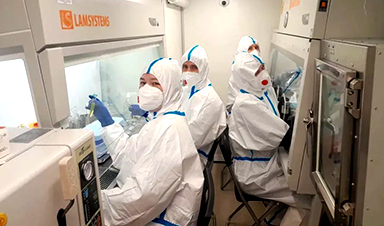
Researcher at Russian plague laboratory dies of ‘unknown’ infection
Russian authorities have imposed "anti-epidemic measures" after a laboratory worker at an institute in Siberia dedicated to studying the plague and other infectious diseases died of a mysterious illness. The researcher, a 28-year-old female [...]

GHCE Concept
From the preface of the book Global Health Care Equivalency in the Age of Nanotechnology, Nanomedicine and Artificial Intelligence, Edited by Frank Boehm: Since the publication of my first book (Nanomedical Device and Systems [...]