Nearly 30 years after rye pollen molecules were shown to slow tumor growth in animals, scientists have finally determined their exact three-dimensional structures.
Nearly 30 years ago, researchers noticed something surprising in rye pollen: two naturally occurring molecules seemed to slow tumor growth in animal studies. The finding drew interest, but the science hit a wall because no one could pin down a crucial detail that determines how a compound behaves in the body: its exact three dimensional shape.
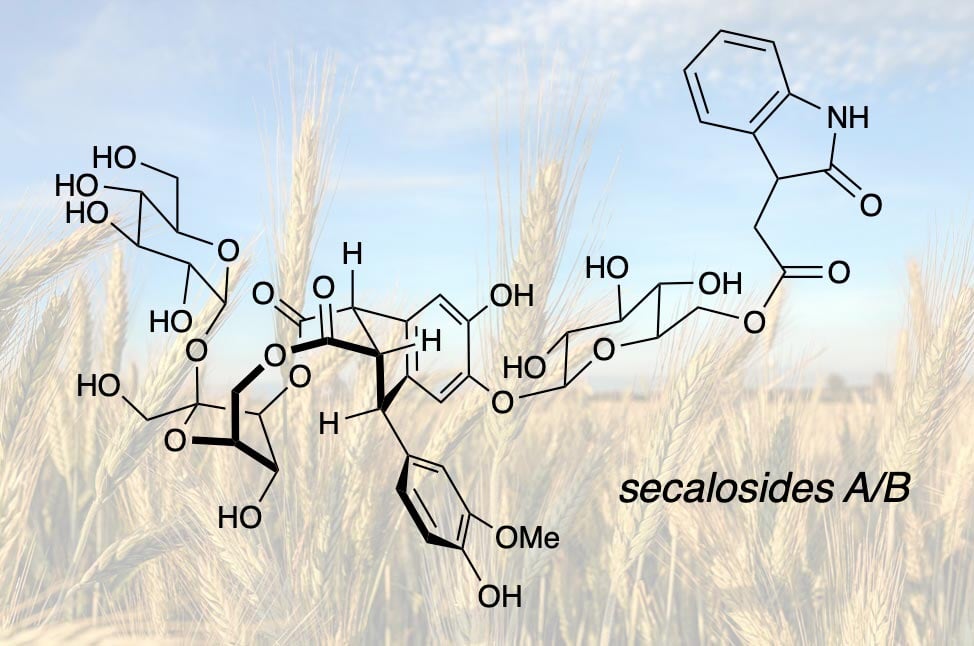
Chemists at Northwestern University now report that they have solved that long running structural puzzle. By assembling the molecules step by step in the lab, the team confirmed the true 3D structures of secalosides A and B, giving researchers a reliable starting point for the next phase of work.
That "blueprint" matters because biology is shape driven. Once scientists know how a molecule is arranged in space, they can begin testing how it might interact with immune cells and other biological targets, and they can design close variants to see which features are important. In this case, it could help clarify whether specific components of rye pollen, a staple cereal crop grown for its grain, might eventually inspire new ideas for cancer treatment.
The study was recently published in the Journal of the American Chemical Society.
"In preliminary studies, other researchers found that rye pollen could help different animal models clear tumors through some unknown, non-toxic mechanism," said Northwestern's Karl A. Scheidt, who led the study. "Now that we confirmed the structure of these molecules, we can find the active ingredient — or what part of the molecule is doing the work. This is an exciting starting point to make better versions of these molecules that could possibly inform approaches to cancer therapy."
Scheidt is a professor of chemistry at Northwestern's Weinberg College of Arts and Sciences and a professor of pharmacology (by courtesy) at Northwestern University Feinberg School of Medicine. He also is a member of the Chemistry of Life Processes Institute and of the Robert H. Lurie Comprehensive Cancer Center of Northwestern University.
Nature as inspiration for medicine
Nature has repeatedly provided starting points for major medical advances, even when the raw materials were not ready to be used as drugs in their original form. Many familiar medicines trace back to compounds first found in plants and microbes, which scientists later refined to make them safer, more effective, or easier for the body to use.
Morphine, a long used treatment for severe pain, comes from the opium poppy. Taxol, a key cancer therapy, was first obtained from the Pacific yew tree. Statins, widely taken to lower cholesterol and reduce heart disease risk, were developed from molecules discovered in fungi.
"Natural products aren't necessarily effective drugs on their own, but they are great leads," Scheidt said. "We can find inspiration in natural products and use chemistry to make better versions that are orally available, survive the metabolism and hit the right targets."
Eventually, rye pollen potentially could join these ranks. Many consumers around the world already ingest rye pollen extract in supplement form to protect prostate health. But scientists haven't yet optimized it for use as a pharmaceutical drug. Understanding how it works required knowing the molecules' precise three-dimensional shape — information that proved elusive.
A molecular mystery
Using traditional techniques, such as advanced nuclear magnetic resonance spectroscopy, scientists could not fully reveal the orientation of the molecules' key parts. As a result, two competing structural models persisted for decades.
Those two proposed structures had the same atoms, same connections and same overall shape. But a central part of the molecules are mirror images of each other. That subtle distinction can change how the molecule fits into a biological target and determine whether a molecule is biologically active or inert.
"It's like your hands," Scheidt said. "They are mirror images of each other, but you need a different glove for each. If you had two left-handed gloves, it wouldn't work because your hands can't be superimposed on top of one another."
Building from scratch
To settle the question once and for all, the Northwestern team turned to total synthesis, or the step-by-step process of constructing a natural molecule in the laboratory. The approach was incredibly complicated and challenging. At their cores, secalosides A and B contain an extremely rare and highly strained feature: a tightly compressed, 10-membered ring that is notoriously difficult to build.
Scheidt and his team devised a clever workaround. They first built a larger, more flexible ring and then triggered a reaction that snapped it into a smaller, strained shape in a single step. After synthesizing both competing structural versions of the secalosides, the scientists compared them to samples isolated from rye pollen. Only one version matched perfectly, finally revealing the true molecular structure.
"We've demonstrated we can make the core of this natural product," Scheidt said. "Now, we're trying to find potential collaborators in immunology who could help us translate this to a possible clinical endpoint."
Reference: "Synthesis and Structural Confirmation of Secalosides A and B" by Yunchan Nam, Anthony T. Tam, Troy E. Reynolds, Diego N. Rojas, Jonathan A. Brekan, Sneha Sil and Karl A. Scheidt, 23 December 2025, Journal of the American Chemical Society.
DOI: 10.1021/jacs.5c18864

News
Molecular Manufacturing: The Future of Nanomedicine – New book from NanoappsMedical Inc.
This book explores the revolutionary potential of atomically precise manufacturing technologies to transform global healthcare, as well as practically every other sector across society. This forward-thinking volume examines how envisaged Factory@Home systems might enable the cost-effective [...]

Ancient bacteria strain discovered in ice cave is resistant to some modern antibiotics
In the depths of Scarisoara cave in Romania sits one of the world’s biggest underground glaciers, a monumental slab of ice the size of roughly 40 Olympic swimming pools that began to form around [...]

Scientists Identify “Good” Bacteria That May Prevent Long COVID
According to the WHO, about 6% of people worldwide who get COVID-19, roughly 400 million people, later develop a long-lasting form of the illness. That shows the condition remains a significant public health challenge. In [...]
New book from Nanoappsmedical Inc. – Global Health Care Equivalency
A new book by Frank Boehm, NanoappsMedical Inc. Founder. This groundbreaking volume explores the vision of a Global Health Care Equivalency (GHCE) system powered by artificial intelligence and quantum computing technologies, operating on secure [...]
RNA Recycling Extends Lifespan
Summary: Researchers discovered a biological “trash disposal” mechanism that directly controls how fast we age. While circular RNA has long been known to accumulate in cells as we get older, this study proves for the [...]
Cancer’s Deadly Paradox: How Tumors Break Their Own DNA To Keep Growing
Cancer’s strongest gene switches push DNA into damaging overdrive, creating repeated breaks and repairs that may fuel tumor evolution while exposing possible therapeutic weak spots. A new study indicates that cancer can harm its own genetic [...]
NanoMedical Brain/Cloud Interface – Explorations and Implications. A new book from Frank Boehm
New book from Frank Boehm, NanoappsMedical Inc Founder: This book explores the future hypothetical possibility that the cerebral cortex of the human brain might be seamlessly, safely, and securely connected with the Cloud via [...]
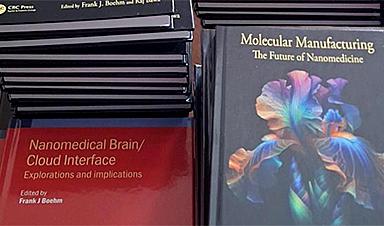
Our books now available worldwide!
Online Sellers other than Amazon, Routledge, and IOPP Indigo Global Health Care Equivalency in the Age of Nanotechnology, Nanomedicine and Artifcial Intelligence Global Health Care Equivalency In The Age Of Nanotechnology, Nanomedicine And Artificial [...]
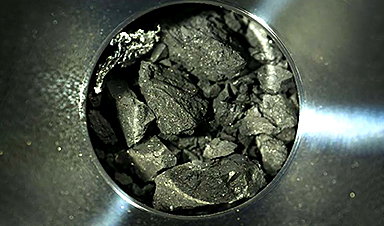
Ryugu asteroid samples contain all DNA and RNA building blocks, bolstering origin-of-life theories
All the essential ingredients to make the DNA and RNA underpinning life on Earth have been discovered in samples collected from the asteroid Ryugu, scientists said Monday. The discovery comes after these building blocks [...]

Is Berberine Really a “Natural Ozempic”?
Often labeled a “natural Ozempic,” berberine is widely discussed as a metabolic aid. Yet research suggests its influence may lie deeper. In recent years, berberine has gained significant attention as a supposed “natural way” [...]
Viagra Ingredient Shows Promise for Rare Childhood Brain Disease in Surprising Study
A rare childhood disease with no approved treatment may have an unexpected new therapeutic candidate. Sildenafil, the active ingredient also sold under the brand name Viagra, may help reduce symptoms in people with Leigh [...]

In a first for China, Neuracle’s implantable brain-computer interface wins approval
In a landmark development, Neuracle Medical Technology has secured the country’s first-ever approval for an implantable brain-computer interface (BCI) system designed to restore hand motor function in patients with spinal cord injuries, in a [...]
A Cambridge Lab Mistake Reveals a Powerful New Way to Modify Drug Molecules
A surprising lab discovery reveals a light-powered way to tweak complex drugs faster, cleaner, and later in development. Researchers at the University of Cambridge have created a new technique for altering complex drug molecules [...]
New book from NanoappsMedical Inc – Molecular Manufacturing: The Future of Nanomedicine
This book explores the revolutionary potential of atomically precise manufacturing technologies to transform global healthcare, as well as practically every other sector across society. This forward-thinking volume examines how envisaged Factory@Home systems might enable the cost-effective [...]

Scientists Discover Simple Saliva Test That Reveals Hidden Diabetes Risk
Researchers have identified a potential new way to assess metabolic health using saliva instead of blood. High insulin levels in the blood, known as hyperinsulinemia, can reveal metabolic problems long before obvious symptoms appear. It is [...]

One Nasal Spray Could Protect Against COVID, Flu, Pneumonia, and More
A single nasal spray vaccine may one day protect against viruses, pneumonia, and even allergies. For decades, scientists have dreamed of creating a universal vaccine capable of protecting against many different pathogens. The idea [...]