A new study provides the first direct biological evidence explaining why some people continue to experience taste loss long after recovering from COVID-19.
Researchers have uncovered specific biological changes in taste buds that could help explain why a small number of people continue to struggle with taste loss long after a COVID-19 infection.
The study, published in Chemical Senses, is the first to directly connect patients' lingering taste complaints with measurable abnormalities inside the cells responsible for detecting flavor.
What causes long-term taste loss after COVID-19?
To explore the cause of long-term taste disturbances, scientists from the University of Colorado Anschutz and two universities in Sweden examined 28 non-hospitalized individuals who reported altered taste more than one year after having COVID-19.
Key findings:
- 8 of 28 patients showed clearly abnormal taste test scores
- 11 patients reported specific loss of sweet, bitter, and umami taste
- Salty and sour tastes were largely preserved
To better understand the biological basis of these symptoms, the researchers collected taste bud biopsies from 20 of the participants.
Molecular defect identified in taste receptor cells
The research team, organized by Göran Hellekant, PhD, of the University of Wisconsin and the Swedish University of Agricultural Sciences, found that certain taste receptor cells contained lower levels of messenger RNA (mRNA). This mRNA is needed to produce a protein known as PLCβ2, which plays a central role in transmitting taste signals for sweet, bitter, and umami flavors.
"PLCβ2 acts like a molecular amplifier inside taste cells," said Thomas Finger, PhD, professor of cell and developmental biology at the University of Colorado Anschutz and corresponding author of the study. "It strengthens the signal before it's transmitted to the brain. When levels are reduced, the taste signal weakens."
Structural changes also observed
Beyond the molecular findings, microscopic analysis revealed physical differences in some patients' taste buds. While several participants had tissue that appeared typical under the microscope, others showed noticeable disorganization in the structure of their taste buds.
"Some subjects had normal-looking taste buds, while others showed structural disorganization," Finger said. "This suggests that both molecular and architectural changes may contribute to persistent taste dysfunction."
These results suggest that prolonged taste impairment may stem from a combination of disrupted cellular signaling and altered tissue structure.
Why does taste loss persist?
Under normal conditions, taste bud cells regenerate every two to four weeks. However, the study found evidence that disruptions in the underlying signaling pathways can last much longer in certain individuals.
Most people who lose their sense of taste during COVID-19 regain it within weeks or months. This research provides measurable biological evidence that helps explain why recovery may be delayed in a smaller group of patients.
"Our findings offer measurable evidence of long-term taste disruption in some post-COVID patients long after the virus has been cleared," the authors write.
The researchers emphasize that more work is needed to determine whether these molecular changes can fully reverse and whether future treatments could help restore normal taste signaling.
Reference: "Taste dysfunction in long COVID" by Hanna Morad, Tytti Vanhala, Marta A Kisiel, Agnes Andreason, Mei Li, Göran Andersson, Göran Laurell, Thomas E Finger and Göran Hellekant, 29 January 2026, Chemical Senses.
DOI: 10.1093/chemse/bjaf068

News
Scientists Discover Why Some COVID Survivors Still Can’t Taste Food Years Later
A new study provides the first direct biological evidence explaining why some people continue to experience taste loss long after recovering from COVID-19. Researchers have uncovered specific biological changes in taste buds that could help [...]
Catching COVID significantly raises the risk of developing kidney disease, researchers find
Catching Covid significantly raises the risk of developing deadly kidney disease, research has shown. The virus was found to increase the chances that patients will develop the incurable condition by around 50 per cent. [...]
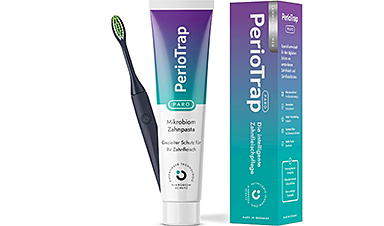
New Toothpaste Stops Gum Disease Without Harming Healthy Bacteria
Researchers have developed a targeted approach to combat periodontitis without disrupting the natural balance of the oral microbiome. The innovation could reshape how gum disease is treated while preserving beneficial bacteria. The human mouth [...]
Plastic Without End: Are We Polluting the Planet for Eternity?
The Kunming Montreal Global Biodiversity Framework calls for the elimination of plastic pollution by 2030. If that goal has been clearly set, why have meaningful measures that create real change still not been implemented? [...]
Scientists Rewire Natural Killer Cells To Attack Cancer Faster and Harder
Researchers tested new CAR designs in NK-92 cells and found the modified cells killed tumor cells more effectively, showing stronger anti-cancer activity. Researchers at the Ribeirão Preto Blood Center and the Center for Cell-Based [...]
New “Cellular” Target Could Transform How We Treat Alzheimer’s Disease
A new study from researchers highlights an unexpected player in Alzheimer’s disease: aging astrocytes. Senescent astrocytes have been identified as a major contributor to Alzheimer’s progression. The cells lose protective functions and fuel inflammation, particularly in [...]
Treating a Common Dental Infection… Effects That Extend Far Beyond the Mouth
Successful root canal treatment may help lower inflammation associated with heart disease and improve blood sugar and cholesterol levels. Treating an infected tooth with a successful root canal procedure may do more than relieve [...]
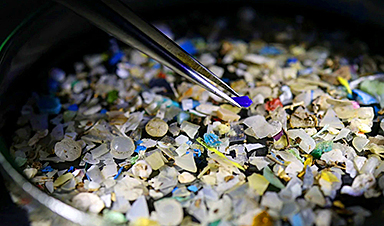
Microplastics found in prostate tumors in small study
In a new study, researchers found microplastics deep inside prostate cancer tumors, raising more questions about the role the ubiquitous pollutants play in public health. The findings — which come from a small study of 10 [...]
All blue-eyed people have this one thing in common
All Blue-Eyed People Have This One Thing In Common Blue Eyes Aren’t Random—Research Traces Them Back to One Prehistoric Human It sounds like a myth at first — something you’d hear in a folklore [...]
Scientists reveal how exercise protects the brain from Alzheimer’s
Researchers at UC San Francisco have identified a biological process that may explain why exercise sharpens thinking and memory. Their findings suggest that physical activity strengthens the brain's built in defense system, helping protect [...]
NanoMedical Brain/Cloud Interface – Explorations and Implications. A new book from Frank Boehm
New book from Frank Boehm, NanoappsMedical Inc Founder: This book explores the future hypothetical possibility that the cerebral cortex of the human brain might be seamlessly, safely, and securely connected with the Cloud via [...]
Deadly Pancreatic Cancer Found To “Wire Itself” Into the Body’s Nerves
A newly discovered link between pancreatic cancer and neural signaling reveals a promising drug target that slows tumor growth by blocking glutamate uptake. Pancreatic cancer is among the most deadly cancers, and scientists are [...]
This Simple Brain Exercise May Protect Against Dementia for 20 Years
A long-running study following thousands of older adults suggests that a relatively brief period of targeted brain training may have effects that last decades. Starting in the late 1990s, close to 3,000 older adults [...]
Scientists Crack a 50-Year Tissue Mystery With Major Cancer Implications
Researchers have resolved a 50-year-old scientific mystery by identifying the molecular mechanism that allows tissues to regenerate after severe damage. The discovery could help guide future treatments aimed at reducing the risk of cancer [...]
This New Blood Test Can Detect Cancer Before Tumors Appear
A new CRISPR-powered light sensor can detect the faintest whispers of cancer in a single drop of blood. Scientists have created an advanced light-based sensor capable of identifying extremely small amounts of cancer biomarkers [...]
Blindness Breakthrough? This Snail Regrows Eyes in 30 Days
A snail that regrows its eyes may hold the genetic clues to restoring human sight. Human eyes are intricate organs that cannot regrow once damaged. Surprisingly, they share key structural features with the eyes [...]