Researchers at University College London (UCL) have uncovered a key mechanism that helps the body switch off inflammation—a breakthrough that could lead to new treatments for chronic diseases affecting millions worldwide.
Inflammation is the body’s frontline defense against infection and injury, but when it doesn’t switch off properly, it can drive serious health conditions such as arthritis, heart disease, and diabetes. Until now, scientists didn’t fully understand how the body decides to stop the immune “fight” response and start healing.
Published in Nature Communications, the study reveals that tiny fat-derived molecules called epoxy-oxylipins act as natural brakes on the immune system. These molecules prevent the overgrowth of certain immune cells, known as intermediate monocytes, that can cause chronic inflammation—linked to tissue damage, illness and disease progression.
For the study, healthy human volunteers were given a tiny injection of UV-killed E. coli bacteria into the forearm, which triggered a short-lived inflammatory reaction—pain, redness, heat and swelling—similar to what happens after an infection or injury.
Volunteers were split into two groups: prophylactic arm and therapeutic arm.
At different times, the volunteer groups were given a drug called GSK2256294, which blocks an enzyme known as soluble epoxide hydrolase (sEH), which naturally breaks down epoxy-oxylipins.
- Prophylactic arm: Participants received the drug two hours before inflammation began, to see if boosting epoxy-oxylipins early could prevent harmful immune changes. In this group there were 24 volunteers—12 were treated, 12 untreated (placebo).
- Therapeutic arm: Participants received the drug four hours after inflammation started, mimicking real-world treatment once symptoms appear. In this group there were 24 volunteers—12 were treated, 12 untreated (placebo).
Both approaches showed that blocking the enzyme sEH with GSK2256294 raised epoxy-oxylipin levels, accelerated pain resolution, and sharply reduced levels of intermediate monocytes in blood and tissue—the immune cells linked to chronic inflammation and disease. Interestingly, the drug did not significantly alter external symptoms, such as redness and swelling.
Further tests revealed that one epoxy-oxylipin, 12,13-EpOME, works by shutting down a protein signal called p38 MAPK, which drives monocyte transformation. This was confirmed in lab experiments and in volunteers given a p38-blocking drug.
First author Dr. Olivia Bracken (UCL Department of Aging, Rheumatology and Regenerative Medicine) said, “Our findings reveal a natural pathway that limits harmful immune cell expansion and helps calm inflammation more quickly.
“Targeting this mechanism could lead to safer treatments that restore immune balance without suppressing overall immunity.
“With chronic inflammation ranked as a major global health threat, this discovery opens a promising avenue for new therapies.”
Corresponding author Professor Derek Gilroy (UCL Division of Medicine) said, “This is the first study to map epoxy-oxylipin activity in humans during inflammation.
“By boosting these protective fat molecules, we could design safer treatments for diseases driven by chronic inflammation.”
He added, “This was an entirely human-based study with direct relevance to autoimmune diseases, as we used a drug already suitable for human use—one that could be repurposed to treat flares in chronic inflammatory conditions, an area currently bereft of effective therapies.”
Why epoxy-oxylipins?
Scientists chose to study epoxy-oxylipins because these fat-derived molecules were known from animal research to reduce inflammation and pain, but their role in humans remained unknown. Unlike well-studied inflammatory mediators, such as histamine and cytokines, epoxy-oxylipins are part of an underexplored pathway that scientists believed could naturally calm the immune system.
Next steps
The discovery opens the door to clinical trials exploring sEH inhibitors as potential therapies for conditions like rheumatoid arthritis and cardiovascular disease.
Dr. Bracken said, “For instance, rheumatoid arthritis is a condition in which the immune system attacks the cells that line your joints. sEH inhibitors could be trialed alongside existing medications to investigate if they can help prevent or slow down joint damage incurred by the condition.”
Dr. Caroline Aylott, Head of Research Delivery at Arthritis UK, said, “The pain of arthritis can affect how we move, think, sleep and feel, along with our ability to spend time with loved ones. Pain is incredibly complex and is affected by many different factors. We also know that everybody’s pain is different.
“That is why it is important that we invest in research like this that helps us understand what causes and influences people’s experience of pain.
“We are excited to see the results of this study which has found a natural process that could stop inflammation and pain. We hope in the future that this will lead to new pain management options for people with arthritis.”
Publication details
Epoxy-Oxylipins Direct Monocyte Fate in Inflammatory Resolution in Humans, Nature Communications (2026). DOI: 10.1038/s41467-025-67961-5
Journal information: Nature Communications

News

Catching COVID significantly raises the risk of developing kidney disease, researchers find
Catching Covid significantly raises the risk of developing deadly kidney disease, research has shown. The virus was found to increase the chances that patients will develop the incurable condition by around 50 per cent. [...]
New Toothpaste Stops Gum Disease Without Harming Healthy Bacteria
Researchers have developed a targeted approach to combat periodontitis without disrupting the natural balance of the oral microbiome. The innovation could reshape how gum disease is treated while preserving beneficial bacteria. The human mouth [...]

Plastic Without End: Are We Polluting the Planet for Eternity?
The Kunming Montreal Global Biodiversity Framework calls for the elimination of plastic pollution by 2030. If that goal has been clearly set, why have meaningful measures that create real change still not been implemented? [...]
Scientists Rewire Natural Killer Cells To Attack Cancer Faster and Harder
Researchers tested new CAR designs in NK-92 cells and found the modified cells killed tumor cells more effectively, showing stronger anti-cancer activity. Researchers at the Ribeirão Preto Blood Center and the Center for Cell-Based [...]
New “Cellular” Target Could Transform How We Treat Alzheimer’s Disease
A new study from researchers highlights an unexpected player in Alzheimer’s disease: aging astrocytes. Senescent astrocytes have been identified as a major contributor to Alzheimer’s progression. The cells lose protective functions and fuel inflammation, particularly in [...]

Treating a Common Dental Infection… Effects That Extend Far Beyond the Mouth
Successful root canal treatment may help lower inflammation associated with heart disease and improve blood sugar and cholesterol levels. Treating an infected tooth with a successful root canal procedure may do more than relieve [...]
Microplastics found in prostate tumors in small study
In a new study, researchers found microplastics deep inside prostate cancer tumors, raising more questions about the role the ubiquitous pollutants play in public health. The findings — which come from a small study of 10 [...]

All blue-eyed people have this one thing in common
All Blue-Eyed People Have This One Thing In Common Blue Eyes Aren’t Random—Research Traces Them Back to One Prehistoric Human It sounds like a myth at first — something you’d hear in a folklore [...]
Scientists reveal how exercise protects the brain from Alzheimer’s
Researchers at UC San Francisco have identified a biological process that may explain why exercise sharpens thinking and memory. Their findings suggest that physical activity strengthens the brain's built in defense system, helping protect [...]
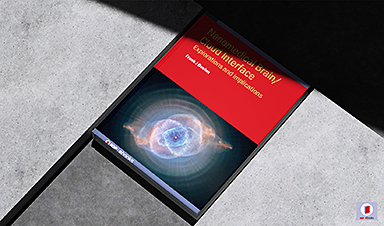
NanoMedical Brain/Cloud Interface – Explorations and Implications. A new book from Frank Boehm
New book from Frank Boehm, NanoappsMedical Inc Founder: This book explores the future hypothetical possibility that the cerebral cortex of the human brain might be seamlessly, safely, and securely connected with the Cloud via [...]
Deadly Pancreatic Cancer Found To “Wire Itself” Into the Body’s Nerves
A newly discovered link between pancreatic cancer and neural signaling reveals a promising drug target that slows tumor growth by blocking glutamate uptake. Pancreatic cancer is among the most deadly cancers, and scientists are [...]
This Simple Brain Exercise May Protect Against Dementia for 20 Years
A long-running study following thousands of older adults suggests that a relatively brief period of targeted brain training may have effects that last decades. Starting in the late 1990s, close to 3,000 older adults [...]
Scientists Crack a 50-Year Tissue Mystery With Major Cancer Implications
Researchers have resolved a 50-year-old scientific mystery by identifying the molecular mechanism that allows tissues to regenerate after severe damage. The discovery could help guide future treatments aimed at reducing the risk of cancer [...]

This New Blood Test Can Detect Cancer Before Tumors Appear
A new CRISPR-powered light sensor can detect the faintest whispers of cancer in a single drop of blood. Scientists have created an advanced light-based sensor capable of identifying extremely small amounts of cancer biomarkers [...]
Blindness Breakthrough? This Snail Regrows Eyes in 30 Days
A snail that regrows its eyes may hold the genetic clues to restoring human sight. Human eyes are intricate organs that cannot regrow once damaged. Surprisingly, they share key structural features with the eyes [...]
This Is Why the Same Virus Hits People So Differently
Scientists have mapped how genetics and life experiences leave lasting epigenetic marks on immune cells. The discovery helps explain why people respond so differently to the same infections and could lead to more personalized [...]