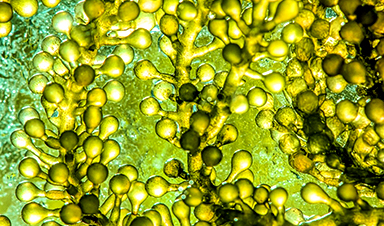
A new approach for cancer treatment involves the use of microalgal-derived nanoparticles. A recent review in Frontiers in Bioengineering and Biotechnology examines their potential as a sustainable and biocompatible solution.
Promise and Limitations
Nanoparticles (NPs), defined as particles of between one and 100 nanometers, possess unique physical, chemical, and biological properties that are not observed in bulk materials. Their enhanced surface area, quantum effects, and increased reactivity make them particularly valuable in drug delivery, imaging, and cancer therapeutics.
However, traditional synthesis methods often involve hazardous chemicals or energy-intensive processes, raising toxicity and environmental concerns that hinder their wider clinical adoption. To address this, researchers are increasingly turning to green synthesis, using biological systems to produce nanoparticles under milder, more environmentally friendly conditions.
Microalgae are a particularly attractive source. Rich in enzymes, bioactive compounds, and metabolites, microalgae can reduce metal ions into nanoparticles without toxic reagents or high temperatures. The resulting biogenic nanoparticles offer high biocompatibility and can be tailored to induce cytotoxicity in cancer cells while sparing healthy tissues.
Harnessing Microalgae for Nanoparticle Synthesis
The review assessed numerous studies that showcase how various microalgal species, including Chlorella, Spirulina, and Scenedesmus, have been used to synthesize metallic nanoparticles such as silver (AgNPs).
Typically, microalgal biomass is suspended in aqueous solutions of metal salts, commonly silver nitrate, and bioreduction is initiated through metabolic extracts or secreted compounds. A visible color change, often from clear to yellow or brown, signals successful nanoparticle formation.
To characterize these particles, researchers use techniques like transmission electron microscopy (TEM) to assess morphology, UV-visible spectroscopy for optical properties, energy-dispersive X-ray spectroscopy (EDX) for elemental analysis, and Fourier-transform infrared spectroscopy (FTIR) to evaluate surface chemistry and functional groups.
Microalgae like Dunaliella salina have also been employed to produce gold nanoparticles (AuNPs) with similarly impressive biomedical potential.
Such nanoparticles can form either intracellularly, via metal ion uptake and reduction inside the cells, or extracellularly, where secreted metabolites mediate reduction on cell surfaces or in the surrounding medium. This multi-pathway mechanism includes key stages: activation (reduction and nucleation), growth (particle aggregation), and termination (stabilization or biomineralization).
Tailoring Nanoparticle Properties for Cancer Therapy
The review focuses on how synthesis parameters, like temperature, reactant concentration, and the specific microalgal strain, can affect the size, shape, and surface charge of the synthesized nanoparticles.
Studies have shown that these characteristics directly influence biological activity and therapeutic efficacy. Those cited in the review demonstrate that microalgal nanoparticles can be fine-tuned for targeted cytotoxic effects against various cancer cell lines while exhibiting low toxicity in healthy cells.
The mechanism behind this is believed to involve several pathways, including the generation of reactive oxygen species (ROS), disruption of cancer cell membrane integrity, and the induction of apoptosis.
Due to their small size, nanoparticles can also take advantage of the enhanced permeability and retention (EPR) effect, enabling them to accumulate selectively in tumor tissues. Functionalizing the nanoparticle surface with targeting ligands or anticancer drugs further enhances specificity and improves therapeutic outcomes.
Opportunities and Ongoing Challenges
The review highlights several advantages of microalgal-based nanoparticle synthesis. These include sustainability, low production costs, scalability, and the ability to control physicochemical properties through natural capping agents, which help stabilize the nanoparticles and support their compatibility for biomedical applications.
The authors also highlight the opportunities for integrating synthetic biology and genetic engineering to enhance microalgal strains. By fine-tuning metabolic pathways, it may be possible to increase both the yield and quality of nanoparticles.
However, more research is still required to achieve consistent nanoparticle size and morphology, understand long-term biocompatibility, and establish standardized, reproducible production protocols. While in vitro studies have shown promising results, translating these findings into clinically viable therapies will require extensive in vivo testing and regulatory validation.
Journal Reference
Garlapati V.K., et al. (2025). Sustainable production of microalgal nanoparticles through green synthesis towards cancer treatment. Frontiers in Bioengineering and Biotechnology, 13, 1621876. DOI: 10.3389/fbioe.2025.1621876, https://www.frontiersin.org/journals/bioengineering-and-biotechnology/articles/10.3389/fbioe.2025.1621876/full


News
Scientists Discover Aspirin May Slash Dementia Risk by 70% – but Only for Certain People
Aspirin was linked to a sharply lower dementia risk in some older adults, and their genes may hold the clue. A Monash University analysis found that older adults with a particular genetic profile had [...]
Inflammation May Awaken Dormant Cancer Cells Years After Treatment
The body’s response to inflammation may disturb cancer cells that have been lying silent for years, giving them an opportunity to grow again. Researchers at the Francis Crick Institute have found that gut inflammation [...]

Where do nanoparticles go once they enter the body?
New international best practice guidance, co-written at ANSTO, sets out how to measure where nanoparticles like titanium dioxide end up in the body and how long they remain. The guidance has been shared by [...]
Long-Acting HIV Shots Could Solve a Major Treatment Challenge for Young People
A major African trial suggests that changing how HIV treatment is delivered could significantly improve viral suppression in adolescents. Young people with HIV were more likely to keep the virus suppressed when they received [...]

WHO Factsheets – The top 10 causes of death
In 2023, the 10 leading causes of death accounted for 33 million deaths, or 54% of the total 61 million deaths worldwide. The top global causes of death, in order of total number of lives lost, [...]
Aging Cells May Be Hiding From the Immune System – Scientists Think They Know How
Your immune system is supposed to clear out damaged cells. Researchers may have found how some of them hide and linger as the body ages. Researchers led by Cedars-Sinai Health Sciences University have identified [...]

Your Voice May Reveal How Fast Your Brain Is Aging
Researchers have developed a machine-learning “speech clock” that estimates age from subtle patterns in how people speak and what they say. It is possible that people’s voices may contain certain signals of aging that [...]

Optogenetics Pioneers Win 2026 Nobel Prize in Physiology or Medicine
The 2026 Nobel Prize in Physiology or Medicine has been awarded to Peter Hegemann, Georg Nagel, and Karl Deisseroth for the development of optogenetics, a revolutionary technology that uses light to control individual neurons [...]

Molecular Manufacturing: The Future of Nanomedicine – From NanoappsMedical Inc.
This book explores the revolutionary potential of atomically precise manufacturing technologies to transform global healthcare, as well as practically every other sector across society. This forward-thinking volume examines how envisaged Factory@Home systems might enable the cost-effective [...]

What is ‘American Covid’ and how bad is it?
Cases of so-called ‘American Covid’ are on the rise in the UK. The strain is officially called XFG, or ‘Stratus’, and is the most common variant in North America, hence the name. It might soon [...]
Researcher at Russian plague laboratory dies of ‘unknown’ infection
Russian authorities have imposed "anti-epidemic measures" after a laboratory worker at an institute in Siberia dedicated to studying the plague and other infectious diseases died of a mysterious illness. The researcher, a 28-year-old female [...]

GHCE Concept
From the preface of the book Global Health Care Equivalency in the Age of Nanotechnology, Nanomedicine and Artificial Intelligence, Edited by Frank Boehm: Since the publication of my first book (Nanomedical Device and Systems [...]

A Surprising Brain Signal Could Explain Why Eating Less Protein Extends Lifespan
A new paper suggests that limiting protein intake triggers a coordinated response throughout the body that may help explain how protein restriction affects healthy aging. Animals respond to protein restriction, or reduced protein in [...]

Back and shoulder surgery is often worse than useless
Millions of operations should be scrapped SIX IN TEN Britons have surgery at some point. So do lots of Americans, at a cost of perhaps $500bn a year, a third of all spending on [...]
Cocaine plays with mind, hijacks brain circuit, drives increasingly rigid and repetitive behavior
Researchers have found that cocaine hijacks brain circuit, which to drive increasingly rigid and repetitive behavior. The brain circuit that normally participates in selecting natural mouth and face movements, but which becomes disproportionately engaged [...]
Injectable nanodevices could provide effective treatment for drug-resistant glioblastoma
The brain cancer glioblastoma is one of the most aggressive and treatment-resistant cancers known to medicine, carrying a median survival of just 12-15 months, even with the best available care. Now, researchers at the [...]