A new study raises important questions about widely used NAD+ supplements, suggesting that compounds often taken to boost energy and support healthy aging may have unintended consequences in cancer treatment.
Millions of Americans take supplements like nicotinamide mononucleotide (NMN), nicotinamide riboside (NR), and nicotinamide (NAM) with the goal of boosting energy and supporting healthy aging. These compounds are marketed for their ability to raise levels of NAD+, a molecule central to metabolism and cellular repair.
Some cancer patients have also turned to these supplements, hoping they might ease the harsh side effects of chemotherapy. But emerging research suggests that this strategy could backfire.
A study from Case Western Reserve University's School of Medicine, published in Cancer Letters, found that these vitamin B3 derivatives may actually help pancreatic cancer cells survive treatment. Pancreatic cancer remains one of the most lethal cancers, with a five-year survival rate of just 13%, making any factor that affects treatment outcomes especially important.
How NAD+ Fuels Both Health and Disease
NAD+ is a molecule required for the survival and function of all cells in the body, including both healthy and cancerous ones. Supplements that raise NAD+ levels effectively supply cells with additional fuel.
In healthy individuals, this added fuel may provide benefits. However, the study found that cancer cells can exploit it to strengthen their energy production, repair DNA damage caused by chemotherapy, and avoid programmed cell death. As a result, tumors may withstand treatments that would normally destroy them.
In laboratory tests and mouse studies, the supplements, especially NMN, protected pancreatic cancer cells from three commonly used chemotherapy drugs: oxaliplatin, 5-fluorouracil, and gemcitabine.
Researchers identified three main ways the supplements interfered with treatment:
- Increasing cancer cell energy, which made tumors more robust
- Lowering oxidative stress in tumors, reducing a key mechanism chemotherapy uses to kill cancer cells
- Limiting DNA damage and preventing cell death, both of which are essential for chemotherapy to work
Implications for Cancer Treatment
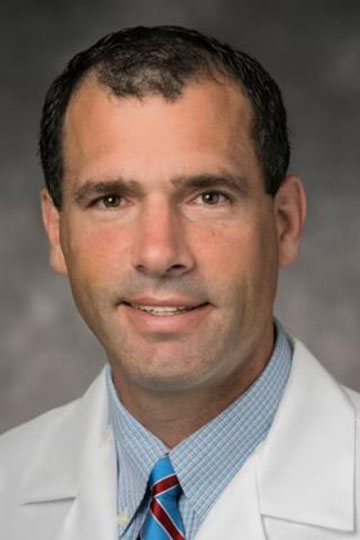
"Our findings highlight a potentially concerning role for NAD+-boosting supplements in the context of an active cancer, especially when used in conjunction with chemotherapy," said study lead Jordan Winter, Case Western Reserve School of Medicine professor and co-leader of the developmental therapeutics program at the National Cancer Institute-designated Cancer Comprehensive Cancer Center. "Our discovery is a call to action for the medical community."
The researchers emphasized that the study does not show these supplements are harmful for healthy individuals. However, for people with active cancer, especially those receiving chemotherapy, the potential risks may be significant.
"This research is a critical reminder that 'natural' doesn't always mean safe," Winter said, "especially in the complex biology of cancer treatment."
The team recommends routine screening of supplement use among cancer patients and calls for further clinical studies to better understand how NAD+ supplements interact with cancer therapies.
For now, Winter advises patients to speak with their oncologist and care team about any supplements they are taking.
Reference: "Vitamin B3 derivatives support pancreatic cancer cell survival and chemotherapy resistance" by Faith Nakazzi, Mehrdad Zarei, Mariana Lopes, Hallie J. Graor, William C. Beegan, Eric Gu, Sakineh Rezaei, Peder J. Lund and Jordan M. Winter, 20 February 2026, Cancer Letters.
DOI: 10.1016/j.canlet.2026.218334

News – Curated by Amanda Scott, Alias Group Creative
Follow her on Bluesky
Popular Vitamin B3 Supplements May Help Cancer Cells Survive, Scientists Warn
A new study raises important questions about widely used NAD+ supplements, suggesting that compounds often taken to boost energy and support healthy aging may have unintended consequences in cancer treatment. Millions of Americans take [...]
Scientists Discover Cancer Tumors Are “Addicted” to This Common Antioxidant
Cancer cells may be exploiting a common antioxidant as fuel, revealing a potential weakness that future therapies could target. Cancer cells may be tapping into an unexpected energy source: an antioxidant long associated with [...]
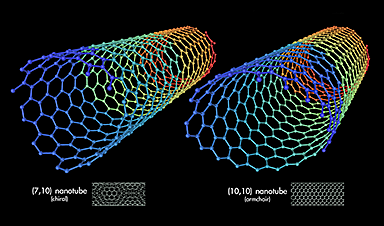
Nanotube injector transfers cytoplasmic contents and organelles between living cells safely
Cells are not isolated units; they continuously exchange proteins, genetic material, and even entire organelles with their neighbors. Intercellular transfer influences how tissues develop, respond to stress, and repair damage. In certain cancers, for [...]

CEO of America’s largest public hospital system is ready to replace radiologists with AI
The chief executive of America’s largest public hospital system says he is prepared to start replacing radiologists with artificial intelligence in some circumstances, once the regulatory landscape catches up. Mitchell H. Katz, MD, president [...]
Our books now available worldwide!
Online Sellers other than Amazon, Routledge, and IOPP Indigo Global Health Care Equivalency in the Age of Nanotechnology, Nanomedicine and Artifcial Intelligence Global Health Care Equivalency In The Age Of Nanotechnology, Nanomedicine And Artificial [...]

Study finds higher heart disease risk in long COVID patients
People with long COVID are at increased risk of developing cardiovascular disease, according to a new study from Karolinska Institutet published in eClinicalMedicine. The results show that the risk of conditions such as cardiac arrhythmias [...]
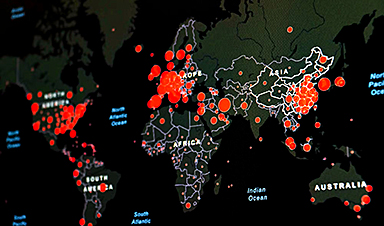
The Corona variant Cicada is here – we know that
Online and on social media, reports are piling up about a new Sars-Cov-2 variant that is currently on the rise: BA.3.2, also known as Cicada. That's what it's all about: The Omicron variant BA.3.2, [...]
A Simple Blood Test Could Predict Dementia Risk 25 Years Early
A single blood marker may quietly signal dementia risk decades in advance. Scientists at the University of California, San Diego, have identified a blood signal that could forecast dementia risk decades before symptoms begin. Their [...]

Sperm Get Lost in Space and Scientists Finally Know Why
Having a baby in space may be far more complicated than expected, as new research shows sperm struggle to find their way in microgravity. Starting a family beyond Earth could be more complicated than [...]
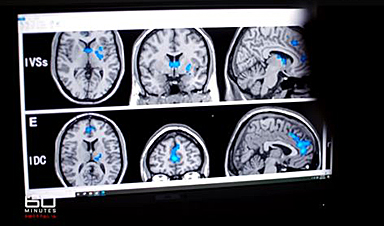
Digital Dementia – Brain fog and disassociation from being chronically online
New medical evidence, featured on 60 Minutes Australia, indicates excessive screen time is causing "digital dementia" in young Australians, with brain scans showing physical shrinkage and damage. Experts warn that high device usage (6-8 hours [...]
A new, highly mutated COVID variant called ‘Cicada’ is spreading in the US.
BA.3.2, a heavily mutated new COVID-19 variant which may be better able to escape immunity from vaccines or prior infection, is now spreading in the United States. Although COVID cases are currently low nationally, [...]
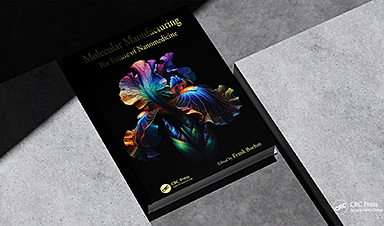
Molecular Manufacturing: The Future of Nanomedicine – New book from NanoappsMedical Inc.
This book explores the revolutionary potential of atomically precise manufacturing technologies to transform global healthcare, as well as practically every other sector across society. This forward-thinking volume examines how envisaged Factory@Home systems might enable the cost-effective [...]

Ancient bacteria strain discovered in ice cave is resistant to some modern antibiotics
In the depths of Scarisoara cave in Romania sits one of the world’s biggest underground glaciers, a monumental slab of ice the size of roughly 40 Olympic swimming pools that began to form around [...]

Scientists Identify “Good” Bacteria That May Prevent Long COVID
According to the WHO, about 6% of people worldwide who get COVID-19, roughly 400 million people, later develop a long-lasting form of the illness. That shows the condition remains a significant public health challenge. In [...]
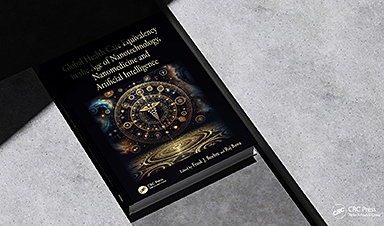
New book from Nanoappsmedical Inc. – Global Health Care Equivalency
A new book by Frank Boehm, NanoappsMedical Inc. Founder. This groundbreaking volume explores the vision of a Global Health Care Equivalency (GHCE) system powered by artificial intelligence and quantum computing technologies, operating on secure [...]
RNA Recycling Extends Lifespan
Summary: Researchers discovered a biological “trash disposal” mechanism that directly controls how fast we age. While circular RNA has long been known to accumulate in cells as we get older, this study proves for the [...]