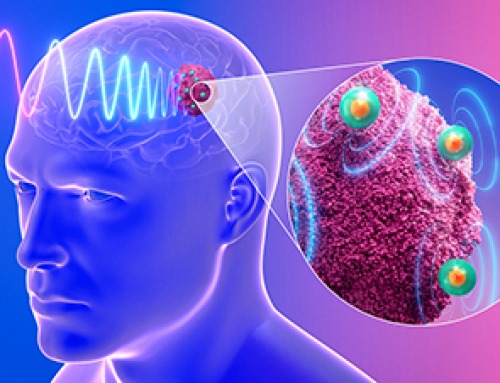
The 2026 Nobel Prize in Physiology or Medicine has been awarded to Peter Hegemann, Georg Nagel, and Karl Deisseroth for the development of optogenetics, a revolutionary technology that uses light to control individual neurons in the living brain.
Hegemann and Nagel discovered channelrhodopsin, a light-sensitive ion channel from green algae, while Deisseroth engineered it into a millisecond-precision optical switch for mammalian neurons. The technique transformed neuroscience from observing correlational brain activity to establishing causal links behind memory, emotion, and disease.
For over a century, neuroscience operated under a fundamental constraint: researchers could record the electrical crackle of brain activity, correlate regional activation with mental states, or apply blunt electrical shocks that stimulated millions of neighboring cells indiscriminately, but they could never establish true causality at the level of specific circuits. The functional map of the human brain remained an imprecise sketch, obscured by question marks and biological noise.
That paradigm permanently shifted with the invention of optogenetics—a technology that fuses optics, molecular genetics, and neurobiology to control living neural circuits with pulses of laser light.
Recognizing this foundational transformation, the Nobel Assembly at Karolinska Institutet has awarded the 2026 Nobel Prize in Physiology or Medicine jointly to Peter Hegemann, Ph.D., Georg Nagel, Ph.D., and Karl Deisseroth, M.D., Ph.D., for the discovery of channelrhodopsin and the creation of optogenetics.
“Optogenetics provides opportunities for mapping the brain in a way that we could once only dream of,” stated Per Svenningsson, M.D., Ph.D., Chair of the Nobel Committee for Physiology or Medicine.
From Algal Phototaxis to Light-Gated Ion Channels
The scientific trajectory of optogenetics began not in a neurology clinic, but within basic biophysical investigations into how simple microscopic organisms sense their surroundings.
Peter Hegemann, working in Germany, was driven by a fundamental biological question: How does the single-celled green alga Chlamydomonas reinhardtii detect illumination and navigate toward light sources to drive photosynthesis?
Collaborating with biophysicist Georg Nagel in the early 2000s, the pair isolated and characterized a family of membrane proteins named channelrhodopsins. Unlike animal visual pigments that require complex cascades of intracellular G-protein signaling to open secondary ion channels, channelrhodopsin was self-contained: a single seven-transmembrane protein that functioned directly as both a light receptor and an ion pore.
Upon absorbing a photon of blue light, the channelrhodopsin pore snaps open within milliseconds. Positively charged cations, principally sodium and calcium ions, flood into the cell interior, instantly generating an electrical impulse across the membrane. When Hegemann and Nagel expressed the algal protein in non-algal host cells, the recipients immediately inherited light sensitivity.
Transforming Algae Genes into Precision Neural Tools
The discovery caught the immediate attention of neuroscientist and bioengineer Karl Deisseroth at Stanford University. Brain cells communicate using the same fundamental mechanism: rapid, millisecond electrical spikes driven by influxes of sodium ions through membrane channels.
Deisseroth realized that if channelrhodopsin could be safely delivered into mammalian neurons, light could be used as an instantaneous, non-invasive actuator to trigger action potentials on demand.
In a landmark 2005 breakthrough, Deisseroth and his team successfully introduced the genetic sequence for channelrhodopsin-2 into cultured rat neurons using viral vectors. Illuminating the culture dish with brief flashes of blue light drove individual neurons to fire synchronized action potentials with millisecond temporal fidelity.
By 2007, Deisseroth overcame immense bioengineering hurdles to bring the tool into the brains of living, awake, and freely moving animals. By coupling cell-type-specific genetic promoters with stereotaxic delivery of flexible, hair-thin fiber-optic implants, Deisseroth demonstrated that flashing light into targeted brain structures could selectively command specific behaviors, flip emotional states, and rewrite learned memories.
Two Decades of Unprecedented Discovery
The emergence of optogenetics dismantled decades of mechanistic speculation across neurobiology, psychiatry, and pharmacology.
Over the past twenty years, thousands of laboratories across the world have adopted optogenetic systems to deconstruct the mammalian brain’s wiring diagram:
- Psychiatric Pathologies: Researchers have used light stimulation to activate and silence discrete projection pathways between the ventral tegmental area, nucleus accumbens, and prefrontal cortex, pinpointing the precise circuits that generate anhedonia in depression, compulsive seeking in substance addiction, and pathological panic in post-traumatic stress disorder.
- Neurodegenerative Movement Disorders: In Parkinson’s disease models, optogenetics untangled the complex interplay between the direct and indirect pathways of the basal ganglia, clarifying why deep brain stimulation succeeds and identifying precise neural nodes for clinical intervention.
- Memory Engram Dynamics: Neurobiologists have tagged the specific, sparse ensemble of neurons that encode an individual memory (the engram), demonstrating that shining light onto those cells can reactivate, modify, or erase traumatic recall.
- Clinical Translation: In clinical medicine, the direct descendants of Hegemann, Nagel, and Deisseroth’s work are now undergoing human trials. By expressing channelrhodopsins in remaining retinal ganglion cells, gene therapy vectors are partially restoring functional visual perception in patients suffering from retinitis pigmentosa.
By bridging basic algal biochemistry with cutting-edge optical engineering, Hegemann, Nagel, and Deisseroth provided science with a definitive light switch for the mind, inaugurating a golden age of causal circuit neuroscience.
Questions & Answers
What is optogenetics?
Optogenetics is a biological technique that combines genetics and optics to control the electrical activity of specific, genetically targeted cells, primarily neurons, using pulses of light with millisecond precision in living organisms.
What is channelrhodopsin and where did it come from?
Channelrhodopsin is a light-gated ion channel protein originally discovered in Chlamydomonas reinhardtii, a single-celled green alga. It opens in response to blue light, allowing positively charged ions to flow into the cell to create an electrical current.
Why was optogenetics considered a revolutionary leap over older brain research methods?
Older methods like pharmaceutical drugs or metal electrodes affected thousands of different cell types simultaneously and operated too slowly to match natural brain firing. Optogenetics allowed scientists to target a single class of neurons and turn them on or off with millisecond accuracy, establishing causal links between specific circuits and behaviors.
Who won the 2026 Nobel Prize in Physiology or Medicine?
The prize was jointly awarded to Peter Hegemann, Georg Nagel, and Karl Deisseroth for their discovery of light-sensitive algal channelrhodopsin proteins and the development of optogenetics to control neural circuits in the living brain.

News – Curated by Amanda Scott, Alias Group Creative
Follow her on Bluesky
Optogenetics Pioneers Win 2026 Nobel Prize in Physiology or Medicine
The 2026 Nobel Prize in Physiology or Medicine has been awarded to Peter Hegemann, Georg Nagel, and Karl Deisseroth for the development of optogenetics, a revolutionary technology that uses light to control individual neurons [...]

Molecular Manufacturing: The Future of Nanomedicine – From NanoappsMedical Inc.
This book explores the revolutionary potential of atomically precise manufacturing technologies to transform global healthcare, as well as practically every other sector across society. This forward-thinking volume examines how envisaged Factory@Home systems might enable the cost-effective [...]

What is ‘American Covid’ and how bad is it?
Cases of so-called ‘American Covid’ are on the rise in the UK. The strain is officially called XFG, or ‘Stratus’, and is the most common variant in North America, hence the name. It might soon [...]
Researcher at Russian plague laboratory dies of ‘unknown’ infection
Russian authorities have imposed "anti-epidemic measures" after a laboratory worker at an institute in Siberia dedicated to studying the plague and other infectious diseases died of a mysterious illness. The researcher, a 28-year-old female [...]

GHCE Concept
From the preface of the book Global Health Care Equivalency in the Age of Nanotechnology, Nanomedicine and Artificial Intelligence, Edited by Frank Boehm: Since the publication of my first book (Nanomedical Device and Systems [...]

A Surprising Brain Signal Could Explain Why Eating Less Protein Extends Lifespan
A new paper suggests that limiting protein intake triggers a coordinated response throughout the body that may help explain how protein restriction affects healthy aging. Animals respond to protein restriction, or reduced protein in [...]

Back and shoulder surgery is often worse than useless
Millions of operations should be scrapped SIX IN TEN Britons have surgery at some point. So do lots of Americans, at a cost of perhaps $500bn a year, a third of all spending on [...]
Cocaine plays with mind, hijacks brain circuit, drives increasingly rigid and repetitive behavior
Researchers have found that cocaine hijacks brain circuit, which to drive increasingly rigid and repetitive behavior. The brain circuit that normally participates in selecting natural mouth and face movements, but which becomes disproportionately engaged [...]
Injectable nanodevices could provide effective treatment for drug-resistant glioblastoma
The brain cancer glioblastoma is one of the most aggressive and treatment-resistant cancers known to medicine, carrying a median survival of just 12-15 months, even with the best available care. Now, researchers at the [...]
New Treatment Cuts “Bad” Cholesterol in Half for a Full Year
A single infusion of an experimental CRISPR-Cas9 therapy was reported to safely lower LDL cholesterol by 52.5% and triglycerides by 47.8%, as measured 12 months after treatment. What if one infusion could keep cholesterol [...]
Too Much RNA Can Drain a Cell’s Energy, Scientists Discover
A virus may cripple a cell’s power supply simply by producing too much of a molecule the cell needs to survive. New research from the Texas A&M College of Veterinary Medicine and Biomedical Sciences [...]

West African scientists warn of weakening health systems and urge stronger outbreak detection
LOME, Togo (AP) — West African laboratory scientists called on governments Friday to strengthen capacity to detect disease outbreaks to avoid another major outbreak, saying health systems across the region are becoming weaker. Participants [...]

A Little-Known Protein Could Point to a New Way To Treat Alzheimer’s
A study suggests that increasing SORLA protein levels could help treat Alzheimer’s disease and other disorders involving tau protein. Increasing SORLA, a protein with a protective role in the brain, helped mice withstand damage [...]
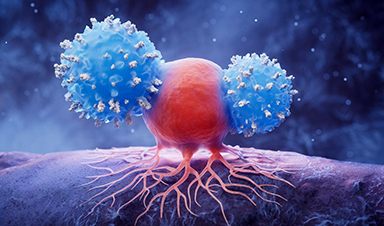
Cancer’s Hidden Antioxidant Shield Helps It Escape the Immune System
Blocking an antioxidant protein that tumors use to suppress immune attacks improved cancer immunotherapy responses in mice. Cancer cells can release antioxidants that interfere with the immune cells trying to kill them. Researchers have [...]

Scientists Find a Berry Compound That Helps Muscle Cells Burn Fat
Pterostilbene, a compound found naturally in some foods, affects how skeletal muscles process fats by stabilizing a protein called PPARδ and increasing its signaling activity. Pterostilbene, a natural compound found in blueberries, grapes, and [...]
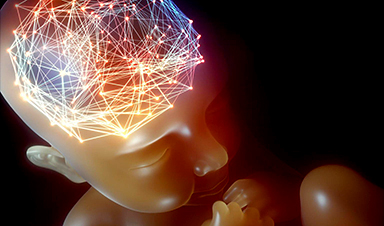
Two Hidden Forces Help Build the Human Brain Before Birth
Scientists have uncovered two surprising forces that help guide how the human brain forms before birth. Before birth, the human brain is shaped in large part by an unusual class of stem cells known [...]