A study suggests that increasing SORLA protein levels could help treat Alzheimer’s disease and other disorders involving tau protein.
Increasing SORLA, a protein with a protective role in the brain, helped mice withstand damage from tau tangles, the toxic protein clumps associated with Alzheimer’s disease. The findings suggest that boosting SORLA could offer a way to treat Alzheimer’s and other disorders involving tau, although that possibility remains a goal for future research.
Tau normally helps nerve cells hold their shape by stabilizing tiny internal filaments called microtubules. It performs this structural job throughout the brain and nervous system. But when tau clumps together inside nerve cells, the resulting tangles are linked to cognitive impairment and cell death. Diseases involving these tangles are known as tauopathies.
Scientists at Sanford Burnham Prebys investigated how changing the amount of SORLA, short for sorting-related receptor with A-type repeats, affected this damage. Their study, published in Science Advances, examined both the protection provided by extra SORLA and the consequences of its absence.
Extra SORLA limits damage in mice
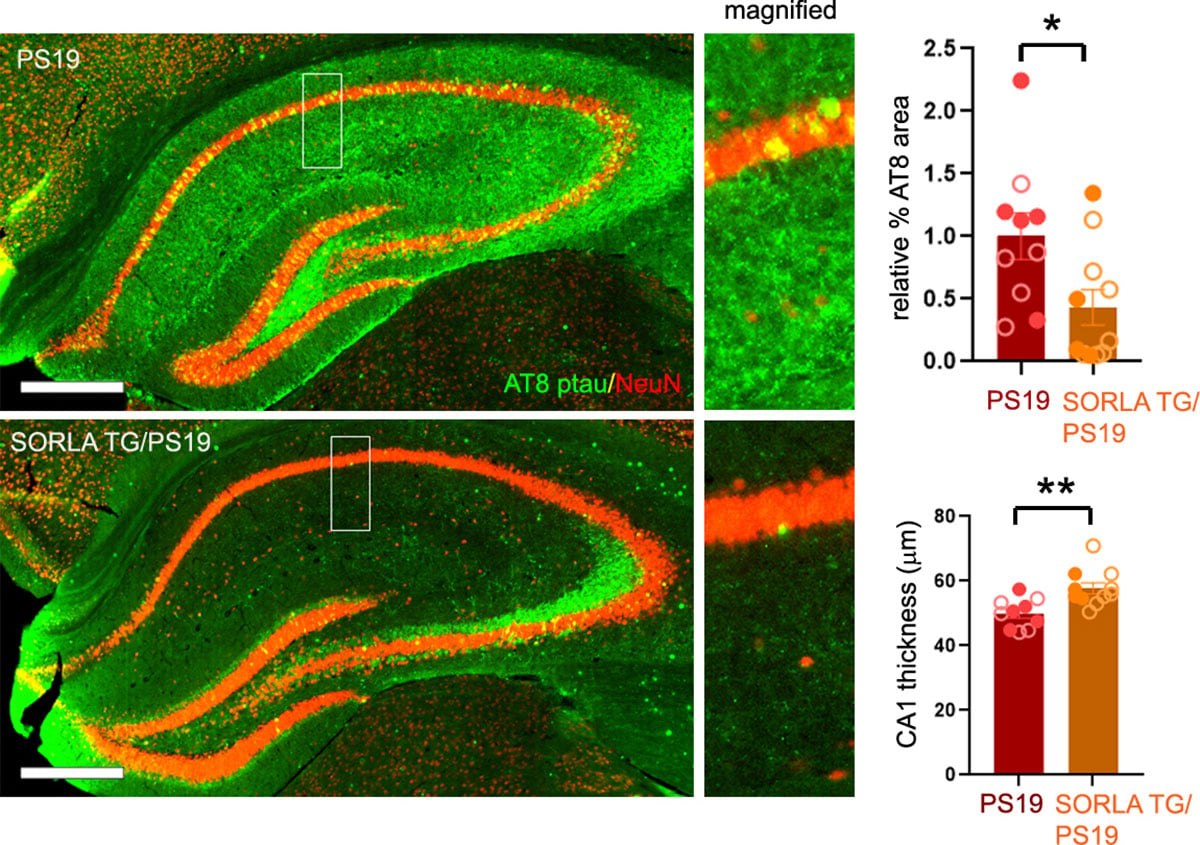
The team first bred mice that produced extra human SORLA with mice that developed tau tangles, brain shrinkage, and cognitive deficits. To investigate what happens without the protein, they also tested mice genetically modified to lack Sorl1, the gene that carries the instructions for making SORLA. Some people have mutations that disable this gene, making the comparison relevant to human disease.
“When you upregulate SORLA, you can suppress the negative effects found in tauopathies,” said Huijie Huang, PhD, a staff scientist in the Huang lab at Sanford Burnham Prebys and the study’s lead author.
“We found there was less brain atrophy and less tau accumulation, which was very exciting to see.”
The mice unable to make SORLA revealed the other side of that protective relationship.
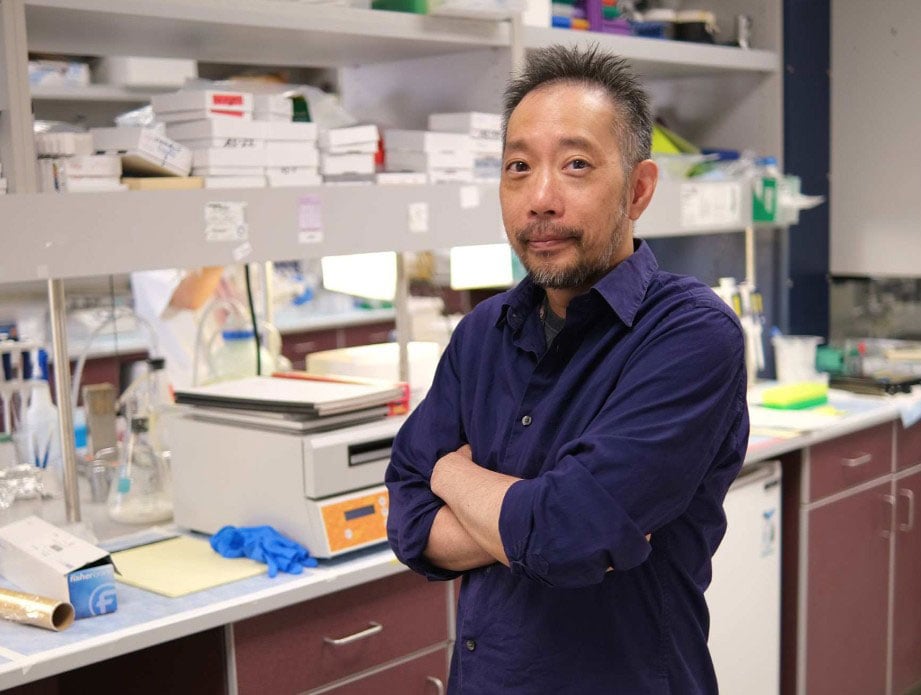
“The opposite turned out to be true when we deleted the ability to produce SORLA proteins,” said Timothy Huang, PhD, an assistant professor in the Center for Neurologic Diseases at Sanford Burnham Prebys and the study’s senior and corresponding author. “A lack of SORLA exacerbated the harmful effects observed in tauopathies.”
SORLA’s protection extends beyond amyloid beta
SORLA had already attracted researchers’ attention because of its effects on amyloid beta, another protein that builds up in Alzheimer’s disease.
“In the last 15 or 20 years, considerable data has come out from our lab and other groups showing that SORLA can suppress one of the hallmarks of Alzheimer’s disease—amyloid-beta generation and accumulation,” said Timothy Huang.
“Very little was known, however, about whether SORLA affected the tau tangles reflected on the other side of the coin in Alzheimer’s disease.”
The new experiments found that extra SORLA reduced several processes associated with tau damage. One was hyperphosphorylation, in which too many chemical groups called phosphate groups become attached to tau. Another was the ability of misshapen tau to act as seeds that draw in more tau and encourage clumps to grow.
The benefits also reached the connections between nerve cells. Extra SORLA helped preserve synapses, the junctions through which neurons communicate, along with synaptic plasticity, the brain’s ability to adjust those connections.
To investigate the cellular changes behind these effects, the researchers combined techniques that measured protein levels and gene expression, or which genetic instructions cells were using. They also mapped the locations of RNA and proteins within brain tissue. RNA helps cells use genetic instructions to make proteins.
These analyses showed that extra SORLA prevented disease-related changes in protein production at synapses. It also suppressed other processes associated with worsening tauopathy, including disease-related patterns of gene activity in glial cells. These cells support and protect neurons, suggesting that SORLA’s effects extend beyond nerve cells themselves.
Could drugs calm overactive glial cells?
The findings in mice without SORLA pointed to a possible treatment approach involving glial cells.
“One particularly notable finding that we can build on is the upregulation of a member of the plexin-B family of receptors in the absence of SORLA,” said Huijie Huang.
Receptors are proteins that receive cellular signals. The increased levels of this plexin-B receptor drew interest because drugs that target the receptor family could potentially be repurposed.
“There are unique drugs that can target this class of receptors that we may be able to apply to tau-related dementia disorders,” said Timothy Huang. “One potential future direction is to repurpose these drugs to target overactivation of glial cells and perhaps reverse some of the phenotypes in tauopathies”
The researchers also plan to examine how individual cell types respond when SORLA levels rise or fall. They intend to graft human neurons or glial cells into mouse brains and study the effects of different SORLA mutations.
“Mouse cells and human cells are different,” said Timothy Huang. “Because we’re looking at human disease, it’s more informative if we can observe the modulation and dysfunction of SORLA in the context of a human cell inside of a diseased brain environment.”
Reference: “SORLA up-regulation suppresses pathological effects in aged tauopathy mouse brain” by Huijie Huang, Christina Huan Shi, Wenqi Yang, Juan C. Piña-Crespo, Jay Bhatnagar, Julian Curatolo, Rabi Murad, Palak Shah, Alex Campos, Alexandra Houser, Rebecca A. Porritt, Giau Van Vo, Qiang Xiao, Tongmei Zhang, Shengjie Feng, Kevin Y. Yip and Timothy Y. Huang, 17 July 2026, Science Advances.
DOI: 10.1126/sciadv.aed6825
The study was supported by the National Institutes of Health, National Cancer Institute and National Institute on Aging.

News – Curated by Amanda Scott, Alias Group Creative
Follow her on Bluesky
Too Much RNA Can Drain a Cell’s Energy, Scientists Discover
A virus may cripple a cell’s power supply simply by producing too much of a molecule the cell needs to survive. New research from the Texas A&M College of Veterinary Medicine and Biomedical Sciences [...]

West African scientists warn of weakening health systems and urge stronger outbreak detection
LOME, Togo (AP) — West African laboratory scientists called on governments Friday to strengthen capacity to detect disease outbreaks to avoid another major outbreak, saying health systems across the region are becoming weaker. Participants [...]
A Little-Known Protein Could Point to a New Way To Treat Alzheimer’s
A study suggests that increasing SORLA protein levels could help treat Alzheimer’s disease and other disorders involving tau protein. Increasing SORLA, a protein with a protective role in the brain, helped mice withstand damage [...]
Cancer’s Hidden Antioxidant Shield Helps It Escape the Immune System
Blocking an antioxidant protein that tumors use to suppress immune attacks improved cancer immunotherapy responses in mice. Cancer cells can release antioxidants that interfere with the immune cells trying to kill them. Researchers have [...]

Scientists Find a Berry Compound That Helps Muscle Cells Burn Fat
Pterostilbene, a compound found naturally in some foods, affects how skeletal muscles process fats by stabilizing a protein called PPARδ and increasing its signaling activity. Pterostilbene, a natural compound found in blueberries, grapes, and [...]
Two Hidden Forces Help Build the Human Brain Before Birth
Scientists have uncovered two surprising forces that help guide how the human brain forms before birth. Before birth, the human brain is shaped in large part by an unusual class of stem cells known [...]
Researchers Uncover a Hidden Trigger Behind Chronic Inflammation
The findings offer new insights that could help guide the development of future therapies. A protein called human resistin may help flip on one of the immune system’s most powerful inflammatory switches. Researchers at [...]
Scientists Have Uncovered Previously Hidden Microbial Activity on Human Skin
The most abundant microbes on your skin may not be the ones doing most of the work. Human skin supports vast communities of bacteria, fungi, and viruses that can influence its protective barrier, immune [...]
Brazilian Tree Compounds Fight COVID-19 on Multiple Fronts
Scientists found compounds in a Brazilian tree that hit SARS-CoV-2 on multiple fronts, revealing a promising new lead in the search for COVID-19 treatments. Researchers have found that galloylquinic acids extracted from the leaves [...]
Cutting Two Amino Acids Slowed Prostate Cancer in Mice
A newly identified link between amino acid metabolism and cholesterol production may help prostate tumors adapt to hormone therapy. Prostate cancer can find ways around treatments designed to deprive tumors of the hormones they [...]
Largest-Ever Physics Survey Raises New Doubts About Our Model of the Universe
Physicists around the world remain deeply divided on key mysteries of the universe, from dark matter to quantum gravity. The standard cosmological model failed to gain majority support, and no leading theory dominated the [...]

Scientists Just Overturned a 100-Year-Old Belief About Bacteria in the Lungs
New findings raise questions about the role of microbes living in the lungs. More than 35 trillion bacteria live throughout the human body, forming microbiomes in the gut, mouth, lungs, skin, and urogenital tract. [...]
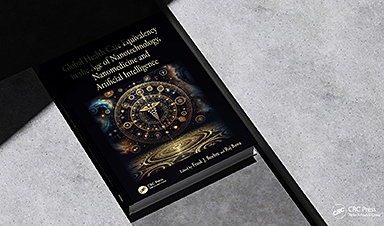
GHCE Concept
From the preface of the book Global Health Care Equivalency in the Age of Nanotechnology, Nanomedicine and Artificial Intelligence, Edited by Frank Boehm: Since the publication of my first book (Nanomedical Device and Systems [...]

Novartis, Ionis drug failure spurs questions
Pelacarsen didn’t protect heart health despite lowering levels of a protein particle, “Lp(a),” in a large clinical trial — a result with important implications for cardiovascular drug research. Dive Brief: An RNA drug from [...]
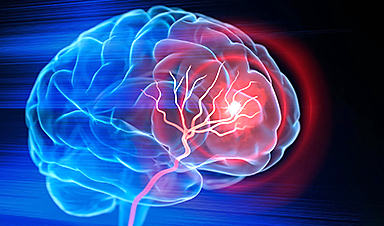
New injectable treatment helps the brain rebuild after stroke
Biomedical engineers at Duke University have created an injectable biomaterial that may help the brain recover from damage left behind by an ischemic stroke. In experiments with mice, the material transformed the cavity created [...]
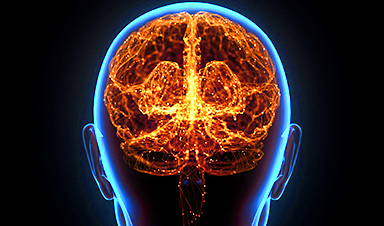
Scientists Discover a Hidden “Immune Organ” Inside the Skull
Researchers discovered lymph node-like immune hubs inside skull bone marrow that appear to act as rapid-response centers for the brain. For decades, the brain was thought to operate largely apart from the immune system. [...]