Millions of operations should be scrapped
SIX IN TEN Britons have surgery at some point. So do lots of Americans, at a cost of perhaps $500bn a year, a third of all spending on adults in the world’s biggest health-care market. Plenty of these procedures save lives, by removing tumours, transplanting new organs or mending broken ones. Many others make life better, say by restoring vision (cataract extraction) or hearing (tympanoplasty, for example). Yet a growing body of evidence suggests millions of surgeries performed each year are unnecessary—and, given the risk of complications when a person is sliced open, often worse than useless.
Of ten common orthopaedic procedures, a specialty which accounts for a quarter of all operations in Britain and a similar share in America, only three—for carpal tunnel and total replacement of knees and hips—offer outcomes that are clearly superior to non-operative care. Six, including common ones like lumbar-spine decompression, are no better than drugs, physiotherapy or just Father Time. Similarly, roughly two-thirds of excised appendices could have been fixed with antibiotics and many prostates, around 100,000 of which are operated on in Europe each year, are better off with watchful waiting.
For patients, needless surgery is a cause of physical pain and, especially in America, financial stress. For stretched health-care systems in ageing rich countries, it is a terrible waste of resources. A recent reduction in referrals for shoulder operations (just one of the six useless orthopaedic procedures) is saving England’s National Health Service (NHS) around £100m ($134m) a year, or 1% of its total surgical budget.
The main reason for the persistence of useless procedures is a dearth of clinical data on whether they work. Surgeons liken asking about this to wondering whether parachutes are useful when leaping out of a plane. If the patient gets better, the parachute is assumed to have been a success. Regulators do not require proof that it actually was, as they do with new drugs. Individual surgeons have neither the incentive nor the means to check for themselves. Contrast that with drugmakers, which bankroll big, costly randomised trials in the hope of making lots of money from pills that are proven effective.
Governments can start to correct this failure by running trials themselves. The NHS has already begun doing this, with some success. By testing procedures across many hospitals around Britain, it avoids the charge of impugning the skill of any individual surgeon or, conversely, of missing out the truly skilful. It and other public health-care systems should conduct more such exercises.
Once the results are in, it will be easier for payers, be they public systems or private insurers, to refuse to cover procedures that do not benefit patients. This will not only save money. Surgeons freed from performing unnecessary shoulder and back operations could spend more time on knees, hips and carpal tunnels. In systems where care is rationed, like the NHS, this would have the welcome effect of trimming waiting lists. In July 6.2m patients in England were awaiting non-urgent specialist treatment, a category that includes lots of surgeries.
Unlearning decades of modern medical practice will not come easily to health-care systems. It will be harder still for the surgeons. Like all medics, they believe that they are doing right by their patients. But if your only tool is a scalpel, everything looks ripe for cutting.
Jack the knife
Surgeons must therefore be taught, starting in medical school and then by their mentors in what remains an apprenticeship-based craft, to present patients with a range of options and choose the best one together rather than dictating it from on high. Such “shared decision-making” has become common among clinicians but remains alien to many surgeons. It is in everyone’s interest to make it standard.

News – Curated by Amanda Scott, Alias Group Creative
Follow her on Bluesky
Back and shoulder surgery is often worse than useless
Millions of operations should be scrapped SIX IN TEN Britons have surgery at some point. So do lots of Americans, at a cost of perhaps $500bn a year, a third of all spending on [...]
Cocaine plays with mind, hijacks brain circuit, drives increasingly rigid and repetitive behavior
Researchers have found that cocaine hijacks brain circuit, which to drive increasingly rigid and repetitive behavior. The brain circuit that normally participates in selecting natural mouth and face movements, but which becomes disproportionately engaged [...]
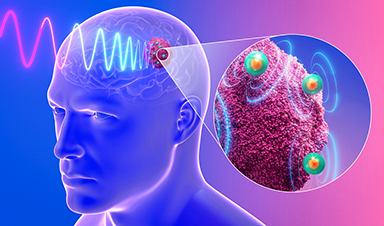
Injectable nanodevices could provide effective treatment for drug-resistant glioblastoma
The brain cancer glioblastoma is one of the most aggressive and treatment-resistant cancers known to medicine, carrying a median survival of just 12-15 months, even with the best available care. Now, researchers at the [...]
New Treatment Cuts “Bad” Cholesterol in Half for a Full Year
A single infusion of an experimental CRISPR-Cas9 therapy was reported to safely lower LDL cholesterol by 52.5% and triglycerides by 47.8%, as measured 12 months after treatment. What if one infusion could keep cholesterol [...]

Too Much RNA Can Drain a Cell’s Energy, Scientists Discover
A virus may cripple a cell’s power supply simply by producing too much of a molecule the cell needs to survive. New research from the Texas A&M College of Veterinary Medicine and Biomedical Sciences [...]
West African scientists warn of weakening health systems and urge stronger outbreak detection
LOME, Togo (AP) — West African laboratory scientists called on governments Friday to strengthen capacity to detect disease outbreaks to avoid another major outbreak, saying health systems across the region are becoming weaker. Participants [...]

A Little-Known Protein Could Point to a New Way To Treat Alzheimer’s
A study suggests that increasing SORLA protein levels could help treat Alzheimer’s disease and other disorders involving tau protein. Increasing SORLA, a protein with a protective role in the brain, helped mice withstand damage [...]
Cancer’s Hidden Antioxidant Shield Helps It Escape the Immune System
Blocking an antioxidant protein that tumors use to suppress immune attacks improved cancer immunotherapy responses in mice. Cancer cells can release antioxidants that interfere with the immune cells trying to kill them. Researchers have [...]

Scientists Find a Berry Compound That Helps Muscle Cells Burn Fat
Pterostilbene, a compound found naturally in some foods, affects how skeletal muscles process fats by stabilizing a protein called PPARδ and increasing its signaling activity. Pterostilbene, a natural compound found in blueberries, grapes, and [...]
Two Hidden Forces Help Build the Human Brain Before Birth
Scientists have uncovered two surprising forces that help guide how the human brain forms before birth. Before birth, the human brain is shaped in large part by an unusual class of stem cells known [...]
Researchers Uncover a Hidden Trigger Behind Chronic Inflammation
The findings offer new insights that could help guide the development of future therapies. A protein called human resistin may help flip on one of the immune system’s most powerful inflammatory switches. Researchers at [...]
Scientists Have Uncovered Previously Hidden Microbial Activity on Human Skin
The most abundant microbes on your skin may not be the ones doing most of the work. Human skin supports vast communities of bacteria, fungi, and viruses that can influence its protective barrier, immune [...]
Brazilian Tree Compounds Fight COVID-19 on Multiple Fronts
Scientists found compounds in a Brazilian tree that hit SARS-CoV-2 on multiple fronts, revealing a promising new lead in the search for COVID-19 treatments. Researchers have found that galloylquinic acids extracted from the leaves [...]
Cutting Two Amino Acids Slowed Prostate Cancer in Mice
A newly identified link between amino acid metabolism and cholesterol production may help prostate tumors adapt to hormone therapy. Prostate cancer can find ways around treatments designed to deprive tumors of the hormones they [...]

Largest-Ever Physics Survey Raises New Doubts About Our Model of the Universe
Physicists around the world remain deeply divided on key mysteries of the universe, from dark matter to quantum gravity. The standard cosmological model failed to gain majority support, and no leading theory dominated the [...]
Scientists Just Overturned a 100-Year-Old Belief About Bacteria in the Lungs
New findings raise questions about the role of microbes living in the lungs. More than 35 trillion bacteria live throughout the human body, forming microbiomes in the gut, mouth, lungs, skin, and urogenital tract. [...]