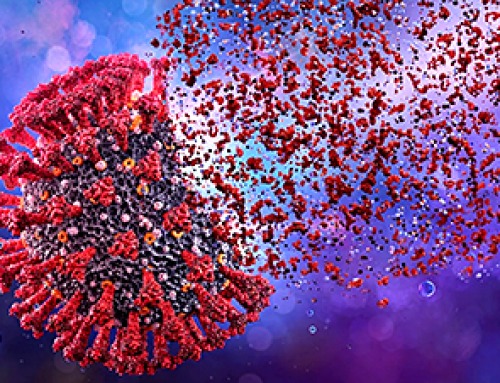
A virus may cripple a cell’s power supply simply by producing too much of a molecule the cell needs to survive.
New research from the Texas A&M College of Veterinary Medicine and Biomedical Sciences (VMBS) suggests that an overload of RNA can directly impair mitochondria, the microscopic power generators that supply cells with usable energy.
The discovery emerged from experiments involving poxvirus infection, but its relevance may extend much further. Excess RNA has also been observed in some cancers, neurodegenerative diseases, and age-related disorders. The findings could even help scientists better understand how cells respond to RNA-based medicines, including mRNA vaccines.
RNA Cleanup Protects Cellular Energy
Published in the Proceedings of the National Academy of Sciences, the study expands the known importance of RNA degradation. Cells routinely dismantle unnecessary, damaged, or defective RNA to regulate protein production and prevent molecular clutter.
“Scientists have long known that RNA degradation helps control protein production and remove defective RNA,” said Dr. Zhilong Yang, a professor in VMBS’ Department of Veterinary Pathobiology. “Our study reveals another important role: it helps cells maintain the energy they need to function properly.”
Mitochondria generate energy by maintaining an electrical and chemical gradient across their inner membranes. Disrupting that finely balanced system can reduce cellular respiration, leaving cells with less energy for growth, repair, and other essential activities.
The results indicate that RNA quality control helps defend this energy system. Its role is not limited to managing protein instructions and immune signals. It may also prevent excess RNA from physically interfering with mitochondria.
When Essential RNA Becomes Harmful
RNA is not a single type of molecule. Messenger RNA (mRNA) carries genetic instructions from DNA to the cellular machinery that builds proteins. Double-stranded RNA (dsRNA) often appears during viral replication and can warn the immune system that an infection is underway.
Viruses can produce enormous quantities of RNA after taking control of a cell. If that material accumulates faster than the cell can remove it, the buildup may impair mitochondria and weaken energy production.

Scientists already knew that excess dsRNA could provoke powerful immune responses. What surprised the researchers was evidence that too much mRNA, an ordinary and indispensable part of healthy cells, could also become damaging.
“MRNA is a normal component of our cells, but it seems like with many good things, if we get too much, that can become a problem for the cell,” Yang said. “When too much RNA builds up, including mRNA, it can damage the mitochondria and interfere with the cell’s ability to produce energy.”
Poxviruses Must Keep Cells Alive
Viruses have no independent source of energy and cannot manufacture proteins on their own. They must exploit living cells to reproduce, creating a delicate problem: the virus needs to take over the cell without disabling it too quickly.
Poxviruses, the family that includes smallpox and mpox viruses, appear to solve part of that problem by using RNA cleanup systems. These systems break down excess RNA and may keep an infected cell functioning long enough to support continued viral replication.
“If the cell is not healthy, the virus would not replicate well,” Yang said. “The virus needs to keep RNA levels balanced inside the cell.”
That strategy suggests RNA degradation can benefit both sides in different ways. The cell uses it to preserve normal function, while the virus may depend on it to maintain the cellular environment required for its own survival.
RNA Damages Mitochondria Directly
The researchers initially suspected that the damage arose indirectly. Because some RNA molecules trigger antiviral defenses, an intense immune response seemed like a likely explanation for the loss of mitochondrial function.
Experiments challenged that idea. The team removed mitochondria from cells and exposed the isolated structures directly to RNA. Even without the rest of the cell or its immune machinery, mitochondrial damage still occurred.
“When we isolated only the mitochondria and added RNA, we still saw mitochondrial damage,” said Dr. Djamal Brahim Belhaouari, the study’s first author. “That was the moment we realized this could be a previously unknown cellular response to RNA.”
The decline in mitochondrial performance also began before major immune defenses switched on and did not require the cell’s usual antiviral response. Together, those findings support the possibility that RNA accumulation itself disrupts mitochondrial activity.
An Electrical Disruption Around Mitochondria
Exactly how RNA causes the damage remains unresolved. The researchers suspect that its electrical charge may be important.
“We think the negatively charged RNA may accumulate around mitochondria and disrupt the electrical balance needed for energy production, although how it happens is unknown,” Yang said. “This is a new concept that we are continuing to explore.”
If confirmed, this mechanism would reveal an unexpected connection between RNA abundance and cellular metabolism. Instead of acting only as a carrier of genetic information or a trigger for immunity, RNA could also alter the physical conditions surrounding mitochondria.
Possible Links to Disease and Aging
The implications may extend beyond infection because abnormal RNA accumulation has been documented in several disease settings. Some cancers, neurodegenerative conditions, and age-related disorders also involve mitochondrial dysfunction, raising the possibility that the two problems may sometimes be connected.
“We think this has quite broad translational implications,” Brahim Belhaouari said. “Too much double-stranded RNA or mRNA that cannot be degraded effectively may contribute to disease processes in some contexts.”
What It Could Mean for RNA Medicines
The findings may also help guide research into RNA-based therapeutics and vaccines. These technologies deliberately introduce RNA into the body, making it important to understand how different doses, delivery systems, and degradation rates affect cells.
“Understanding this mechanism could help researchers design and optimize future RNA-based therapeutics and vaccines by better understanding how cells respond to large amounts of RNA,” Yang said.
“Scientists already knew that too much double-stranded RNA can be harmful,” Yang said. “What surprised us was finding out that too much mRNA, something cells normally need every day, can also damage mitochondria and interfere with the cell’s ability to produce energy.”
Reference: “Perturbation of RNA homeostasis impairs mitochondrial respiration during poxvirus infection through excess RNA accumulation” by Djamal Brahim Belhaouari, Anil Pant, Santiago Navarro-Forero, Fernando Cantu and Zhilong Yang, 26 May 2026, Proceedings of the National Academy of Sciences.
DOI: 10.1073/pnas.2605194123
Research reported in this study was supported, in part, by the National Institute of Allergy and Infectious Diseases (R01AI143709 to Z.Y.) and Texas A&M University.

News – Curated by Amanda Scott, Alias Group Creative
Follow her on Bluesky
Too Much RNA Can Drain a Cell’s Energy, Scientists Discover
A virus may cripple a cell’s power supply simply by producing too much of a molecule the cell needs to survive. New research from the Texas A&M College of Veterinary Medicine and Biomedical Sciences [...]

West African scientists warn of weakening health systems and urge stronger outbreak detection
LOME, Togo (AP) — West African laboratory scientists called on governments Friday to strengthen capacity to detect disease outbreaks to avoid another major outbreak, saying health systems across the region are becoming weaker. Participants [...]

A Little-Known Protein Could Point to a New Way To Treat Alzheimer’s
A study suggests that increasing SORLA protein levels could help treat Alzheimer’s disease and other disorders involving tau protein. Increasing SORLA, a protein with a protective role in the brain, helped mice withstand damage [...]
Cancer’s Hidden Antioxidant Shield Helps It Escape the Immune System
Blocking an antioxidant protein that tumors use to suppress immune attacks improved cancer immunotherapy responses in mice. Cancer cells can release antioxidants that interfere with the immune cells trying to kill them. Researchers have [...]

Scientists Find a Berry Compound That Helps Muscle Cells Burn Fat
Pterostilbene, a compound found naturally in some foods, affects how skeletal muscles process fats by stabilizing a protein called PPARδ and increasing its signaling activity. Pterostilbene, a natural compound found in blueberries, grapes, and [...]

Two Hidden Forces Help Build the Human Brain Before Birth
Scientists have uncovered two surprising forces that help guide how the human brain forms before birth. Before birth, the human brain is shaped in large part by an unusual class of stem cells known [...]

Researchers Uncover a Hidden Trigger Behind Chronic Inflammation
The findings offer new insights that could help guide the development of future therapies. A protein called human resistin may help flip on one of the immune system’s most powerful inflammatory switches. Researchers at [...]
Scientists Have Uncovered Previously Hidden Microbial Activity on Human Skin
The most abundant microbes on your skin may not be the ones doing most of the work. Human skin supports vast communities of bacteria, fungi, and viruses that can influence its protective barrier, immune [...]
Brazilian Tree Compounds Fight COVID-19 on Multiple Fronts
Scientists found compounds in a Brazilian tree that hit SARS-CoV-2 on multiple fronts, revealing a promising new lead in the search for COVID-19 treatments. Researchers have found that galloylquinic acids extracted from the leaves [...]
Cutting Two Amino Acids Slowed Prostate Cancer in Mice
A newly identified link between amino acid metabolism and cholesterol production may help prostate tumors adapt to hormone therapy. Prostate cancer can find ways around treatments designed to deprive tumors of the hormones they [...]
Largest-Ever Physics Survey Raises New Doubts About Our Model of the Universe
Physicists around the world remain deeply divided on key mysteries of the universe, from dark matter to quantum gravity. The standard cosmological model failed to gain majority support, and no leading theory dominated the [...]

Scientists Just Overturned a 100-Year-Old Belief About Bacteria in the Lungs
New findings raise questions about the role of microbes living in the lungs. More than 35 trillion bacteria live throughout the human body, forming microbiomes in the gut, mouth, lungs, skin, and urogenital tract. [...]

GHCE Concept
From the preface of the book Global Health Care Equivalency in the Age of Nanotechnology, Nanomedicine and Artificial Intelligence, Edited by Frank Boehm: Since the publication of my first book (Nanomedical Device and Systems [...]

Novartis, Ionis drug failure spurs questions
Pelacarsen didn’t protect heart health despite lowering levels of a protein particle, “Lp(a),” in a large clinical trial — a result with important implications for cardiovascular drug research. Dive Brief: An RNA drug from [...]

New injectable treatment helps the brain rebuild after stroke
Biomedical engineers at Duke University have created an injectable biomaterial that may help the brain recover from damage left behind by an ischemic stroke. In experiments with mice, the material transformed the cavity created [...]

Scientists Discover a Hidden “Immune Organ” Inside the Skull
Researchers discovered lymph node-like immune hubs inside skull bone marrow that appear to act as rapid-response centers for the brain. For decades, the brain was thought to operate largely apart from the immune system. [...]