Cancer immunotherapy, which uses drugs that stimulate the body’s immune cells to attack tumors, is a promising approach to treating many types of cancer. However, it doesn’t work well for some tumors, including ovarian cancer.
To elicit a better response, MIT researchers have designed new nanoparticles that can deliver an immune-stimulating molecule called IL-12 directly to ovarian tumors. When given along with immunotherapy drugs called checkpoint inhibitors, IL-12 helps the immune system launch an attack on cancer cells.
Studying a mouse model of ovarian cancer, the researchers showed that this combination treatment could eliminate metastatic tumors in more than 80 percent of the mice. When the mice were later injected with more cancer cells, to simulate tumor recurrence, their immune cells remembered the tumor proteins and cleared them again.
“What’s really exciting is that we’re able to deliver IL-12 directly in the tumor space. And because of the way that this nanomaterial is designed to allow IL-12 to be borne on the surfaces of the cancer cells, we have essentially tricked the cancer into stimulating immune cells to arm themselves against that cancer,” says Paula Hammond, an MIT Institute Professor, MIT’s vice provost for faculty, and a member of the Koch Institute for Integrative Cancer Research.
Hammond and Darrell Irvine, a professor of immunology and microbiology at the Scripps Research Institute, are the senior authors of the new study, which appears today in Nature Materials. Ivan Pires PhD ’24, now a postdoc at Brigham and Women’s Hospital, is the lead author of the paper.
“Hitting the gas”
Most tumors express and secrete proteins that suppress immune cells, creating a microenvironment in which the immune response is weakened. One of the main players that can kill tumor cells are T cells, but they get sidelined or blocked by the cancer cells and are unable to attack the tumor. Checkpoint inhibitors are an FDA-approved treatment designed to take those brakes off the immune system by removing the immune-suppressing proteins so that T cells can mount an attack on tumor cells
For some cancers, including some types of melanoma and lung cancer, removing the brakes is enough to provoke the immune system into attacking cancer cells. However, ovarian tumors have many ways to suppress the immune system, so checkpoint inhibitors alone usually aren’t enough to launch an immune response.
“The problem with ovarian cancer is no one is hitting the gas. So, even if you take off the brakes, nothing happens,” Pires says.
IL-12 offers one way to “hit the gas,” by supercharging T cells and other immune cells. However, the large doses of IL-12 required to get a strong response can produce side effects due to generalized inflammation, such as flu-like symptoms (fever, fatigue, GI issues, headaches, and fatigue), as well as more severe complications such as liver toxicity and cytokine release syndrome — which can be so severe they may even lead to death.
In a 2022 study, Hammond’s lab developed nanoparticles that could deliver IL-12 directly to tumor cells, which allows larger doses to be given while avoiding the side effects seen when the drug is injected. However, these particles tended to release their payload all at once after reaching the tumor, which hindered their ability to generate a strong T cell response.
In the new study, the researchers modified the particles so that IL-12 would be released more gradually, over about a week. They achieved this by using a different chemical linker to attach IL-12 to the particles.
“With our current technology, we optimize that chemistry such that there’s a more controlled release rate, and that allowed us to have better efficacy,” Pires says.
The particles consist of tiny, fatty droplets known as liposomes, with IL-12 molecules tethered to the surface. For this study, the researchers used a linker called maleimide to attach IL-12 to the liposomes. This linker is more stable than the one they used in the previous generation of particles, which was susceptible to being cleaved by proteins in the body, leading to premature release.
To make sure that the particles get to the right place, the researchers coat them with a layer of a polymer called poly-L-glutamate (PLE), which helps them directly target ovarian tumor cells. Once they reach the tumors, the particles bind to the cancer cell surfaces, where they gradually release their payload and activate nearby T cells.
Disappearing tumors
In tests in mice, the researchers showed that the IL-12-carrying particles could effectively recruit and stimulate T cells that attack tumors. The cancer models used for these studies are metastatic, so tumors developed not only in the ovaries but throughout the peritoneal cavity, which includes the surface of the intestines, liver, pancreas, and other organs. Tumors could even be seen in the lung tissues.
First, the researchers tested the IL-12 nanoparticles on their own, and they showed that this treatment eliminated tumors in about 30 percent of the mice. They also found a significant increase in the number of T cells that accumulated in the tumor environment.
Then, the researchers gave the particles to mice along with checkpoint inhibitors. More than 80 percent of the mice that received this dual treatment were cured. This happened even when the researchers used models of ovarian cancer that are highly resistant to immunotherapy or to the chemotherapy drugs usually used for ovarian cancer.
Patients with ovarian cancer are usually treated with surgery followed by chemotherapy. While this may be initially effective, cancer cells that remain after surgery are often able to grow into new tumors. Establishing an immune memory of the tumor proteins could help to prevent that kind of recurrence.
In this study, when the researchers injected tumor cells into the cured mice five months after the initial treatment, the immune system was still able to recognize and kill the cells.
“We don’t see the cancer cells being able to develop again in that same mouse, meaning that we do have an immune memory developed in those animals,” Pires says.
The researchers are now working with MIT’s Deshpande Center for Technological Innovation to spin out a company that they hope could further develop the nanoparticle technology. In a study published earlier this year, Hammond’s lab reported a new manufacturing approach that should enable large-scale production of this type of nanoparticle.
The research was funded by the National Institutes of Health, the Marble Center for Nanomedicine, the Deshpande Center for Technological Innovation, the Ragon Institute of MGH, MIT, and Harvard, and the Koch Institute Support (core) Grant from the National Cancer Institute.

News

A Surprising Brain Signal Could Explain Why Eating Less Protein Extends Lifespan
A new paper suggests that limiting protein intake triggers a coordinated response throughout the body that may help explain how protein restriction affects healthy aging. Animals respond to protein restriction, or reduced protein in [...]

Back and shoulder surgery is often worse than useless
Millions of operations should be scrapped SIX IN TEN Britons have surgery at some point. So do lots of Americans, at a cost of perhaps $500bn a year, a third of all spending on [...]
Cocaine plays with mind, hijacks brain circuit, drives increasingly rigid and repetitive behavior
Researchers have found that cocaine hijacks brain circuit, which to drive increasingly rigid and repetitive behavior. The brain circuit that normally participates in selecting natural mouth and face movements, but which becomes disproportionately engaged [...]
Injectable nanodevices could provide effective treatment for drug-resistant glioblastoma
The brain cancer glioblastoma is one of the most aggressive and treatment-resistant cancers known to medicine, carrying a median survival of just 12-15 months, even with the best available care. Now, researchers at the [...]
New Treatment Cuts “Bad” Cholesterol in Half for a Full Year
A single infusion of an experimental CRISPR-Cas9 therapy was reported to safely lower LDL cholesterol by 52.5% and triglycerides by 47.8%, as measured 12 months after treatment. What if one infusion could keep cholesterol [...]

Too Much RNA Can Drain a Cell’s Energy, Scientists Discover
A virus may cripple a cell’s power supply simply by producing too much of a molecule the cell needs to survive. New research from the Texas A&M College of Veterinary Medicine and Biomedical Sciences [...]
West African scientists warn of weakening health systems and urge stronger outbreak detection
LOME, Togo (AP) — West African laboratory scientists called on governments Friday to strengthen capacity to detect disease outbreaks to avoid another major outbreak, saying health systems across the region are becoming weaker. Participants [...]

A Little-Known Protein Could Point to a New Way To Treat Alzheimer’s
A study suggests that increasing SORLA protein levels could help treat Alzheimer’s disease and other disorders involving tau protein. Increasing SORLA, a protein with a protective role in the brain, helped mice withstand damage [...]
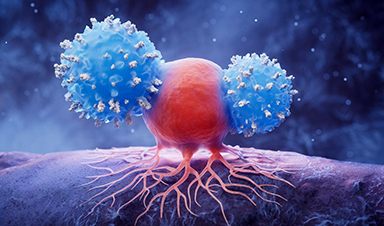
Cancer’s Hidden Antioxidant Shield Helps It Escape the Immune System
Blocking an antioxidant protein that tumors use to suppress immune attacks improved cancer immunotherapy responses in mice. Cancer cells can release antioxidants that interfere with the immune cells trying to kill them. Researchers have [...]

Scientists Find a Berry Compound That Helps Muscle Cells Burn Fat
Pterostilbene, a compound found naturally in some foods, affects how skeletal muscles process fats by stabilizing a protein called PPARδ and increasing its signaling activity. Pterostilbene, a natural compound found in blueberries, grapes, and [...]

Two Hidden Forces Help Build the Human Brain Before Birth
Scientists have uncovered two surprising forces that help guide how the human brain forms before birth. Before birth, the human brain is shaped in large part by an unusual class of stem cells known [...]
Researchers Uncover a Hidden Trigger Behind Chronic Inflammation
The findings offer new insights that could help guide the development of future therapies. A protein called human resistin may help flip on one of the immune system’s most powerful inflammatory switches. Researchers at [...]
Scientists Have Uncovered Previously Hidden Microbial Activity on Human Skin
The most abundant microbes on your skin may not be the ones doing most of the work. Human skin supports vast communities of bacteria, fungi, and viruses that can influence its protective barrier, immune [...]
Brazilian Tree Compounds Fight COVID-19 on Multiple Fronts
Scientists found compounds in a Brazilian tree that hit SARS-CoV-2 on multiple fronts, revealing a promising new lead in the search for COVID-19 treatments. Researchers have found that galloylquinic acids extracted from the leaves [...]
Cutting Two Amino Acids Slowed Prostate Cancer in Mice
A newly identified link between amino acid metabolism and cholesterol production may help prostate tumors adapt to hormone therapy. Prostate cancer can find ways around treatments designed to deprive tumors of the hormones they [...]

Largest-Ever Physics Survey Raises New Doubts About Our Model of the Universe
Physicists around the world remain deeply divided on key mysteries of the universe, from dark matter to quantum gravity. The standard cosmological model failed to gain majority support, and no leading theory dominated the [...]