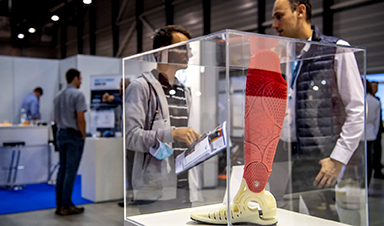
Swiss researchers have developed a method for printing artificial muscles out of silicone. In the future, these could be used on both humans and robots.
Swiss researchers have succeeded in printing artificial muscles out of silicone. In the future, the technology could be used not only in medicine, but also in robotics.
Developing artificial muscles that can keep up with the real ones is a major technical challenge, explains the Swiss Federal Laboratories for Materials Science and Technology (Empa). These must not only be strong, but also elastic and soft.
Now, for the first time, the researchers have developed a method to produce such complex components with the 3D printer. The printed so-called dielectric elastic actuators consist of two different silicone-based materials: a conductive electrode material and a non-conductive dielectric.
Compressed muscles must be as soft as possible
These materials interlock in layers. “It’s like interlacing your fingers,” explains Empa researcher Patrick Danner. If an electrical voltage is applied to the electrodes, the actuator contracts like a muscle. If you switch it off again, it relaxes again.
However, the production is not an easy undertaking. This is because the printed “muscles” must be as soft as possible so that an electrical stimulus can lead to the required deformation. In order to be able to produce something with the 3D printer, certain criteria must also be met: The materials must liquefy under pressure so that they can be pressed out of the printer nozzle. Immediately afterwards, however, they must be viscous enough again to retain the printed form. “These characteristics are often in direct contradiction to each other,” says Danner. “If you optimise one of them, three others change, usually to the detriment.”
In the future, you could print a whole heart like this
In collaboration with researchers at ETH Zurich, Danner and Dorina Opris, head of the research group, have succeeded in reconciling many of these contradictory characteristics.
With the process they have newly developed, not only complex shapes can be printed, but also long elastic fibers. “If we make them a little thinner, we come quite close to how real muscle fibers work,” says Opris. In the future, it may even be possible to print an entire heart from such fibers, the researcher believes.

News
Where do nanoparticles go once they enter the body?
New international best practice guidance, co-written at ANSTO, sets out how to measure where nanoparticles like titanium dioxide end up in the body and how long they remain. The guidance has been shared by [...]
Long-Acting HIV Shots Could Solve a Major Treatment Challenge for Young People
A major African trial suggests that changing how HIV treatment is delivered could significantly improve viral suppression in adolescents. Young people with HIV were more likely to keep the virus suppressed when they received [...]

WHO Factsheets – The top 10 causes of death
In 2023, the 10 leading causes of death accounted for 33 million deaths, or 54% of the total 61 million deaths worldwide. The top global causes of death, in order of total number of lives lost, [...]
Aging Cells May Be Hiding From the Immune System – Scientists Think They Know How
Your immune system is supposed to clear out damaged cells. Researchers may have found how some of them hide and linger as the body ages. Researchers led by Cedars-Sinai Health Sciences University have identified [...]

Your Voice May Reveal How Fast Your Brain Is Aging
Researchers have developed a machine-learning “speech clock” that estimates age from subtle patterns in how people speak and what they say. It is possible that people’s voices may contain certain signals of aging that [...]

Optogenetics Pioneers Win 2026 Nobel Prize in Physiology or Medicine
The 2026 Nobel Prize in Physiology or Medicine has been awarded to Peter Hegemann, Georg Nagel, and Karl Deisseroth for the development of optogenetics, a revolutionary technology that uses light to control individual neurons [...]
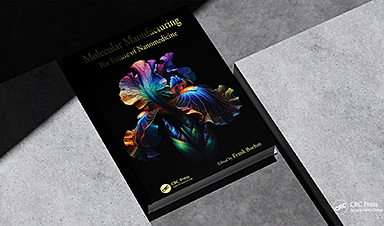
Molecular Manufacturing: The Future of Nanomedicine – From NanoappsMedical Inc.
This book explores the revolutionary potential of atomically precise manufacturing technologies to transform global healthcare, as well as practically every other sector across society. This forward-thinking volume examines how envisaged Factory@Home systems might enable the cost-effective [...]

What is ‘American Covid’ and how bad is it?
Cases of so-called ‘American Covid’ are on the rise in the UK. The strain is officially called XFG, or ‘Stratus’, and is the most common variant in North America, hence the name. It might soon [...]
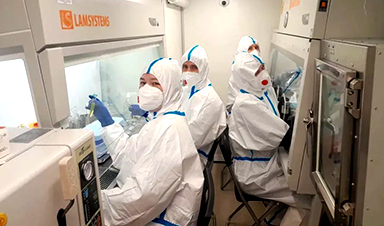
Researcher at Russian plague laboratory dies of ‘unknown’ infection
Russian authorities have imposed "anti-epidemic measures" after a laboratory worker at an institute in Siberia dedicated to studying the plague and other infectious diseases died of a mysterious illness. The researcher, a 28-year-old female [...]

GHCE Concept
From the preface of the book Global Health Care Equivalency in the Age of Nanotechnology, Nanomedicine and Artificial Intelligence, Edited by Frank Boehm: Since the publication of my first book (Nanomedical Device and Systems [...]

A Surprising Brain Signal Could Explain Why Eating Less Protein Extends Lifespan
A new paper suggests that limiting protein intake triggers a coordinated response throughout the body that may help explain how protein restriction affects healthy aging. Animals respond to protein restriction, or reduced protein in [...]

Back and shoulder surgery is often worse than useless
Millions of operations should be scrapped SIX IN TEN Britons have surgery at some point. So do lots of Americans, at a cost of perhaps $500bn a year, a third of all spending on [...]
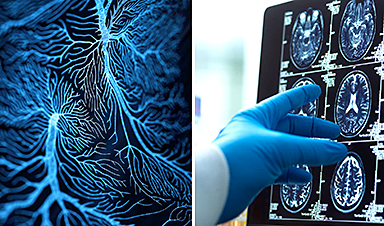
Cocaine plays with mind, hijacks brain circuit, drives increasingly rigid and repetitive behavior
Researchers have found that cocaine hijacks brain circuit, which to drive increasingly rigid and repetitive behavior. The brain circuit that normally participates in selecting natural mouth and face movements, but which becomes disproportionately engaged [...]
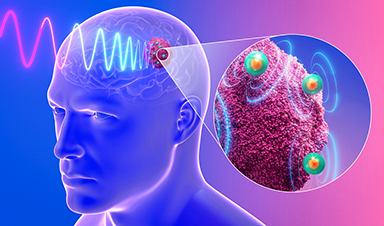
Injectable nanodevices could provide effective treatment for drug-resistant glioblastoma
The brain cancer glioblastoma is one of the most aggressive and treatment-resistant cancers known to medicine, carrying a median survival of just 12-15 months, even with the best available care. Now, researchers at the [...]
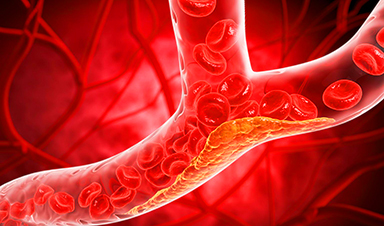
New Treatment Cuts “Bad” Cholesterol in Half for a Full Year
A single infusion of an experimental CRISPR-Cas9 therapy was reported to safely lower LDL cholesterol by 52.5% and triglycerides by 47.8%, as measured 12 months after treatment. What if one infusion could keep cholesterol [...]

Too Much RNA Can Drain a Cell’s Energy, Scientists Discover
A virus may cripple a cell’s power supply simply by producing too much of a molecule the cell needs to survive. New research from the Texas A&M College of Veterinary Medicine and Biomedical Sciences [...]