When most people get sick with COVID-19 today, they think of it as a brief illness, similar to a cold. However, for a large number of people, the illness doesn't end there. The World Health Organization (WHO) calls this condition long COVID, which is when a person's symptoms continue for at least three months after they first get sick. While much research has focused on the specific symptoms like fatigue and brain fog, a new study from the Australian Journal of Primary Health looks at how these symptoms affect people's daily lives.The study found that long COVID is far more than just a minor annoyance; it can seriously limit a person's ability to do normal daily tasks and participate in their community. The participants reported severe difficulties that could be compared to conditions like stroke, rheumatoid arthritis and Parkinson's disease. So, it is not just more fatigue, but a serious health complication
How Does Long COVID Affect Your Quality Of Life?
The study involved 121 adults in Australia who were dealing with long COVID. Most were between 36 and 50 years old and didn't need to be hospitalized for their initial illness. But months or even years later, they were still struggling with activities that were once easy for them. To get a full picture of the impact, the participants answered two well-known health surveys that measure disability and quality of life. The results were quite powerful.
Does Long COVID Cause Disability?
People with long COVID reported a level of disability that was worse than 98% of the general Australian population. An overwhelming 86% of them met the standards for having a serious disability. On average, they had trouble with daily activities for about 27 days a month and were unable to function for about 18 days. While simple tasks like eating or getting dressed were less affected, more complex activities like doing housework and spending time with friends were severely impacted.
Long COVID and Quality of Life
The condition also had a major negative effect on their overall quality of life, which was 23% lower than the general population's. Their energy levels and social lives were the most affected, showing how fatigue and brain fog can strain relationships and a person's connection to their community.
Should Long COVID Be Taken More Seriously?
The results of this study are similar to what has been found in other countries, showing that long COVID often leads to high levels of disability. The research also highlights how important it is to listen to patients. Since there isn't a single test to diagnose long COVID, a person's own description of their health and recovery was found to be a strong and reliable way to measure their disability and quality of life. This proves that what patients say is not just a "story" but a valid health indicator that captures details medical tests can't.
The study points to an urgent need for better support. A 2023 government inquiry estimated that hundreds of thousands of Australians are living with long COVID. Ignoring this problem could worsen social inequality, as communities that are already struggling are often hit the hardest.
To move forward, we need to create comprehensive support services that go beyond basic medical care. This includes rehabilitation programs to help people manage their fatigue and workplaces that are flexible with hours and job duties. By listening to and respecting the experiences of people with long COVID, the healthcare system can help them regain not only their health but also their dignity and ability to fully participate in life.

News
MIT Scientists Reprogram Immune Cells Inside the Body To Destroy Cancer
Natural killer cells reprogrammed inside mice eliminated lymphoma tumors and helped damaged livers heal, though whether this approach could help people with cancer or autoimmune disease remains unknown. To make a cancer treatment from [...]

Melanoma mRNA Vaccine Shows Promise in Preventing Disease Recurrence
Key takeaways: Phase 3 trial finds personalized intismeran plus pembrolizumab may better prevent high-risk melanoma recurrence after surgery The trial enrolled 1,137 patients and builds on phase 2 results showing about half the recurrence [...]
Scientists Discover a Powerful New Weapon Against a Dangerous Gut Infection
The promise of an experimental treatment for C. difficile gut infections lies partly in the bacteria it leaves alive, according to early laboratory and mouse research. Broad-spectrum antibiotics can disrupt the gut’s microbial community, [...]
Your Bones May Hold a Hidden Clue to Blood Cancer Survival
For people with blood cancers called myelodysplastic syndromes, osteoporosis may hold an overlooked clue to survival, a three-year observational study suggests. In blood cancers that develop in the bone marrow, an important clue to [...]

Researchers Discover What Reading for Pleasure May Be Doing to Your Brain
Reading for pleasure may offer surprising benefits for the brain, with research linking the habit to better mental health, stronger cognitive abilities, and a lower risk of dementia. Reading for pleasure may do far [...]
Scientists Discover a Hidden Trigger That Keeps Inflammation Alive
Inflammation persists after proteins detach from immune receptors, revealing a potential target for autoimmune treatments. Since a Nobel Prize-winning discovery in the 1990s identified molecules called Toll-like Receptors as the guardians of the human [...]
A Virus Gives Itself Away the Moment It Attacks
Researchers have found the trigger behind a powerful bacterial defense against viruses. Viruses that prey on bacteria could become an increasingly important tool for treating bacterial infections, particularly as antibiotic resistance makes some infections [...]
Scientists Discover Aspirin May Slash Dementia Risk by 70% – but Only for Certain People
Aspirin was linked to a sharply lower dementia risk in some older adults, and their genes may hold the clue. A Monash University analysis found that older adults with a particular genetic profile had [...]
Inflammation May Awaken Dormant Cancer Cells Years After Treatment
The body’s response to inflammation may disturb cancer cells that have been lying silent for years, giving them an opportunity to grow again. Researchers at the Francis Crick Institute have found that gut inflammation [...]

Where do nanoparticles go once they enter the body?
New international best practice guidance, co-written at ANSTO, sets out how to measure where nanoparticles like titanium dioxide end up in the body and how long they remain. The guidance has been shared by [...]
Long-Acting HIV Shots Could Solve a Major Treatment Challenge for Young People
A major African trial suggests that changing how HIV treatment is delivered could significantly improve viral suppression in adolescents. Young people with HIV were more likely to keep the virus suppressed when they received [...]

WHO Factsheets – The top 10 causes of death
In 2023, the 10 leading causes of death accounted for 33 million deaths, or 54% of the total 61 million deaths worldwide. The top global causes of death, in order of total number of lives lost, [...]
Aging Cells May Be Hiding From the Immune System – Scientists Think They Know How
Your immune system is supposed to clear out damaged cells. Researchers may have found how some of them hide and linger as the body ages. Researchers led by Cedars-Sinai Health Sciences University have identified [...]

Your Voice May Reveal How Fast Your Brain Is Aging
Researchers have developed a machine-learning “speech clock” that estimates age from subtle patterns in how people speak and what they say. It is possible that people’s voices may contain certain signals of aging that [...]
Optogenetics Pioneers Win 2026 Nobel Prize in Physiology or Medicine
The 2026 Nobel Prize in Physiology or Medicine has been awarded to Peter Hegemann, Georg Nagel, and Karl Deisseroth for the development of optogenetics, a revolutionary technology that uses light to control individual neurons [...]
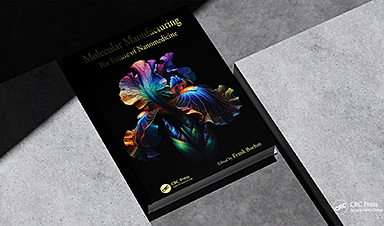
Molecular Manufacturing: The Future of Nanomedicine – From NanoappsMedical Inc.
This book explores the revolutionary potential of atomically precise manufacturing technologies to transform global healthcare, as well as practically every other sector across society. This forward-thinking volume examines how envisaged Factory@Home systems might enable the cost-effective [...]