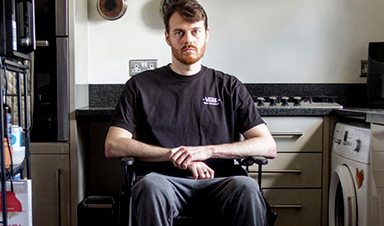
When Alex Sprackland caught Covid-19 in March 2020, he thought he'd be back to normal in no time. Yet, five years on, the 34-year-old still grapples with the severe, life-limiting effects of the infection.
'I was diagnosed with long Covid seven months after my initial illness – my life has never been the same,' Alex, from Tunbridge Wells, tells Metro. 'I had to leave my flat, I lost my relationship, and I moved back in with my parents. I also dropped out of university when I became too sick to finish the course.
'I can't even work, but there's no support for me. No treatments. Nothing.'
After contracting the virus, Alex developed a series of symptoms that included an irregular heartbeat, breathlessness, ongoing pain and digestive problems. Initially he was misdiagnosed with chronic fatigue syndrome and prescribed 'graded exercise' by his GP, which only worsened his symptoms.
Alex bounced between numerous specialists, none of whom could help. 'It was demoralising, especially when people didn't believe me about the symptoms,' he remembers.
Six months later Alex was finally referred to the NHS long Covid service, but says, 'no one knew what to offer me. I ended up going to a private clinic instead and they started some experimental treatments.'
However, the decision cost him his place at the NHS clinic, as he was pursuing 'off-label treatments'.
Although 120 specialised long Covid clinics opened in England and Wales in 2021, today there are less than 50 – and Alex is now paying for private healthcare out of his limited savings and Personal Independence Payment (PIP) to find answers.
He is one of approximately 2million people in the United Kingdom with the condition, a chronic, systemic disease that can cause a range of long-term health issues, such as severe fatigue, difficulty breathing, chest pain and memory problems.

'It's all a gamble to find trustworthy information; no one knows enough,' says Alex, who relies on a wheelchair. 'I spend 99% of the time in my room and haven't seen most of my friends for five years. I'm watching all their lives pass me by, which is probably the hardest thing to deal with, over the symptoms.'
School became impossible
Avalyn Godfrey, 16, knows the feeling all too well. After catching coronavirus in October 2021 at age 12, she developed long Covid with symptoms of debilitating fatigue, breathlessness, dizziness, sensory issues and brain fog.
Once a super active kid, Avalyn's energy slowly disappeared, making lessons impossible to keep up with. After transferring to a more understanding school, where a teacher who also had long Covid advocated for her, the teen's worsening symptoms made homeschooling the safest option.
She has since completed six GCSEs at home, but finds it hard to maintain her social life.
'When you are not in school as a teenager, there aren't many ways to keep contact with your friends,' Avalyn tells Metro from her home in Cheshire.
After fighting for over a year to get an official diagnosis, which was delayed by doctors dismissing the teen as 'looking for attention', shewas referred to an NHS long Covid clinic.
However, Avalyn's mother, Donna McParland, says treatments were limited and the clinic initially insisted she meticulously log every activity, which her daughter didn't have the energy to do.
Then, they moved on to teaching Avalyn about 'pacing' – an activity management technique used amongst people with chronic illness to help people balance symptoms with everyday life – and carrying out numerous tests, which all came back normal.
'When we have appointments, they tell us about new medical studies or tests they're doing and for a second, you think, "Oh, that's great,' says Avalyn. 'But then nothing happens.'
Avalyn hopes that her symptoms will improve over time and that one day, better treatments will be discovered. In the meantime, she's focusing on achieving her dream of becoming a primary school teacher.
'I've always wanted to be a teacher and I love working with kids; it just feels like something I'm good at,' she says, hopefully.
'I had to go through an ill-health dismissal'
Mum of two Jenny Sullivan has also navigated the challenges of long Covid support. A dedicated English teacher with boundless energy and a fierce passion for her work; when she caught coronavirus in September 2023, everything changed.
After developing severe long Covid symptoms, Jenny was left unable to stand due to dizziness, while also suffering from frequent fatigue and a marked decline in her overall health. She also lives with MCAS (Mast Cell Activation Syndrome), a rare disease that results in a range of allergy-like symptoms.
After nearly three months of worsening symptoms, Jenny, who lives in Tonbridge, went to the GP for the first time, starting a long journey to diagnosis and treatment for long Covid.
'I was signed off work but thought I would be returning soon – then I found out there was a six-month waiting list to see the cardiologist for my symptoms,' she tells Metro.
'It was excruciating to realise, over time, that I wasn't well enough to work and I had to go through an ill-health dismissal – then it was even worse to realise there were no decent treatments to help me.'
Jenny was referred to her local NHS long Covid clinic, but found they couldn't offer her any advice except pacing and some limited treatments for postural orthostatic tachycardia syndrome (POTS), a condition that causes rapid increases in heart rate and has been diagnosed in many long Covid patients.
Eventually, she decided to seek help privately and now travels to Liverpool to see specialist Dr Binita Kane, who also treats Alex.
'The problem is, long Covid specialists are so rare and I have to travel so far to see mine to get stabilised just a little,' says Jenny from her home, having transitioned from a desk to bed to preserve energy while speaking.
'The lack of NHS treatment means that some people pay thousands to untrained and unqualified individuals promising 'miracle cures'; it's easy for opportunists to oversell when there are no alternatives.'
Now unable to work for nearly 18 months, Jenny uses a mobility scooter for outings, which has given her more access to the outside world. However, most of her life is still centred around resting in bed, and she is investing in private care in the hopes of improving her quality of life.
But she is limited by time, cost and distance. A single private consultation can cost up to £500, wait times are still up to six months, and Jenny has to travel for access to care, sapping her already diminished energy.
Despite the need for long Covid care still being apparent, many sufferers are facing a dearth of support with doctors who don't have the funding or knowledge required.
Dr Nikita Kanani, MBE, a GP with extensive experience working with long Covid patients, says that 'GPs are doing their best, but they're often working without the tools or capacity they need.
'There's been some education and guidance, but it's not consistent, and many are managing complex cases without access to the specialist support or multidisciplinary pathways they need to refer into.'
An NHS England spokesperson told Metro: 'More than 100,000 people have been supported by specialist Long Covid clinics since 2020, with NHS staff helping them deal with the physical, cognitive, and psychological effects of Covid-19.
'National guidance and funding has been issued to local health leaders to help them create Long-Covid services which best meet the needs of their local area.'
Looking for answers
However, Alex says he has had to become his 'own doctor in many ways.'
He explains: 'I am reading the latest research, finding new potential treatments, and then looking for doctors who will prescribe the medications or try the new protocol I recommend. It's exhausting.'
While energy-draining, Alex admits that being proactive in his treatment helps alleviate some of the frustration. As part of the Long Covid campaign group, Not Recovered UK, he has also helped raised upwards of £12,000 for research.
Avalyn, too, has directed her attention toward raising awareness, working with organisations like Long Covid Kids and writing her own children's book, called 'Star Dizzy Lizzy', to educate young people.
Andrea from Long Covid Support believes the answer lies in improving research and maintaining the precious few clinics that remain.
'Research is essential; we need it for diagnostics, for treatment, before we even think about rehabilitation,' she says.
Dr Kanani agrees: 'the scale of suffering from long Covid should justify faster investment in trials and early access schemes. We need a system that can act with urgency, rather than waiting for absolute certainty before supporting patients.'
Beyond stopping the closure of these much-needed clinics, Alex says, too many people think 'Coronavirus doesn't exist anymore'.
He adds: 'we are the unfortunate aftermath of the pandemic that people don't want to think about. They just want to put their things in their ears and move on with life. We can't do that though, because we're living with long Covid.'

News
Optogenetics Pioneers Win 2026 Nobel Prize in Physiology or Medicine
The 2026 Nobel Prize in Physiology or Medicine has been awarded to Peter Hegemann, Georg Nagel, and Karl Deisseroth for the development of optogenetics, a revolutionary technology that uses light to control individual neurons [...]
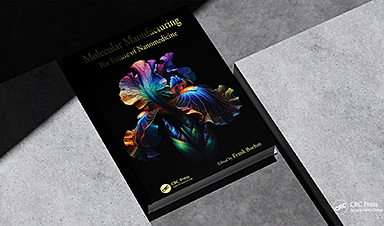
Molecular Manufacturing: The Future of Nanomedicine – From NanoappsMedical Inc.
This book explores the revolutionary potential of atomically precise manufacturing technologies to transform global healthcare, as well as practically every other sector across society. This forward-thinking volume examines how envisaged Factory@Home systems might enable the cost-effective [...]

What is ‘American Covid’ and how bad is it?
Cases of so-called ‘American Covid’ are on the rise in the UK. The strain is officially called XFG, or ‘Stratus’, and is the most common variant in North America, hence the name. It might soon [...]
Researcher at Russian plague laboratory dies of ‘unknown’ infection
Russian authorities have imposed "anti-epidemic measures" after a laboratory worker at an institute in Siberia dedicated to studying the plague and other infectious diseases died of a mysterious illness. The researcher, a 28-year-old female [...]
GHCE Concept
From the preface of the book Global Health Care Equivalency in the Age of Nanotechnology, Nanomedicine and Artificial Intelligence, Edited by Frank Boehm: Since the publication of my first book (Nanomedical Device and Systems [...]

A Surprising Brain Signal Could Explain Why Eating Less Protein Extends Lifespan
A new paper suggests that limiting protein intake triggers a coordinated response throughout the body that may help explain how protein restriction affects healthy aging. Animals respond to protein restriction, or reduced protein in [...]

Back and shoulder surgery is often worse than useless
Millions of operations should be scrapped SIX IN TEN Britons have surgery at some point. So do lots of Americans, at a cost of perhaps $500bn a year, a third of all spending on [...]
Cocaine plays with mind, hijacks brain circuit, drives increasingly rigid and repetitive behavior
Researchers have found that cocaine hijacks brain circuit, which to drive increasingly rigid and repetitive behavior. The brain circuit that normally participates in selecting natural mouth and face movements, but which becomes disproportionately engaged [...]
Injectable nanodevices could provide effective treatment for drug-resistant glioblastoma
The brain cancer glioblastoma is one of the most aggressive and treatment-resistant cancers known to medicine, carrying a median survival of just 12-15 months, even with the best available care. Now, researchers at the [...]
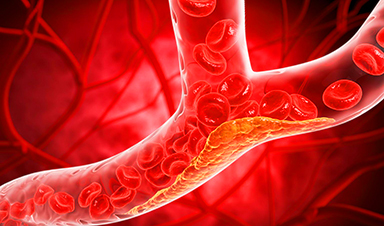
New Treatment Cuts “Bad” Cholesterol in Half for a Full Year
A single infusion of an experimental CRISPR-Cas9 therapy was reported to safely lower LDL cholesterol by 52.5% and triglycerides by 47.8%, as measured 12 months after treatment. What if one infusion could keep cholesterol [...]

Too Much RNA Can Drain a Cell’s Energy, Scientists Discover
A virus may cripple a cell’s power supply simply by producing too much of a molecule the cell needs to survive. New research from the Texas A&M College of Veterinary Medicine and Biomedical Sciences [...]
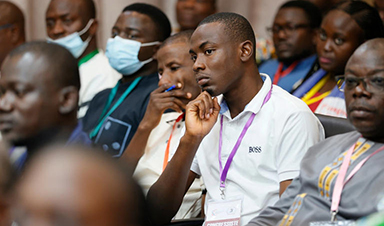
West African scientists warn of weakening health systems and urge stronger outbreak detection
LOME, Togo (AP) — West African laboratory scientists called on governments Friday to strengthen capacity to detect disease outbreaks to avoid another major outbreak, saying health systems across the region are becoming weaker. Participants [...]

A Little-Known Protein Could Point to a New Way To Treat Alzheimer’s
A study suggests that increasing SORLA protein levels could help treat Alzheimer’s disease and other disorders involving tau protein. Increasing SORLA, a protein with a protective role in the brain, helped mice withstand damage [...]
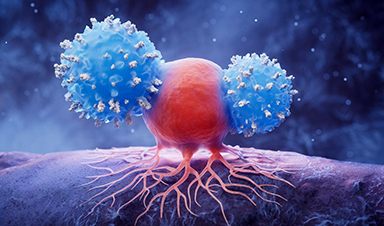
Cancer’s Hidden Antioxidant Shield Helps It Escape the Immune System
Blocking an antioxidant protein that tumors use to suppress immune attacks improved cancer immunotherapy responses in mice. Cancer cells can release antioxidants that interfere with the immune cells trying to kill them. Researchers have [...]

Scientists Find a Berry Compound That Helps Muscle Cells Burn Fat
Pterostilbene, a compound found naturally in some foods, affects how skeletal muscles process fats by stabilizing a protein called PPARδ and increasing its signaling activity. Pterostilbene, a natural compound found in blueberries, grapes, and [...]

Two Hidden Forces Help Build the Human Brain Before Birth
Scientists have uncovered two surprising forces that help guide how the human brain forms before birth. Before birth, the human brain is shaped in large part by an unusual class of stem cells known [...]