Researchers discovered that people who don’t drink enough water react with sharper cortisol spikes during stressful events, explaining why poor hydration is tied to long-term health risks.
A recent study in the Journal of Applied Physiology examined the impact of hydration status and habitual fluid intake on saliva cortisol reactivity to psychosocial stress. Suboptimal hydration and habitual low fluid intake are associated with greater cortisol reactivity to acute psychosocial stress, which may adversely influence long-term health.
Hydration and cortisol reactivity to stress
Consistently drinking less than the recommended daily amount of water can lead to suboptimal hydration, often shown by darker, more concentrated urine and reduced output. Research has associated habitual low fluid intake with a greater metabolic, renal, and cardiovascular disease risk. Chronic low water intake may increase water-regulating hormones, such as arginine vasopressin (AVP), which can increase the release of the stress hormone cortisol.
It is well known that cortisol spikes during acute stress, but it also follows a daily rhythm. When this circadian rhythm is disrupted, or when cortisol responses are exaggerated, it can affect immunity, metabolism, and inflammation. Some research has found higher cortisol levels in people who are suboptimally hydrated and drink less than 1.2 L of fluid per day. However, the exact link between fluid intake, hydration, and cortisol remains uncertain.
About the study
Given the shared pathways between stress hormone cortisol release and whole-body water regulation, this study aimed to verify that individuals with suboptimal hydration and habitual low fluid intake show greater cortisol reactivity to acute psychosocial stress.
Eligible participants were non-smokers, healthy, aged 18–35 years, and free from any known immune, cardiovascular, sleep, or metabolic disorders. Individuals were identified as being habitually low or high fluid drinkers, i.e., LOW and HIGH, with thresholds being derived from a national database. In each group, there were 16 participants.
Over 7 days of screening, participants recorded their daily fluid intake from all sources daily, in pairs to account for potential confounders. Individuals who consumed excessive caffeine and alcohol were excluded from the sample. Participants were then prospectively monitored for 7 days while maintaining their typical fluid intake, making the study stronger than a one-off observational snapshot.
After the screening period, participants individually completed the Trier Social Stress Test (TSST). Later, saliva samples were collected and analyzed for cortisol. They also provided urine samples, which were used to assess urine osmolality and color (UOsm and UCol). Plasma samples were analyzed for copeptin as an additional hydration biomarker.
Study findings
The HIGH group consistently presented with lower UOsm, UCol, and plasma copeptin than the LOW group. However, the groups showed no statistical differences in thirst or plasma osmolality (POsm). Based on a UOsm threshold of 500 mosmol/kgH2O, 15 participants in the LOW group were suboptimally hydrated, and 14 of 16 participants in the HIGH group were hydrated on the morning of the TSST.
The TSST showed notable increases in heart rate and state anxiety; however, no significant interactions between the two variables were observed, indicating similar responses in the LOW and HIGH groups. A smaller proportion of individuals in the LOW group reported a meaningful increase in state anxiety. The LOW group also reported higher “baseline” saliva cortisol levels. However, after a standardized 25-minute seated rest, both groups showed similar saliva cortisol levels.
When “baseline cortisol” was entered as a covariate in the linear mixed models, the TSST elicited a significant increase in saliva cortisol. Saliva cortisol levels peaked post-TSST. Across the two groups, the number of individuals reporting a significant saliva cortisol response was similar.
The researchers also analyzed “responders,” whose cortisol or anxiety change exceeded normal day-to-day variation. Although the proportion of responders was similar in both groups, cortisol reactivity was consistently greater in LOW than in HIGH. However, there were some meaningful group-time interactions, whereby salivary cortisol increased significantly post-TSST only in the LOW group. Cortisol reactivity was lower in the HIGH group, which was associated with hydration status, as assessed by UOsm measurements.
Conclusions
These findings suggest that adults with habitual low fluid intake exhibit greater cortisol reactivity to acute psychosocial stress. Cortisol reactivity was also higher when hydration status was suboptimal. The findings explain why the hydration status and habits could be associated with long-term health.
The study is limited to establishing correlations, and although participants were monitored prospectively, its cross-sectional comparison design cannot establish causation. The short study duration also makes it difficult to gauge any long-term health implications of the present findings.
Habitual low fluid consumption is also linked to the risk of metabolic and cardiovascular disease, but it remains to be seen whether cortisol reactivity to psychosocial stress plays a part. To better understand this issue, prospective longitudinal studies should examine the relationship between acute stress-induced cortisol reactivity, habitual fluid intake, and health outcomes.
The current study did not investigate sex differences in stress reactivity; the generalizability of the findings is limited to females with fluid consumption between 1.5 and 2.5 L/day, and males with fluid consumption between 1.6 and 2.9 L/day were excluded.
- Kashi, D. S. et al. (2025). Habitual fluid intake and hydration status influence cortisol reactivity to acute psychosocial stress. Journal of Applied Physiology. https://doi.org/JAPPL-00408-2025. https://journals.physiology.org/doi/full/10.1152/japplphysiol.00408.2025

News
Scientists Discover a Hidden Trigger That Keeps Inflammation Alive
Inflammation persists after proteins detach from immune receptors, revealing a potential target for autoimmune treatments. Since a Nobel Prize-winning discovery in the 1990s identified molecules called Toll-like Receptors as the guardians of the human [...]
A Virus Gives Itself Away the Moment It Attacks
Researchers have found the trigger behind a powerful bacterial defense against viruses. Viruses that prey on bacteria could become an increasingly important tool for treating bacterial infections, particularly as antibiotic resistance makes some infections [...]
Scientists Discover Aspirin May Slash Dementia Risk by 70% – but Only for Certain People
Aspirin was linked to a sharply lower dementia risk in some older adults, and their genes may hold the clue. A Monash University analysis found that older adults with a particular genetic profile had [...]
Inflammation May Awaken Dormant Cancer Cells Years After Treatment
The body’s response to inflammation may disturb cancer cells that have been lying silent for years, giving them an opportunity to grow again. Researchers at the Francis Crick Institute have found that gut inflammation [...]

Where do nanoparticles go once they enter the body?
New international best practice guidance, co-written at ANSTO, sets out how to measure where nanoparticles like titanium dioxide end up in the body and how long they remain. The guidance has been shared by [...]
Long-Acting HIV Shots Could Solve a Major Treatment Challenge for Young People
A major African trial suggests that changing how HIV treatment is delivered could significantly improve viral suppression in adolescents. Young people with HIV were more likely to keep the virus suppressed when they received [...]

WHO Factsheets – The top 10 causes of death
In 2023, the 10 leading causes of death accounted for 33 million deaths, or 54% of the total 61 million deaths worldwide. The top global causes of death, in order of total number of lives lost, [...]
Aging Cells May Be Hiding From the Immune System – Scientists Think They Know How
Your immune system is supposed to clear out damaged cells. Researchers may have found how some of them hide and linger as the body ages. Researchers led by Cedars-Sinai Health Sciences University have identified [...]

Your Voice May Reveal How Fast Your Brain Is Aging
Researchers have developed a machine-learning “speech clock” that estimates age from subtle patterns in how people speak and what they say. It is possible that people’s voices may contain certain signals of aging that [...]
Optogenetics Pioneers Win 2026 Nobel Prize in Physiology or Medicine
The 2026 Nobel Prize in Physiology or Medicine has been awarded to Peter Hegemann, Georg Nagel, and Karl Deisseroth for the development of optogenetics, a revolutionary technology that uses light to control individual neurons [...]
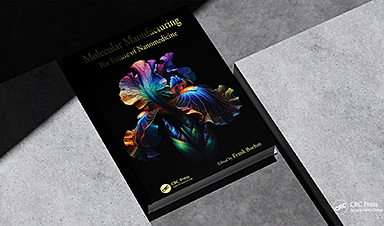
Molecular Manufacturing: The Future of Nanomedicine – From NanoappsMedical Inc.
This book explores the revolutionary potential of atomically precise manufacturing technologies to transform global healthcare, as well as practically every other sector across society. This forward-thinking volume examines how envisaged Factory@Home systems might enable the cost-effective [...]

What is ‘American Covid’ and how bad is it?
Cases of so-called ‘American Covid’ are on the rise in the UK. The strain is officially called XFG, or ‘Stratus’, and is the most common variant in North America, hence the name. It might soon [...]
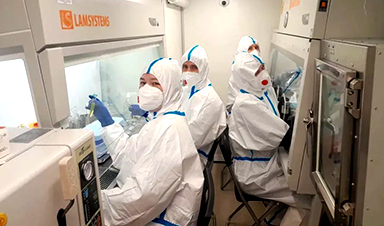
Researcher at Russian plague laboratory dies of ‘unknown’ infection
Russian authorities have imposed "anti-epidemic measures" after a laboratory worker at an institute in Siberia dedicated to studying the plague and other infectious diseases died of a mysterious illness. The researcher, a 28-year-old female [...]
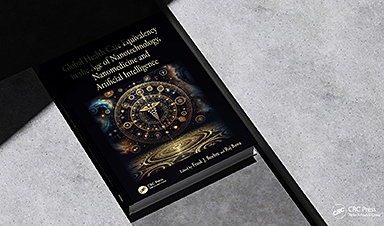
GHCE Concept
From the preface of the book Global Health Care Equivalency in the Age of Nanotechnology, Nanomedicine and Artificial Intelligence, Edited by Frank Boehm: Since the publication of my first book (Nanomedical Device and Systems [...]
A Surprising Brain Signal Could Explain Why Eating Less Protein Extends Lifespan
A new paper suggests that limiting protein intake triggers a coordinated response throughout the body that may help explain how protein restriction affects healthy aging. Animals respond to protein restriction, or reduced protein in [...]

Back and shoulder surgery is often worse than useless
Millions of operations should be scrapped SIX IN TEN Britons have surgery at some point. So do lots of Americans, at a cost of perhaps $500bn a year, a third of all spending on [...]