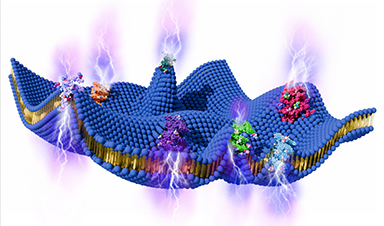
Living cells may generate electricity through the natural motion of their membranes. These fast electrical signals could play a role in how cells communicate and sense their surroundings.
Scientists have proposed a new theoretical explanation for how living cells may generate electrical signals on their own. The idea centers on the cell membrane, the thin, flexible layer that surrounds every cell and separates its interior from the outside environment. Rather than being still, this membrane is constantly in motion due to activity happening inside the cell. The new framework shows that these tiny movements at the molecular level can give rise to real electrical effects.
The work was led by Pradeep Sharma and his colleagues, who developed a mathematical model to connect biological activity with basic physical principles. Their goal was to understand how normal cellular processes could translate into electrical behavior without requiring specialized structures like nerves or electrodes.
Molecular Motion Drives Membrane Fluctuations
Inside living cells, countless processes are always underway. Proteins shift shape as they perform their functions, and chemical reactions release energy that keeps the cell alive. One key process is ATP hydrolysis, which is how cells break down adenosine triphosphate to power biological work. These activities exert forces on the cell membrane, causing it to bend, ripple, and fluctuate.
According to the model, these constant shape changes are not just mechanical. When the membrane bends, it can generate an electrical response through a physical effect known as flexoelectricity. This effect occurs when deformation in a material creates an electrical charge, linking motion directly to voltage.
Voltage Levels Comparable to Neuron Signals
The researchers found that the electrical differences produced across the membrane, known as transmembrane voltages, can be surprisingly strong. In some cases, the voltage may reach up to 90 millivolts. This is similar in size to the voltage changes that occur when neurons send signals in the brain.
The timing of these changes is also striking. The voltage fluctuations can happen over milliseconds, which closely matches the speed and shape of typical action potential curves seen in nerve cells. This suggests that the same underlying physics could help explain how electrical signaling works in biological systems.
Moving Ions Against Their Natural Direction
Beyond generating voltage, the framework predicts another important effect. The electrical signals created by membrane motion could actively move ions. Ions are charged particles that play a central role in cell signaling and maintaining balance inside cells. Normally, ions move along electrochemical gradients, flowing from areas of higher concentration to lower concentration.
The model suggests that active membrane fluctuations could push ions in the opposite direction, effectively working against these gradients. The researchers show that this behavior depends on the membrane’s elastic properties, which describe how easily it bends, and its dielectric properties, which describe how it responds to electric fields. Together, these features determine both the direction and polarity of ion transport.
From Individual Cells to Tissues and Materials
Looking ahead, the authors propose extending this framework beyond single cells. By applying the same principles to groups of cells, scientists could explore how coordinated membrane activity leads to collective electrical behavior at the level of tissues.
The researchers argue that this mechanism offers a physical foundation for understanding sensory perception, neuronal firing, and energy harvesting in living cells. It may also help bridge biological science and engineering by inspiring bio-inspired and physically intelligent materials that mimic the electrical behavior of living systems.
Reference: “Flexoelectricity and the fluctuations of (active) living cells: Implications for energy harvesting, ion transport, and neuronal activity” by Pratik Khandagale, Liping Liu and Pradeep Sharma, 16 December 2025, PNAS Nexus.
DOI: 10.1093/pnasnexus/pgaf362

News
Cocaine plays with mind, hijacks brain circuit, drives increasingly rigid and repetitive behavior
Researchers have found that cocaine hijacks brain circuit, which to drive increasingly rigid and repetitive behavior. The brain circuit that normally participates in selecting natural mouth and face movements, but which becomes disproportionately engaged [...]
Injectable nanodevices could provide effective treatment for drug-resistant glioblastoma
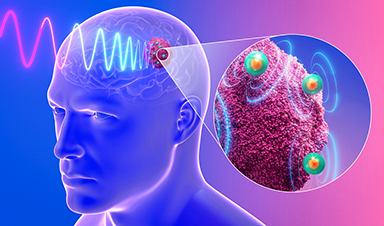
The brain cancer glioblastoma is one of the most aggressive and treatment-resistant cancers known to medicine, carrying a median survival of just 12-15 months, even with the best available care. Now, researchers at the [...]
New Treatment Cuts “Bad” Cholesterol in Half for a Full Year
A single infusion of an experimental CRISPR-Cas9 therapy was reported to safely lower LDL cholesterol by 52.5% and triglycerides by 47.8%, as measured 12 months after treatment. What if one infusion could keep cholesterol [...]
Too Much RNA Can Drain a Cell’s Energy, Scientists Discover
A virus may cripple a cell’s power supply simply by producing too much of a molecule the cell needs to survive. New research from the Texas A&M College of Veterinary Medicine and Biomedical Sciences [...]

West African scientists warn of weakening health systems and urge stronger outbreak detection
LOME, Togo (AP) — West African laboratory scientists called on governments Friday to strengthen capacity to detect disease outbreaks to avoid another major outbreak, saying health systems across the region are becoming weaker. Participants [...]

A Little-Known Protein Could Point to a New Way To Treat Alzheimer’s
A study suggests that increasing SORLA protein levels could help treat Alzheimer’s disease and other disorders involving tau protein. Increasing SORLA, a protein with a protective role in the brain, helped mice withstand damage [...]
Cancer’s Hidden Antioxidant Shield Helps It Escape the Immune System
Blocking an antioxidant protein that tumors use to suppress immune attacks improved cancer immunotherapy responses in mice. Cancer cells can release antioxidants that interfere with the immune cells trying to kill them. Researchers have [...]

Scientists Find a Berry Compound That Helps Muscle Cells Burn Fat
Pterostilbene, a compound found naturally in some foods, affects how skeletal muscles process fats by stabilizing a protein called PPARδ and increasing its signaling activity. Pterostilbene, a natural compound found in blueberries, grapes, and [...]
Two Hidden Forces Help Build the Human Brain Before Birth
Scientists have uncovered two surprising forces that help guide how the human brain forms before birth. Before birth, the human brain is shaped in large part by an unusual class of stem cells known [...]

Researchers Uncover a Hidden Trigger Behind Chronic Inflammation
The findings offer new insights that could help guide the development of future therapies. A protein called human resistin may help flip on one of the immune system’s most powerful inflammatory switches. Researchers at [...]
Scientists Have Uncovered Previously Hidden Microbial Activity on Human Skin
The most abundant microbes on your skin may not be the ones doing most of the work. Human skin supports vast communities of bacteria, fungi, and viruses that can influence its protective barrier, immune [...]
Brazilian Tree Compounds Fight COVID-19 on Multiple Fronts
Scientists found compounds in a Brazilian tree that hit SARS-CoV-2 on multiple fronts, revealing a promising new lead in the search for COVID-19 treatments. Researchers have found that galloylquinic acids extracted from the leaves [...]
Cutting Two Amino Acids Slowed Prostate Cancer in Mice
A newly identified link between amino acid metabolism and cholesterol production may help prostate tumors adapt to hormone therapy. Prostate cancer can find ways around treatments designed to deprive tumors of the hormones they [...]
Largest-Ever Physics Survey Raises New Doubts About Our Model of the Universe
Physicists around the world remain deeply divided on key mysteries of the universe, from dark matter to quantum gravity. The standard cosmological model failed to gain majority support, and no leading theory dominated the [...]

Scientists Just Overturned a 100-Year-Old Belief About Bacteria in the Lungs
New findings raise questions about the role of microbes living in the lungs. More than 35 trillion bacteria live throughout the human body, forming microbiomes in the gut, mouth, lungs, skin, and urogenital tract. [...]

GHCE Concept
From the preface of the book Global Health Care Equivalency in the Age of Nanotechnology, Nanomedicine and Artificial Intelligence, Edited by Frank Boehm: Since the publication of my first book (Nanomedical Device and Systems [...]